Top 10 Ways to Lower Your Heating Bill This Winter (UK 2026/27)
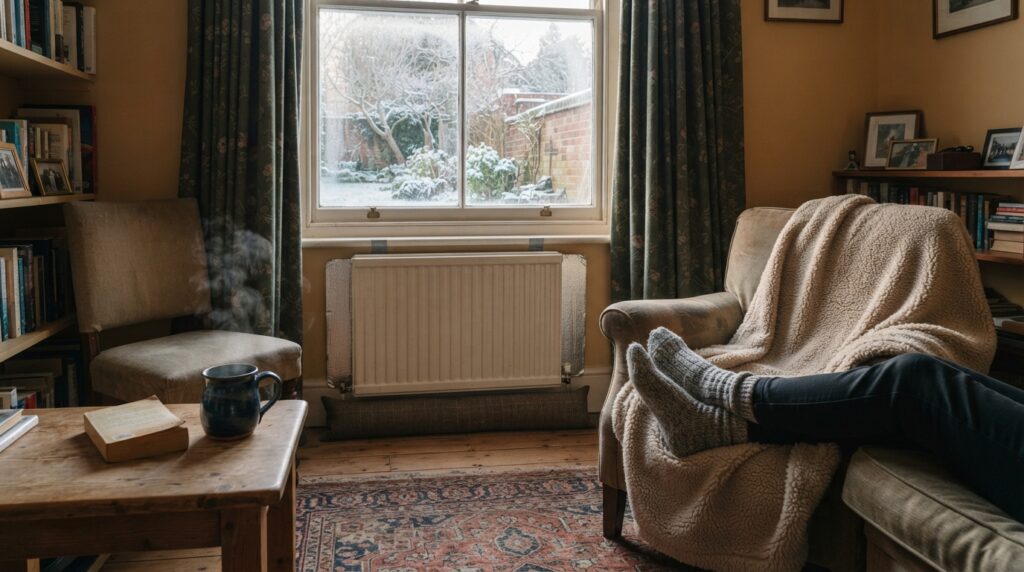
You don’t need a whole new heating system to knock real money off your winter bills. According to the Energy Saving Trust, turning your room thermostat down from 22°C to 21°C alone can save around £120 a year in Great Britain, and using heating controls effectively adds up to a further £100 a year. Combine that with draught-proofing, reflector panels, curtains at dusk and a proper radiator-bleed, and you’re looking at meaningful savings from a weekend’s work.
Here are 10 things that actually save money on heating this winter, in the order that gives the biggest return for the least effort. Every figure comes from a named UK source, not a marketing headline.
1. Turn the thermostat down by 1°C
The single highest-value change on this list. The Energy Saving Trust says dropping the thermostat from 22°C to 21°C could save around £120 a year in GB, or £80 in Northern Ireland. It also recommends setting your thermostat to the lowest comfortable temperature — for most people between 18°C and 21°C. UK Health Security Agency guidance is to heat the home to at least 18°C where possible.
2. Use your heating controls properly
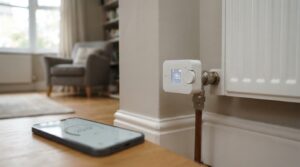
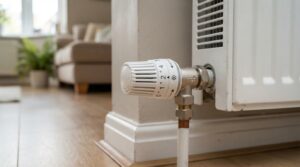
The Energy Saving Trust puts the value of using thermostat, programmer and TRVs together effectively at around £100 a year in GB and £110 in NI. That’s not a new gadget — it’s just setting the timer to match when you’re actually home, turning down TRVs in rooms you don’t use, and stopping heating rooms overnight if you don’t need to. See our winter thermostat guide.
3. Draught-proof doors, letterboxes and windows
The gaps you can’t see cost you the most. Foam strips around doors, a letterbox brush, and a chimney draught excluder work together to stop cold air pushing in and warm air escaping. Our draught-proofing guide covers where to look; do this before spending money on anything else.
4. Close the curtains at dusk
A single-glazed window is a hole in your wall the size of the glass. Thermal curtains closed at dusk trap warm air in the room instead of letting it drift against cold glass and condense on it. Our thermal curtain guide covers what to look for.
5. Bleed your radiators
A radiator that’s cold at the top and warm at the bottom has trapped air, and it’s putting out a fraction of the heat it should. Bleeding takes ten minutes with a radiator key and can transform how well a room heats. Our step-by-step guide covers it.
6. Fit reflector panels behind external-wall radiators
Around £18 a year in GB, £20 in NI, according to the Energy Saving Trust. Only worth doing on radiators fixed to uninsulated external walls — on internal walls the heat stays inside the house anyway. Kitchen foil doesn’t count; use a proper foil-faced foam panel. Our reflector panel guide explains where they earn their money.
A simple room thermometer
See what one degree actually feels like
Battery powered
Sits on a shelf or wall
You can’t save money on heating without knowing what temperature the room is actually at. Hall thermostats are often several degrees warmer or colder than the room you’re sitting in, so a small thermometer in the living room and the bedroom tells you whether 21°C on the wall really is 21°C on the sofa. Look for min/max memory so you can see how cold the room gets overnight. Our thermometer and hygrometer guide covers what to look for.
Good for: checking a thermostat set-point actually matches the room; seeing whether an unheated room is at risk of condensation.
Less good for: controlling anything — it measures, it doesn’t adjust the heating.
7. Block an open unused chimney
The University of Liverpool has calculated that about 5% of household heat can be lost through an open chimney. A chimney balloon or wool chimney draught excluder blocks most of that while still letting the flue breathe enough to stay dry. Never leave one in place if you light a fire. See our chimney draught excluder guide.
8. Heat one room properly, rather than the whole house badly
If you spend most of the day in one room, keeping the whole house at 20°C is the wrong shape of spending. Our cheapest way to heat one room guide covers the maths of turning the boiler down and warming a single room with a cheaper heater, and our home office heating guide covers the working-from-home version.
9. Claim what you’re entitled to
Winter support isn’t just for pensioners. The Warm Home Discount is a one-off £150 off your electricity bill for eligible households; the Cold Weather Payment gives £25 for each 7-day period of very cold weather in your area; the Winter Fuel Payment gives £100–£300 to pension-age households. Our Warm Home Discount guide and Cold Weather Payment guide cover eligibility, and Scotland has its own equivalents.
10. Deal with the damp
A damp room feels colder at any given temperature, so you set the thermostat higher, and pay more, without being any warmer. Ventilating properly, using a dehumidifier in a laundry room and stopping washing drying on radiators all help. Our winter condensation guide and drying clothes indoors post cover the practical steps.
Frequently asked questions
How much does turning the thermostat down 1°C save?
The Energy Saving Trust says lowering the thermostat from 22°C to 21°C could save around £120 a year in Great Britain, or £80 in Northern Ireland.
What’s the ideal room temperature in winter?
The Energy Saving Trust recommends setting your thermostat to the lowest comfortable temperature, which for most people is between 18°C and 21°C. UK Health Security Agency advice is to heat the home to at least 18°C where you can.
Is it cheaper to heat one room or the whole house?
If you only use one room for most of the day, heating just that room is usually cheaper. If the whole family is home, whole-house heating with the thermostat set sensibly is usually better value than running several plug-in heaters.
Sources
- Energy Saving Trust — Thermostats and heating controls
- Energy Saving Trust — Radiator reflector panels explained
- Chimney Sheep / University of Liverpool — Chimney Sheep FAQs
- Ofgem — Energy price cap, October to December 2026
Related reading: our draught-proofing guide, cheapest way to heat one room and Warm Home Discount guide.
Compare current digital room thermometers at Amazon UK.