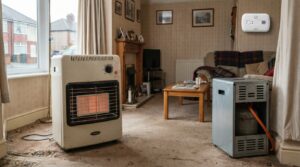
Cold Weather Payment 2026/27: How the £25 Payments Work and Who Gets Them
A Cold Weather Payment is £25 for every 7-day period of very cold weather in your area between 1 November 2026 and 31 March 2027. “Very cold” has a precise meaning: the average temperature at your local weather station is recorded as, or forecast to be, 0°C or below for 7 days in a row. You don’t apply — if you’re on a qualifying benefit such as Pension Credit, or certain claims of Universal Credit, income-related ESA or Support for Mortgage Interest, it’s paid automatically. It’s available in England, Wales and Northern Ireland. Scotland has a different scheme instead, the Winter Heating Payment, which is paid once a year whatever the weather.
Depending on the winter, your area might trigger no payments at all, or several. That makes this one of the more confusing bits of winter support, because whether you get anything depends not just on who you are but on the weather at a station you’ve probably never heard of. Here’s exactly how it works for winter 2026/27.
What triggers a payment
Your postcode is linked to a nearby weather station. A payment is triggered when the average temperature there is recorded as, or forecast to be, zero degrees Celsius or below over seven consecutive days. Each qualifying 7-day period means another £25, so a long cold spell can trigger more than one payment.
You can check whether a payment has been triggered for your postcode using the government’s Cold Weather Payment checker at coldweatherpayments.dwp.gov.uk for England and Wales. Northern Ireland has its own checker on nidirect.
Who qualifies
GOV.UK lists these qualifying benefits for Cold Weather Payments:
- Pension Credit — you’ll usually get payments if you get Pension Credit.
- Income-related Employment and Support Allowance — if you’re in the work-related activity group or support group, or you have a severe or enhanced disability premium, a pensioner premium, a disabled child, or a child under 5 living with you.
- Universal Credit — if you’re not employed or gainfully self-employed (and neither is your partner, if you have one), and you either have a health condition or disability with limited capability for work, or a child under 5 living with you. You’re also eligible if your claim includes a disabled child amount.
- Support for Mortgage Interest — with a severe or enhanced disability premium, a pensioner premium, a disabled child, or a child under 5 living with you.
The Universal Credit rules catch a lot of people out. Being on Universal Credit alone isn’t enough — you also need to meet the work condition and one of the extra conditions.
How you get paid
It’s automatic. If you’re eligible, you’ll get the payment without needing to apply. The one thing you may need to do is report a change if you have a baby or a child under 5 comes to live with you, because that can make you newly eligible. Cold Weather Payments don’t affect your other benefits, and they’re completely separate from the Winter Fuel Payment and the Warm Home Discount.
Scotland: the Winter Heating Payment instead
Cold Weather Payments aren’t available in Scotland. Social Security Scotland replaced them with the Winter Heating Payment, which it describes as a guaranteed payment that everyone eligible receives, no matter what the weather. For winter 2025/26 it was worth £59.75, paid automatically to people getting Universal Credit, Pension Credit, Income Support, income-based Jobseeker’s Allowance or Support for Mortgage Interest during a qualifying week in November, with extra conditions for some benefits. Check mygov.scot for this winter’s amount and qualifying week.
For many households in milder parts of Scotland that’s a better deal than the weather-dependent system, since it pays out even in a winter that never drops below freezing for a full week.
What £25 actually buys
At the electricity price cap for October to December 2026 — 26.32p per kWh on direct debit — £25 covers roughly 95 kWh. To put that in context, a 2kW fan heater running flat out uses 2 kWh an hour, so 95 kWh is under 48 hours of it — while a low-wattage heated throw would run for many evenings on the same money. It won’t heat a whole house through a freezing week. What it can do is make sure the people most at risk stay warm, which matters: the UK Health Security Agency advises heating your home to at least 18°C if you can, and warns that cold weather increases the risk of heart attacks, strokes and chest infections.
If money is tight in a cold spell, the most efficient approach is to keep one room properly warm and heat the person as well as the space. Our cheapest way to heat one room guide covers the room, and our electric blanket versus heated throw comparison covers the person.
An electric heated throw
Heats you, not the whole room
Multiple heat settings
Auto shut-off on most models
In a freezing week, a heated throw on the sofa does far more per kilowatt hour than trying to heat a whole room from cold. Check the wattage on the listing so you can work out the running cost yourself at 26.32p per kWh, look for an automatic shut-off timer, and buy from a reputable retailer with a recognised safety mark — the same checks we set out in our heated throw comparison. It’s a supplement to keeping the room at a safe temperature, not a replacement for it, especially for older people.
Good for: staying warm on the sofa for very little electricity; people who feel the cold in the evenings; stretching a fixed winter budget.
Less good for: keeping the room itself at a safe temperature, which still matters for health. Not for use while asleep unless the manufacturer says it’s designed for that.
Frequently asked questions
How much is the Cold Weather Payment for 2026/27?
£25 for each 7-day period of very cold weather in your area between 1 November 2026 and 31 March 2027.
Do I need to apply for a Cold Weather Payment?
No. If you’re eligible, it’s paid automatically. You may need to report a change if you have a baby or a child under 5 comes to live with you.
Why didn’t I get a Cold Weather Payment when it was freezing?
Payments depend on the average temperature at your local weather station being 0°C or below over 7 consecutive days. Cold nights with milder days often don’t bring the average below zero. You also need to be on a qualifying benefit, and for Universal Credit that means meeting extra conditions.
Can I get Cold Weather Payments in Scotland?
No. Scotland has the Winter Heating Payment instead, which is paid once a year automatically to eligible people regardless of the weather. It was £59.75 for winter 2025/26.
Sources
- GOV.UK — Cold Weather Payment
- GOV.UK — Cold Weather Payment: eligibility
- Social Security Scotland — Winter Heating Payment starts
- UK Health Security Agency — Cold weather alert issued by UKHSA
- Ofgem — Energy price cap, 1 October to 31 December 2026
Related reading: our Warm Home Discount guide, Winter Fuel Payment guide and will winter 2026/27 be the coldest for years?
Compare current electric heated throws at Amazon UK.