Does Window Insulation Shrink Film Actually Work? (UK)
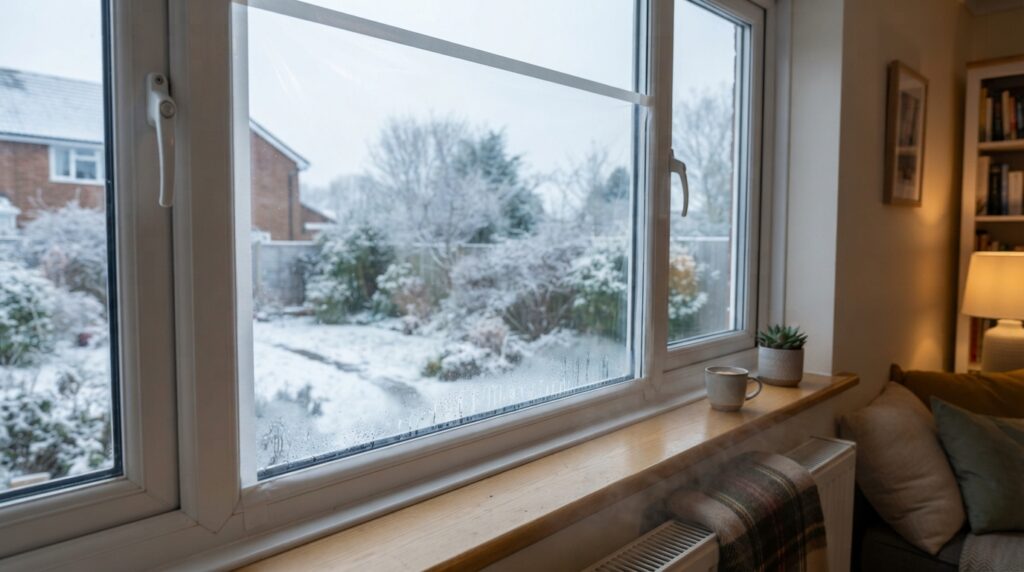
Yes, for the right window. Window insulation film is a thin clear plastic that you tape to the inside of the window frame and shrink flat with a hair dryer. It creates a still air gap between the film and the glass, which is what makes double glazing work in the first place. Everest states that a quality window film can reflect up to 30% of a room’s heat back into the room in winter. Where it earns its money is on single-glazed windows in rented flats, listed buildings and holiday lets where you can’t upgrade. On modern double glazing the return is much smaller. And it’s not pretty — up close it looks a bit like cling film on the window.
This isn’t the shiny mirror film for keeping summer sun out — that’s a different product covered in our reflective window film guide. This is a clear plastic shrink film, sold in kits for around ten pounds, that turns any window into a temporary version of double glazing for the winter. Here’s when it makes sense.
How it works
Everest describes the mechanism plainly: a shrink film is applied to the indoor window frame with double-sided tape, then a hair dryer is used to shrink the film flat, creating an airtight barrier. The still layer of air trapped between the film and the glass is what actually does the insulating. Air moves heat much more slowly than glass does, so a still air gap between two panes of anything — glass, glass and plastic, two sheets of plastic — is worth several times what a single pane is.
When it’s worth doing
The situations where it earns its money:
- Single-glazed windows in a rented flat, where you can’t fit secondary glazing.
- Listed buildings or conservation areas, where changing the windows isn’t allowed.
- Holiday lets and second homes where you don’t want to spend on permanent upgrades.
- Single-glazed period windows you’d prefer to keep for aesthetic reasons.
- A back-of-house window that’s freezing but isn’t worth the cost of upgrading.
When it’s not worth doing
- Modern double or triple glazing — the extra insulation is small enough that you won’t notice it.
- Windows you want to open mid-winter for ventilation — the film has to be cut and replaced.
- Windows you actually look out of every day — up close the film shows small ripples and can look a bit like cling film.
- A window with damp seals or condensation between panes of a failed double-glazed unit — the underlying problem needs fixing.
Fitting the film
- Clean the frame thoroughly. The double-sided tape only sticks to a clean, dry, paint-sound surface. On peeling paint, sort that first.
- Apply the double-sided tape around the inside edge of the window frame, in an unbroken loop.
- Cut the film a little larger than the tape rectangle. It’s easier to trim to size once it’s up.
- Stick the film to the tape, working from one edge to the other. It doesn’t need to be tight at this stage — wrinkles are fine.
- Shrink with a hair dryer on the hot setting, held a few inches from the film. Keep the dryer moving, working outwards from the middle. The wrinkles disappear and the film pulls taut.
- Trim the excess off with a sharp knife.
A window insulation shrink film kit
Temporary DIY secondary glazing
Covers multiple windows in one kit
Fits with a hair dryer
Look for a kit that covers the total window area you actually have (multi-window kits are cheaper per window). Check the tape is described as “removable” if you’re a renter or worried about paint, and even then test it on a hidden bit of frame first. Thicker films look better once shrunk than very thin ones. Buy enough tape for the full perimeter of every window plus a bit — kits often skimp on tape length.
Good for: single-glazed windows in flats and older houses; renters; anywhere you can’t fit permanent secondary glazing; cheap and fully reversible.
Less good for: modern double glazing (small return); windows you actually look out of a lot; anything with damp paint on the frame, which the tape won’t stick to.
How it compares to secondary glazing
Proper secondary glazing — a second pane of glass or acrylic in a slim internal frame — is more effective and looks better, but it costs several times more and needs fitting. If you’re staying put in a period house long-term, our secondary glazing guide is the piece to read. Shrink film is the low-commitment version: an experiment for a winter, or a way to make one especially draughty room bearable while you save up.
Combining with curtains
Shrink film and thermal blackout curtains work well together. The film cuts the heat leaving through the glass; the curtains, closed at dusk, trap warm air on the room side of the window. Neither on its own is quite as good as the two combined. Our thermal curtain guide covers what to look for.
Frequently asked questions
Does shrink film really insulate windows?
Yes. Everest states that a quality window film can reflect up to 30% of a room’s heat back in winter. The effect comes from the still air gap it creates between the film and the glass.
Is window film worth it on double glazing?
Usually not. Modern double glazing already does most of the job the film is trying to do, so the extra saving is small. The bigger returns are on single-glazed windows.
Will window film damage the paint on my frames?
The double-sided tape can lift paint that’s already peeling or damp. On sound paint it’s usually removable at the end of winter, though some residue is possible. Test on a hidden bit of frame first if you’re worried.
Can I open the window with film fitted?
No. Once fitted, the film seals the window closed until spring. That’s the trade-off of the still air gap. Fit it to windows you don’t need to open during winter.
Sources
Related reading: our secondary glazing guide, thermal blackout curtains and reflective window film (for summer).
Compare current window insulation shrink film kits at Amazon UK.