Chimney Balloons and Chimney Sheep: Do They Actually Work? (UK)
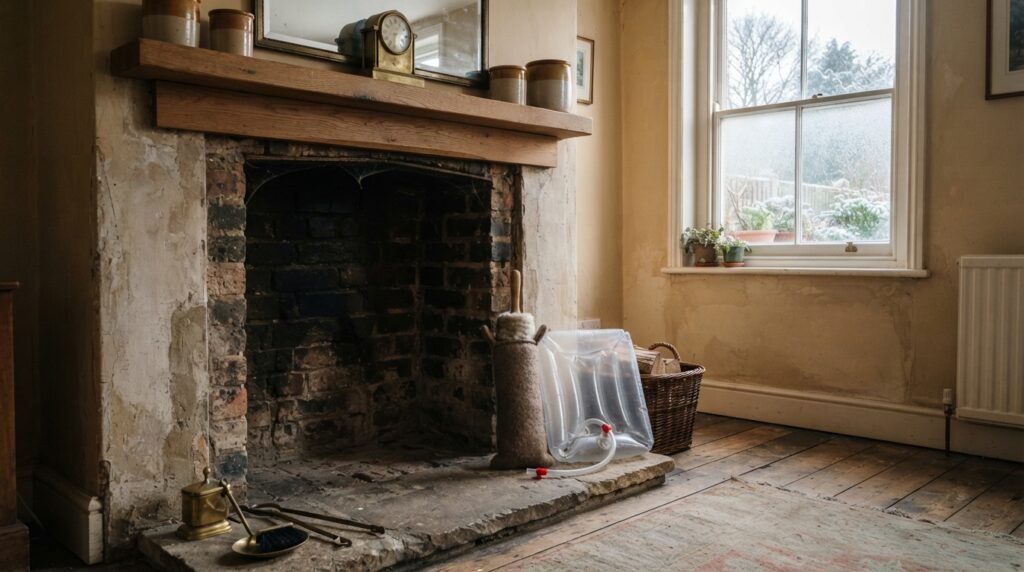
Yes, both work. An open, unused chimney is one of the biggest heat leaks in a British home — the University of Liverpool has calculated that around 5% of household heat can be lost up an uncapped chimney. A chimney balloon (inflated PVC) or a Chimney Sheep (a wool bung) sits in the flue and blocks most of that draught. The Chimney Sheep manufacturer states its wool version stops around 95% of the air while letting 5% through so the flue can still breathe, with a stated average payback of around six months. Both are cheap, DIY-fittable and completely reversible.
An open chimney is a hole in your ceiling that runs all the way to the sky. Even a fireplace you never use is quietly pulling warm air out of the room and letting cold air fall down. Here’s what actually stops it, and the important safety rules.
How much heat does an open chimney lose?
Chimney Sheep quotes University of Liverpool research calculating that about 5% of household heat is lost through an open chimney. That’s not a huge headline percentage, but it’s higher than most people expect, and it comes on top of the constant cold draught into the room, which makes the room feel colder even before you look at the bill.
Chimney balloons
A chimney balloon is a thick PVC bag that you push up into the throat of the chimney (the narrow bit above the fireplace opening) and inflate through a mouthpiece. Once inflated it seals against the flue walls, blocking almost all airflow. Advantages: cheap, easy to buy in different sizes, and completely reversible. Disadvantages: PVC deflates over time, so you may need to top it up, and it’s not breathable, so any moisture that finds its way up the flue can’t escape.
Chimney Sheep and other wool bungs
The Chimney Sheep is a wool disc on a handle that pushes up into the flue and jams itself in with the same friction as a bath sponge in a plug hole. Chimney Sheep says its Herdwick wool version is naturally breathable and lets moisture permeate through, stopping about 95% of the air while letting the remaining 5% through for ventilation — so a small amount of air movement remains, which stops damp forming in the flue. It’s a permanent-feeling fix for a chimney you never use, and easy to lift out for a chimney sweep.
A wool chimney draught excluder
Breathable, sized to your flue
Sizes for different flue diameters
Reusable and reversible
Measure your flue at the throat, just above the fireplace opening, before ordering — sizes vary. Look for a version with a stiff wire handle so you can lift it out cleanly, and check the manufacturer’s guidance on breathability if your chimney tends to get damp. Fit a visible ribbon or dangle in the fireplace opening as a reminder not to light a fire with it in place.
Good for: unused open chimneys in draughty rooms; period properties where a cap on the pot isn’t allowed; renters who want a reversible fix.
Less good for: chimneys still in occasional use, where you have to remember to remove it every single time. Wool can smell mildly for the first day or two.
A chimney balloon
Cheaper, seals tighter, PVC not breathable
Fits a range of flue sizes
Top up if it goes soft
A chimney balloon is a lower-cost alternative that seals even tighter than wool, at the cost of not breathing. If your flue is dry and well-swept, a balloon is fine; if there’s any damp risk (a north-facing wall, a broken pot cap letting rain in), the wool option is safer. Measure the flue and buy the size closest to it, then push and inflate. Fit a visible reminder so no-one lights a fire.
Good for: tightest possible seal on a dry, sound flue; lowest cost option; easy to store folded when not in use.
Less good for: damp flues, where non-breathable PVC can trap moisture. Slow leaks over months mean you’ll need to top it up occasionally.
Which one should you pick?
- Chimney you never use, dry flue — either works; wool is slightly more forgiving.
- Chimney you never use, but the flue gets damp — go for a wool option that lets moisture pass.
- Chimney you use occasionally — go for whichever is easiest to remove and replace, and hang a bright ribbon in the opening.
- Working wood burner or fire — don’t fit one at all. Instead, close the vents on the appliance when not in use, and use a proper fire door.
What about capping the chimney pot instead?
A permanent chimney cap on the pot at roof level stops rain and birds getting in and reduces draught, but it doesn’t fully seal the flue and it requires a roofer. It’s the right choice for a chimney you’re absolutely never going to use again, or where you want to keep birds and squirrels out. A balloon or wool bung is the right choice for anything you might want to reverse. The two can be combined.
Frequently asked questions
Do chimney balloons and chimney sheep really work?
Yes. The Chimney Sheep manufacturer states its wool version stops around 95% of the air, and University of Liverpool research calculates that an open chimney loses around 5% of household heat overall.
Can I light a fire with a chimney balloon in place?
Absolutely not. Any chimney draught excluder must be removed before lighting a fire — a blocked flue will fill the room with smoke and carbon monoxide, and the excluder itself will burn or melt. Always leave a visible reminder in the fireplace opening.
Will a chimney draught excluder cause damp?
Not if the flue and pot are sound and the excluder allows some ventilation. Chimney Sheep says its wool version lets around 5% of the air through and is naturally breathable to moisture. A PVC balloon seals more tightly, which is fine on a dry flue but riskier if damp is already an issue.
Sources
- Chimney Sheep — Chimney Sheep FAQs
- University of Liverpool report — Chimney Sheep draught excluder efficacy report
Related reading: our draught-proofing guide, air bricks and trickle vents and top 10 ways to lower your heating bill.
Compare current wool chimney draught excluders at Amazon UK.