Air Conditioning and Menopause: Managing Night Sweats and Hot Flushes
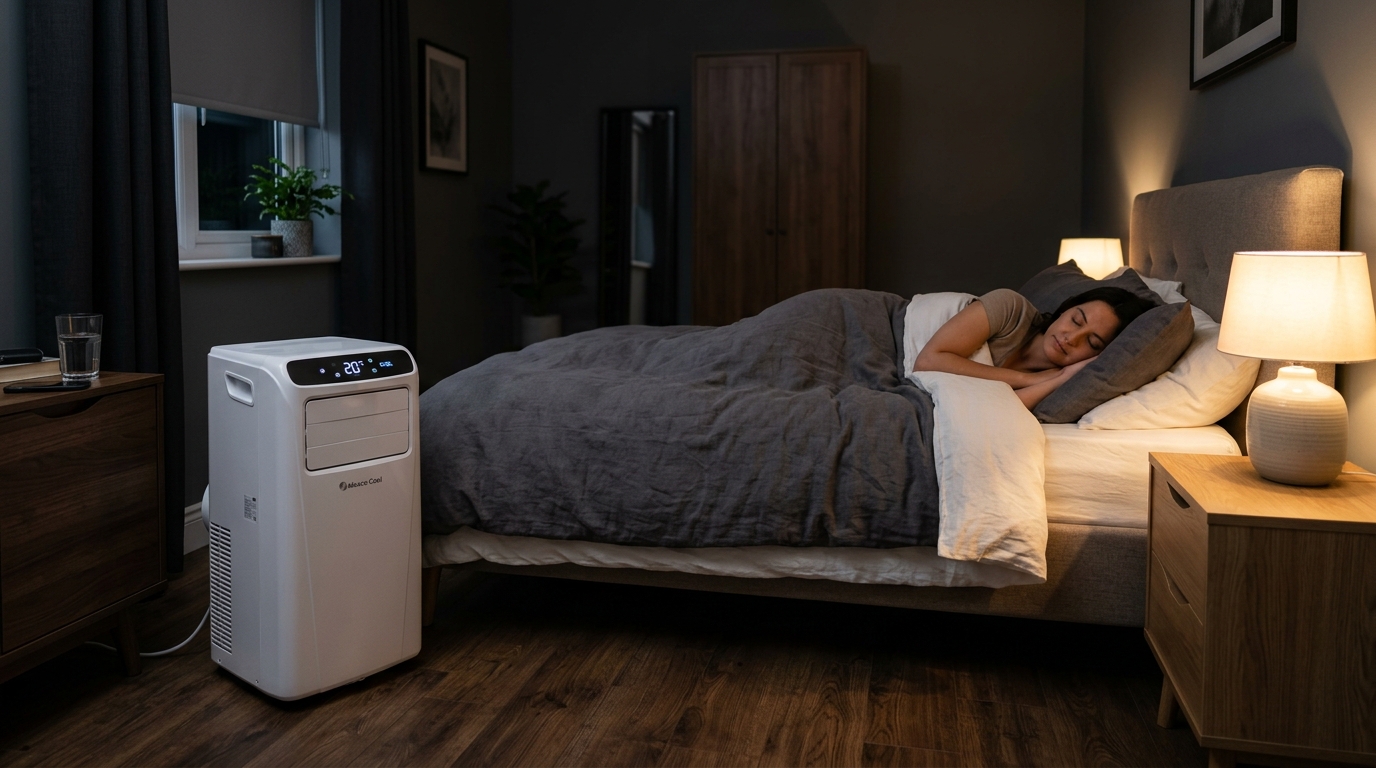
Cooling the room won’t stop a hot flush — flushes originate internally, not from the air temperature. What a cool room does is shorten the recovery: after a night sweat, a cool, dry room lets you settle back to sleep instead of lying awake in damp bedding waiting for the room to catch up. That’s a real and underrated benefit. The other half is humidity — an air conditioner dries the air as it cools, and drier air lets sweat evaporate more effectively, which is exactly what you need at 3am.
Night sweats are among the most disruptive menopausal symptoms, and the sleep loss compounds everything else. Here’s what the room can and can’t do.
What cooling does and doesn’t do
It doesn’t prevent flushes. Hot flushes and night sweats arise from changes in how the body regulates temperature — they’re internally generated, and a cooler room doesn’t stop them starting.
It does change what happens next. Two things:
- Faster recovery. After a sweat, you need to shed heat and dry off. In a warm room that takes a long time and you’re awake for all of it. In a cool one it’s quicker, and you’re more likely to get back to sleep.
- Lower humidity. An air conditioner removes moisture as it cools — that’s where the tank water comes from. Sweat evaporates more effectively from skin in drier air, which is the mechanism your body is relying on. Our “feels like” guide covers why humidity matters as much as temperature.
Consistency matters too. A room that swings warm and cool through the night causes its own waking. Our night waking guide covers that.
Setting the room up
- Shade the window from mid-morning, before the room heats. The highest-value free action — closing curtains at bedtime achieves very little when the walls and furniture have been absorbing energy all day. Our blinds guide covers what to look for.
- Purge ventilate once outside is genuinely cooler than inside, then shut everything in the morning. Our timing guide covers judging it, and most households get it wrong by hours.
- Pre-cool rather than run all night if noise is a problem. A well-sealed, shaded room coasts for hours.
- A fan as well as, or instead of, cooling. Moving air across skin accelerates evaporation, which is exactly what helps during a sweat. A fan on a low setting within reach of the bed is one of the most practical things you can have.
- Natural fibres. Cotton and linen bedding and nightwear manage moisture better than synthetics, which trap it.
- Layers rather than one heavy duvet, so you can adjust without getting up.
- A separate duvet from your partner if you share a bed — the single most effective change many couples make, and it removes the argument about the window.
- Water and a damp flannel within reach, so you don’t have to get up and fully wake.
The partner problem
Worth naming, because it’s the practical obstacle in a lot of households: one person wants the room at 17°C and the other is cold.
What tends to work: separate duvets of different togs, a fan aimed at one side of the bed rather than cooling the whole room, and cooling the room moderately rather than dramatically. A room at 18°C with a fan on one side is usually a workable compromise where 15°C for everyone isn’t.
The picks
A bedside fan with a remote
The practical one
Instant
No venting
Genuinely the most useful item for night sweats specifically, and the cheapest. A fan you can switch on from bed without getting up, aimed at you rather than the room, accelerates evaporation exactly when you need it — and you can turn it off again once you’ve cooled, rather than cooling the whole room all night. A remote matters here more than usual.
Good for: targeted, immediate relief during a sweat; shared bedrooms where the other person doesn’t want the room cold; low running cost.
Less good for: genuinely hot nights, where the air itself is too warm for evaporation to help much. It also adds noise, and doesn’t reduce humidity — on a muggy night that limits how much it does.
MeacoCool MC Series Pro 9000
For the humidity too
16–26m²
52 dB low fan
App control
Meaco publish 52 dB on low fan, a 16–26m² range, an A rating and a two-year warranty, with app control and a dehumidify mode. The dehumidification is the part that earns its place here — a drier room helps sweat evaporate, which a fan alone doesn’t address. The app lets you pre-cool before bed so you’re not starting the machine from a warm room at midnight.
Good for: muggy nights where a fan has stopped helping; pre-cooling so the room is ready; anyone whose sleep disruption is significant enough to justify the outlay.
Less good for: anyone very noise-sensitive — Trusted Reviews measured 58.5 dB fan-only in independent testing, above the published low-fan figure, and compressor cycling can wake you as readily as a sweat. It also won’t stop a flush happening. If your partner shares the room, a fan on your side may cause less friction than cooling the whole room.
The winter half
Worth planning for. Night sweats don’t stop in October, and a bedroom that’s heated to 20°C overnight is harder to recover in than one at 17°C.
Practical points: turn the bedroom radiator down rather than off — off produces cold surfaces and condensation, which brings its own problems, as our damp guide covers. A thermostatic radiator valve lets you set that room independently, and our heating at night guide covers the wider question.
A reverse-cycle unit is worth considering if you’re buying anyway — it works in both directions, so it isn’t sitting unused for eight months. Our heat pump guide covers those.
Frequently asked questions
What temperature should the bedroom be?
Cooler than a living room, and consistent. There’s no specific figure for menopausal symptoms — go by what lets you settle back to sleep. Consistency matters as much as the number, since swings cause their own waking.
Will air conditioning stop my hot flushes?
No. Flushes are internally generated. What a cool, dry room does is shorten the recovery afterwards, which for sleep is the part that matters. If flushes are significantly affecting your life, that’s a GP conversation — there are treatment options.
Is it worth the running cost?
Only you can weigh that, but do it with real numbers rather than assumptions. Our running cost guide covers the calculation, and the figure is usually lower than people expect. Sustained sleep loss has its own costs.
Does the dryness cause problems?
It can — a dry throat or eyes if the room is over-dried or you’re in the airflow. Don’t set it colder than you need and angle the louvres away from the bed. Our dryness guide covers the fixes.
Sources
- NHS — Menopause
- NICE — Menopause: diagnosis and management (NG23)
- Women’s Health Concern — Women’s Health Concern
- NHS — Sleep and tiredness
- Met Office — Tropical nights and their impact
- Trusted Reviews — MeacoCool MC Series Pro 9000 review
Related reading: our night waking guide and tropical nights guide.
Compare options at Amazon UK. For night sweats specifically, a bedside fan with a remote is the cheapest thing that helps — try that before committing to cooling.