Are Electric Heated Gloves and Socks Worth It for Cold Hands and Feet? (UK)
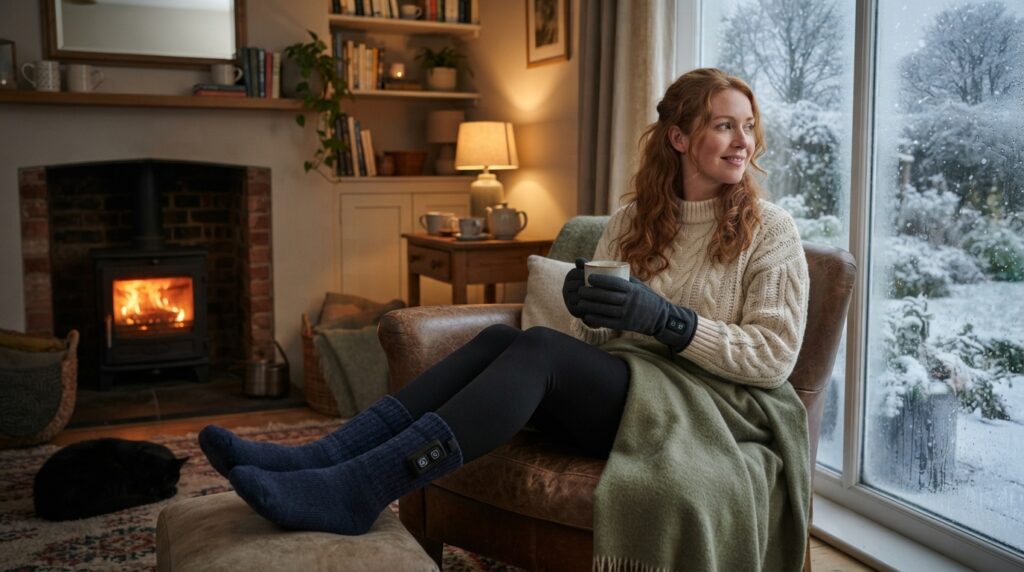
For people whose hands and feet stay cold indoors as well as out — particularly anyone with Raynaud’s or poor circulation — the answer is usually yes. Scleroderma and Raynaud’s UK’s advice is to use hand warmers, feet warmers, gloves and thick socks, and battery-powered heated versions do the same job for longer, on demand. For everyone else, they’re a niche buy: a heated throw or a warmer room is cheaper and more comfortable at home. Where heated wearables really pay off is for outdoor use in the cold — walking the dog, standing at a bus stop, watching football — and for people who work in cold spaces. This is general information, not medical advice. If cold hands and feet are new, one-sided or painful, see a GP.
Cold hands and feet are one of the most common winter complaints in the UK, and the market has responded with a flood of battery-heated gloves, socks, gilets and slippers. Whether they’re worth it depends less on the product than on why your hands are cold in the first place. Here’s how to work that out, and what to look for if the answer is yes.
Are your cold hands the room’s fault, or yours?
Start with the free test. Warm the room properly — UK Health Security Agency advice is to heat to at least 18°C where you can — put on layers, and sit for half an hour. If your hands and feet warm up, the room was the problem, and heated wearables are the wrong tool. A better-heated room, or targeted personal heat like our heated throws and electric blankets, will do more for less. Our always-cold-hands-and-feet guide covers the room side in more detail.
If your hands and feet stay cold even in a warm room, or they go white, then blue, then red when you touch something cold, that’s when heated wearables start making sense.
Raynaud’s and cold-sensitivity
When they earn their money
- Outdoors in the cold. Dog walkers, football spectators, keen photographers and anyone standing still in cold weather.
- Cold workplaces. Delivery drivers, market traders, warehouse workers.
- Cold hobbies. Fishing, birdwatching, cycling.
- Winter travel, particularly waiting on platforms or in draughty stations.
- People with Raynaud’s or poor circulation, indoors and out.
Heated gloves: what to look for
The most important spec isn’t the top heat setting but battery life. A pair that runs on high for an hour then dies isn’t much use for a two-hour dog walk. Look for the manufacturer’s stated run time on the low setting, since that’s what you’ll actually use most.
Battery-powered heated gloves
For outdoor cold and Raynaud’s flare-ups
Three heat settings on most models
Windproof outer, insulating inner
The features that matter most: at least three heat settings so you’re not stuck on the hottest, a stated run time you can live with on the middle setting, a windproof and water-resistant outer, and touchscreen-friendly fingertips if you’ll use your phone. Check the manufacturer’s stated battery life on both high and low, and that the batteries are user-replaceable rather than sealed in. Sizing runs small on many models, so measure your hand and check the size chart.
Good for: outdoor use in cold weather; people with Raynaud’s or poor circulation; touchscreen-friendly fingertips for phone use.
Less good for: long days out on the highest setting — batteries drain fast on high. They’re also heavier and bulkier than ordinary gloves, and they need charging.
Heated socks: the details that matter
Heated socks work the same way — small rechargeable batteries around the ankle warm elements woven into the foot. The two questions people don’t ask often enough: where does the heat actually go, and how do you wash them.
- Toes or arch? Most cold-sensitive people feel it worst in the toes, so a sock that concentrates the heating element there is more useful than one that warms the arch.
- Battery pack position. A pocket around the top of the sock is fine for walking; if you’re cycling or running, look for one that doesn’t sit under a shoe strap.
- Washing. Most heated socks are hand-wash only with the batteries removed. Check before buying — a sock you can’t wash is a sock you won’t wear.
- Layering. A thin liner sock inside a heated one adds insulation and stops the element sitting directly on skin, which some people find uncomfortable.
Rechargeable heated socks
For cold toes, outdoors and at desks
Battery packs around the ankle
Three heat settings on most models
Look for a pair with the heating element focused on the toes rather than the arch, batteries that sit at the top of the sock so they’re clear of your footwear, and a stated run time you can live with on the middle setting. Merino or thick synthetic blends stay warmer if the battery runs out mid-walk. Check the wash instructions before buying, since a sock you can’t wash easily is a sock you’ll wear once. Sizing varies widely, so measure your foot rather than trusting a size label.
Good for: cold toes at desks or on walks; layering under boots; Raynaud’s flare-ups affecting the feet.
Less good for: everyday wear — most are hand-wash only and are too bulky for slim boots. Batteries add weight around the ankle.
The alternatives worth trying first
If cold hands and feet are only a problem indoors, heated wearables usually aren’t the right answer. A warmer room, a well-insulated pair of slippers, a hot drink in your hands, and personal heating like our heated throws and hot water bottles tackle it more comfortably for less money. Rechargeable hand warmers are a good halfway house too — a pocketable puck that keeps your hands warm on a walk without the bulk of heated gloves.
When to see a GP
Frequently asked questions
Do heated gloves and socks actually work?
Yes, most rechargeable models produce genuine warmth for outdoor use. How useful they are depends on the battery life, so check the manufacturer’s stated run time on the middle heat setting rather than the maximum.
Are heated wearables safe for people with Raynaud’s?
Scleroderma and Raynaud’s UK includes hand warmers, feet warmers, gloves and thick socks in its list of things that help. Battery-heated versions do the same job for longer. If cold-management measures aren’t enough, SRUK advises seeing a GP.
How long do the batteries last?
It varies by model and heat setting. Look at the manufacturer’s stated run time on low, since that’s what most people use once the initial cold is off. Some models let you replace batteries; sealed ones can’t be replaced when they age.
Can I wash heated socks and gloves?
Usually only by hand with the batteries removed. Check the care label before buying — a pair you can’t easily wash is a pair you’ll stop wearing.
Sources
- Scleroderma and Raynaud’s UK — Managing your Raynaud’s symptoms
- UK Health Security Agency — Cold weather alert issued by UKHSA
Related reading: our always-cold-hands-and-feet guide, heated throws and hot water bottles and cheapest way to heat one room.
Compare current rechargeable heated gloves at Amazon UK.