The Best Time to Open and Close Windows in a Heatwave (UK)
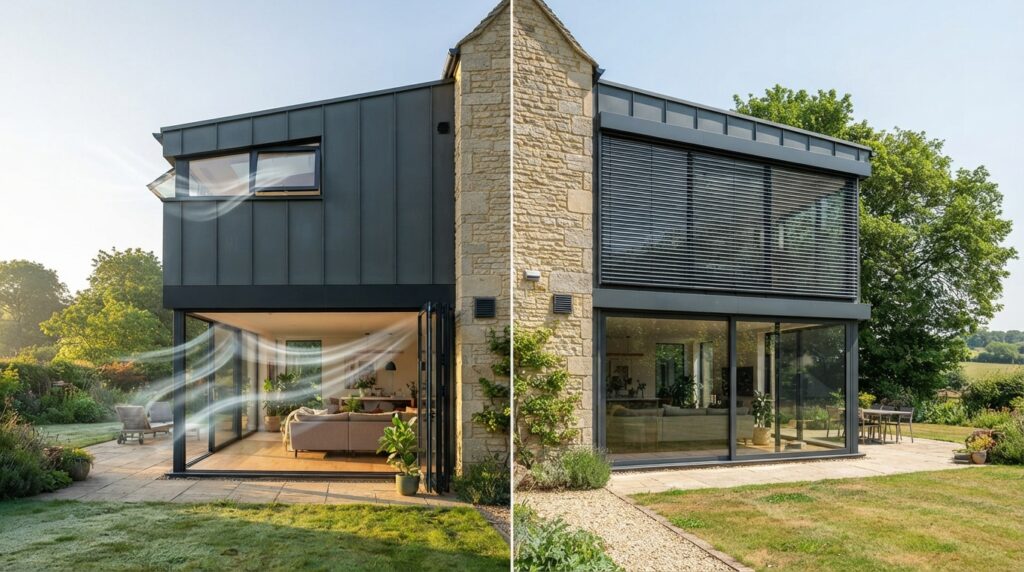
One rule governs everything: open the windows when it’s cooler outside than inside, and close them when it’s hotter outside than inside. In a typical UK heatwave that means shut and shaded from mid-morning until early evening, then open from evening through the night until early morning. But don’t follow the clock — follow the thermometer, because the crossover point moves with the weather, your house and which way your rooms face. The instinct to fling the windows open when you’re hot is the single most common mistake: if it’s 30°C outside and 24°C inside, opening up lets heat in. And when you close the windows in the morning, close the curtains and blinds too — half the people who get the windows right leave the sun streaming in.
This is the most valuable free cooling habit there is, and almost the whole of passive cooling in a British home depends on getting it right. Here’s the method in full.
The rule, and why it feels wrong
Air moves heat. Open a window and you exchange inside air for outside air — which helps only if the outside air is cooler. On a hot afternoon it usually isn’t, so opening the window is actively importing heat, while also letting in the warm air your shading has been working to keep out.
The reason this feels counter-intuitive is that a breeze feels good even when it’s warm, because moving air helps sweat evaporate. So an open window on a hot day genuinely feels better on your skin while making the room hotter. Both things are true at once. The fix is to get the cooling from a fan — which moves air across you without importing outdoor heat — and keep the windows shut. Our fan types guide covers that.
Finding your crossover point
The crossover is the moment outdoor temperature drops below indoor temperature. It’s the signal to open up, and it’s worth knowing yours rather than guessing:
- Put a thermometer in the room you care about most — usually the bedroom. People routinely misjudge indoor temperature by several degrees. Our thermometers guide covers choosing one, and a model showing humidity too is more useful still.
- Check the outdoor temperature from a weather app or an outdoor sensor.
- When outside drops below inside, open everything. In a UK heatwave that’s often early-to-mid evening, though a west-facing room that’s been baking may stay warmer for longer.
- In the morning, close up before they cross back — typically not long after sunrise, and earlier than most people expect on a hot day.
A useful detail: your house lags behind the outdoor temperature. Buildings store heat, so indoors often peaks in the evening, well after the outdoor peak — which is exactly why a bedroom can feel hottest at bedtime on a day that cooled off outside hours earlier.
The daily routine
- Early morning (coolest part of the day). This is your last and best chance to flush heat out. Open everything wide and get air moving through the house.
- Once the sun is up and the temperature climbing — close up. Windows shut, curtains and blinds closed on any window that will catch sun. Do it before the room warms, not after.
- Through the day. Keep it shut and shaded. Use fans for comfort, not open windows. Avoid adding heat indoors — ovens, tumble dryers, and so on.
- Late afternoon / early evening. Start checking the crossover. Resist opening up just because the sun’s off the front of the house; check the actual temperatures.
- Evening and overnight. Once outside is cooler, open up fully and create a through-draught. This is when you do the real work of removing the day’s stored heat.
Cross-ventilation: openings on opposite sides
An open window on its own does surprisingly little — air needs somewhere to come in and somewhere to go out. What moves serious volumes of air is a path through the building:
- Open windows on opposite sides of the house so air travels across it, rather than two windows on the same wall.
- Open the internal doors on the path so air can actually flow.
- Exploit the stack effect. Warm air rises, so an opening high in the house — an upstairs window, a landing window, a roof light — acts as an exhaust while cooler air is drawn in lower down.
- Put a fan in a window to force it. A fan facing outwards in an upstairs or warm-side window pumps hot air out and pulls cool air in through the rest of the house — by far the most effective free cooling move there is. Our box-fan window guide covers which way to face it.
Which windows to open — it’s not all of them equally
A detail that gets missed: not all outdoor air around your house is the same temperature.
- Open the shaded side for intake. Air on the shady, north or garden side of the house is often noticeably cooler than air sitting against a sun-baked wall or patio.
- Be wary of a window in direct sun, even in the evening — a west-facing wall and its paving can still be radiating heat long after the sun has moved off, so the air just outside is warmer than the general outdoor temperature.
- Use the upstairs as the exhaust, since hot air collects there.
The mistake almost everyone makes
Holding onto what you gained
Night ventilation fills the house with cooler air; the daytime job is keeping it. That means shutting up promptly in the morning, keeping shading closed, and reducing the gaps warm air leaks in through — our draught-proofing guide covers the sealing side, and it’s the same gaps that lose heat in winter.
The genuine exceptions
Night ventilation isn’t available to everyone every night, and it’s worth being honest about why:
- Security. Open ground-floor windows overnight are a real risk. Favour upstairs openings, use restrictors, and don’t leave anything climbable outside.
- Children falling. Open upstairs windows and young children are a serious combination. Fit restrictors — releasable ones on fire-escape windows — per our window restrictors guide.
- Humidity. If outdoor air is cooler but very humid, you’re importing moisture along with the coolness, which can leave rooms feeling clammy. It’s usually still worth doing, but it’s why some nights feel less improved than the thermometer suggests.
- Pollen and air quality. A genuine blocker for hay fever sufferers in summer, and for anyone on a busy road or near a pollution source. If open windows aren’t viable, mechanical cooling with the windows shut becomes much more attractive.
- Noise. If opening the window means traffic or nightlife noise, you’re trading heat for sleeplessness. Our secondary glazing guide covers the noise side, though note it doesn’t help with solar gain.
- Rain and wind. Obvious, but worth building into the habit — and a reason to check before going to bed.
When the crossover never comes
On a tropical night — where the outdoor temperature doesn’t drop below 20°C — there may simply be little or no cool air to bring in, and the whole method runs out of road. These are becoming more frequent in the UK, as our tropical nights guide covers. On those nights, ventilate anyway if outside is even slightly cooler, rely more on airflow across your body and the measures in our sleeping in a heatwave guide — and accept that this is the point at which cooling that removes both heat and humidity earns its cost.
Frequently asked questions
Should I close my windows during a heatwave?
Yes, whenever it’s hotter outside than inside — usually mid-morning to early evening. An open window then brings heat in. Open up once outside has dropped below your indoor temperature, typically in the evening and overnight.
What time exactly should I open them?
There’s no fixed time — it depends on the weather, your house and orientation. Use a thermometer indoors and check the outdoor temperature; open when outside drops below inside. In practice that’s often early evening, and you close again shortly after sunrise.
Why is my house hottest in the evening when it cooled off outside hours ago?
Because buildings store heat and release it slowly, so indoor temperature lags behind outdoor. That’s also why the evening flush matters so much — you’re removing heat the structure absorbed during the day.
Is one open window enough?
Not really. Air needs an inlet and an outlet, so open windows on opposite sides with internal doors open, and use an upstairs opening as the exhaust. A fan in a window facing outwards multiplies the effect.
Should I close the curtains as well?
Yes — and this is the commonly missed half. Closed windows stop warm air; only shading stops sunlight, which is usually the bigger heat source. Close both, before the sun reaches the window.
What if I can’t open windows at night for security or hay fever?
Use restrictors and prioritise upstairs windows for security; for pollen or poor air quality, ventilation may not be viable, which makes shading, sealing and mechanical cooling with the windows shut the more realistic route.
Sources
- Energy Saving Trust — Keeping your home cool in summer
- NHS — Heat exhaustion and heatstroke
- Met Office — Heat-health advice
- GOV.UK — Approved Document O: Overheating (ventilation and solar gain)
Related reading: our box-fan window guide and no-AC cooling guide.
A fan in the window moves far more air than an open window alone. Compare current options at Amazon UK.