Do Smart Thermostats Actually Save Money? Hive vs Nest vs tado (UK)
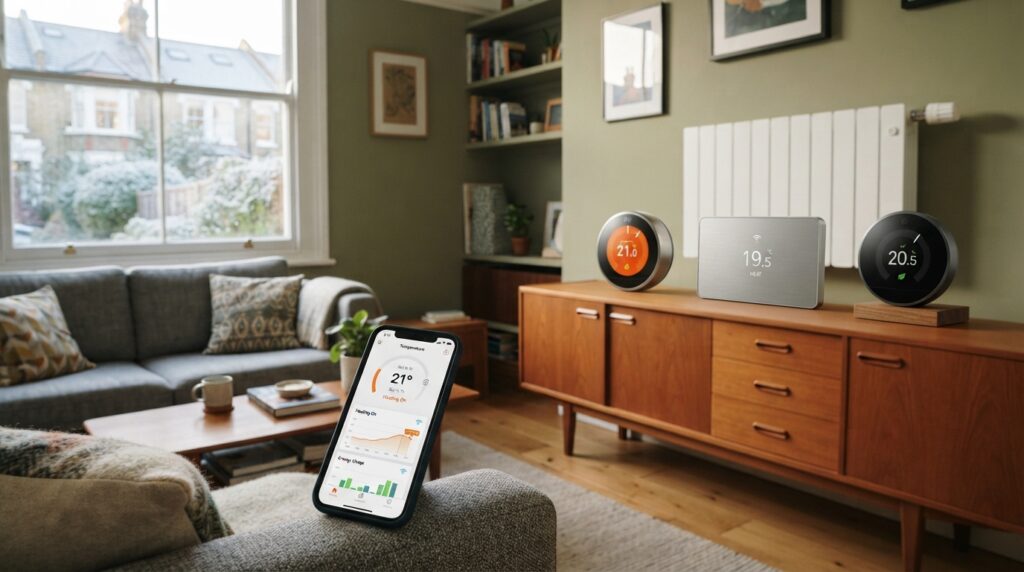
Yes, but only if they let you do something you weren’t already doing. The Energy Saving Trust puts the value of using heating controls effectively at around £100 a year in GB and £110 in Northern Ireland — a figure any competent thermostat, smart or not, can achieve. Which? is blunt about the smart version: whether it saves you money depends on how you currently control your heating. If you already run a good weekly programmer well, a smart thermostat’s savings will be small. If your heating is on a timer you never touch, or heats an empty house, a smart thermostat could pay for itself in a winter or two. The three big UK brands — Hive, Google Nest and tado° — all do the basics; the differences are in features, appearance and app quality.
Smart thermostats have been on the market long enough that the initial hype has faded. Reviews now focus on the sensible question: what does a smart thermostat actually do that a decent old-fashioned programmer with TRVs doesn’t?
What “smart” actually gets you
Which?’s testing of 32 models highlights the features that save money in practice:
- Learning routines that program themselves based on what you actually do, rather than what you thought you’d do when you set the schedule.
- Geofencing or motion sensors that turn heating down when your phone leaves the house.
- Zonal control — heating individual rooms rather than the whole house, using smart TRVs.
- Boiler modulation, where the thermostat talks to a compatible boiler and asks it to run gently instead of full-blast, cutting cycling.
- Hot water scheduling where the boiler is a combi with a hot water tank.
The three big UK brands, honestly compared
Hive
British Gas’s Hive is the easiest starting point for most UK homes. It runs from a wall-mounted thermostat and a dedicated hub, uses a simple app, and has a well-tested Do-It-Yourself install path for common boiler setups. Its schedule-based approach suits people who want smart control without the learning-mode learning curve. It also has hot-water control on models designed for it.
Hive Active Heating
Straightforward and widely supported
Schedule and geolocation modes
Hot water control on compatible boilers
Look for the current generation (branding changes over time), check that it works with your boiler wiring, and confirm whether you want the DIY install kit or professional fitting. Check that any zonal TRVs you might add later are the current-generation Hive ones, since older TRVs may no longer be sold.
Good for: households wanting schedule-based control; combi boilers with hot water tanks; those already using British Gas or Hive’s other smart home kit.
Less good for: unusual boiler setups — check compatibility first. The hub adds one more thing to plug in.
Google Nest
Nest’s Learning Thermostat is the option to consider if you want the thermostat to program itself. It watches your patterns for a week or two and builds a schedule from them, then adjusts based on your daily behaviour. It looks like a piece of design rather than a piece of central-heating kit, which people either love or don’t care about. Nest also uses geofencing via the Google Home app.
Google Nest Learning Thermostat
Programs itself around your patterns
Google Home integration
Distinctive circular display
Confirm the model is the current UK version (Nest models differ by region) and that the heating link included covers your boiler wiring. If you already have Google Home in the house, the ecosystem link is a real plus; if you’re an Apple household, it matters less. Some Nest models don’t handle hot water tank control the same way as combi setups — check before buying if you have a hot water cylinder.
Good for: people who dislike setting schedules; homes already in Google’s ecosystem; anyone who wants the thermostat to look nice.
Less good for: complex hot water tank setups, where compatibility is patchier than Hive’s. Learning mode takes days to settle.
tado°
tado° leans hardest into two features that Which? highlights as genuine savers: geofencing and zonal control via smart radiator thermostats. If different rooms in your house genuinely need different temperatures at different times — a home office in the day, bedrooms in the evening, spare room rarely — a full tado° setup with smart TRVs is the option that best matches that. It also supports boiler modulation on compatible boilers, running the boiler gently rather than in full-blast cycles.
tado° Smart Thermostat
Best for zonal, room-by-room heating
Geofencing per household member
Works with many boilers
The tado° ecosystem grows: the wall thermostat is the starter kit, but the real efficiency case is adding smart TRVs to rooms you want on their own schedule. Check the compatibility list for your boiler, and whether it needs the wired kit or wireless kit. tado° has offered a subscription (Auto-Assist) for the geofencing feature at different points — check the current terms before buying.
Good for: homes with rooms needing different schedules; households where people come and go on different rhythms; boiler modulation on compatible boilers.
Less good for: households wanting one setup and no ongoing fuss — check any current subscription requirement for advanced features. Building out zonal TRVs is a longer-term project.
When a smart thermostat probably won’t pay off
Which? flags the honest limits. A smart thermostat won’t fix an uninsulated house or a badly-fitting front door, and if you already programme your heating well and only heat rooms you’re in, the savings will be small. If your Wi-Fi is unreliable, or you don’t want the boiler to depend on an app, a good manual programmer with TRVs will get you most of the way there for a fraction of the cost. Our winter thermostat guide covers the manual side.
Frequently asked questions
Do smart thermostats really save money?
Which? says the answer depends on how you currently control your heating. If you already set a good schedule and use TRVs, savings will be small. If your heating runs on a fixed timer that doesn’t match your life, a smart thermostat could pay for itself in a winter or two.
Which smart thermostat is best in the UK?
Which? has tested 32 models across brands including Hive, Google Nest, tado°, Honeywell, Drayton, Worcester Bosch, Bosch and Netatmo. The right one for you depends on features (learning vs schedule, zonal control), boiler compatibility and what other smart kit you already have.
Can I fit a smart thermostat myself?
Some come with a DIY install kit for common boiler setups, but many still benefit from a professional install — particularly if you have a boiler with a hot water tank or unusual wiring. Check the manufacturer’s install guide against your boiler before buying.
Sources
- Which? — Best smart thermostats 2026
- Energy Saving Trust — Thermostats and heating controls
Related reading: our winter thermostat guide, top 10 ways to lower your heating bill and cheapest way to heat one room.
Compare current smart thermostats at Amazon UK.