How to Stop Your Car Windscreen Freezing Overnight (UK)
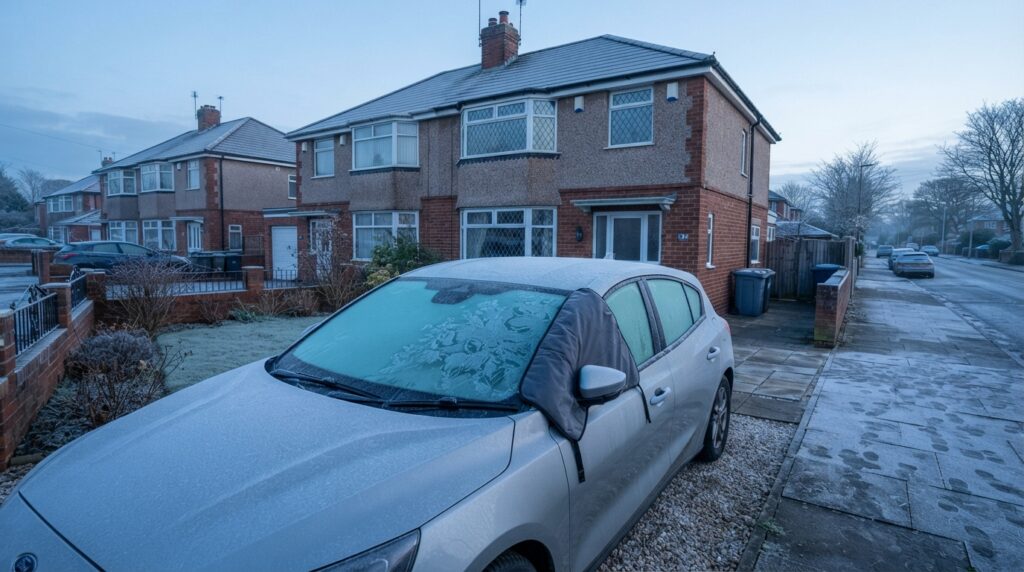
The easiest fix is a windscreen cover that goes on the outside overnight and comes off with the ice still on it. Costs less than a tenner, saves 10 minutes every frosty morning. On the day, the RAC advises de-ice spray and a proper ice scraper, or lukewarm (not hot) water in a pinch. Turn the engine on with the heater on the windscreen setting, but don’t leave the car unattended while it warms up — that’s a fine and an insurance risk. Windscreen wipers must be free of ice before you use them.
Cold clear nights in the UK reliably deliver a frozen windscreen the next morning, and there’s a right way and several wrong ways to deal with it. Here’s what the RAC actually recommends, and the low-effort overnight fix most people don’t bother with.
The overnight fix: a windscreen cover
A magnetic or strap-on windscreen cover is the single most useful winter buy for anyone parking a car outside. It sits over the outside of the glass overnight, so any frost forms on the cover rather than on your windscreen. In the morning you lift it off, shake the ice off, and get in. The RAC specifically recommends windscreen and door-mirror covers to prevent ice buildup overnight, significantly reducing morning de-icing time.
An external windscreen frost cover
10 minutes saved every frosty morning
Secures via door edges or straps
Folds away when not in use
Look for one that fits your car’s screen size, secures at both sides (so wind doesn’t blow it off), and has flaps that trap under the front doors so it can’t be lifted off easily. Some include ear covers for the wing mirrors, which stop those needing de-icing too. Store it folded in the boot so it’s there when you need it. Measure the width of your windscreen before buying, as sizes vary from small hatchbacks to large SUVs.
Good for: cars parked on the street or driveway; drivers in a rush in the morning; anyone who used to arrive at work with cold hands after scraping.
Less good for: heavy snow, where the cover can freeze to the car; garaged cars, which don’t need one. Some cheap covers blow off in high wind.
If you didn’t cover it: how to de-ice properly
The RAC’s advice is straightforward:
- Turn on the engine and set the heater to the windscreen defrost setting. Air conditioning helps too, as it dries out the air. Do this from the driver’s seat while you scrape — don’t walk away.
- Spray de-icer over the outside of the windscreen. The RAC recommends commercial de-ice aerosols as the preferred method, since they clear ice quickly without refreezing.
- Scrape with a proper ice scraper. The RAC advises against dustpans, credit cards or similar — a real scraper removes ice without scratching the glass.
- Check the wipers aren’t frozen to the glass before you use them, or you’ll damage the motor and possibly tear the rubber blades.
- Clear all windows, mirrors and lights before setting off. Driving with a “porthole” cleared through the frost is illegal and dangerous.
What NOT to do
Leaving the engine running unattended. On a public road that’s an offence (see the warning callout above). Even on a private driveway it’s an insurance risk: the RAC quotes police warning that many insurance policies contain exclusion clauses that could invalidate cover if the car is stolen while left running with keys in.
Salt or table salt. It damages the paintwork over time.
Wipers on frozen glass. You’ll strip the rubber and possibly burn out the wiper motor.
Do de-icer sprays actually work?
Yes — that’s what the RAC recommends over improvised methods. A proper de-icer spray drops the freezing point of the water in the ice, so it melts fast and doesn’t refreeze while you scrape. Keep a can in the car, not in the house, so it’s already outside when you need it. Some people use it as a preventative the night before, spraying the screen so ice doesn’t form; that’s a wetter, less tidy alternative to the physical cover.
Longer-term measures
- Park facing east where you can, so the morning sun helps.
- Roll the wipers away from the glass the night before if a hard frost is forecast, so they don’t stick.
- Wing mirror covers save another minute or two — often sold as a pair with the windscreen cover.
- A garage or car port if you have one, obviously, but even a lean-to shelter stops the coldest clear-sky frost forming.
- For electric vehicles, most modern models let you schedule pre-heating from the app while still plugged in.
Frequently asked questions
Can I use hot water to defrost my windscreen?
No. The RAC warns that pouring hot or boiling water onto the windscreen can crack the glass through thermal shock. Lukewarm water is a last-resort alternative if you have no scraper or spray.
Is it illegal to leave your car running to defrost it?
On a public road, yes. UK regulations back Highway Code rule 123 with fixed penalties starting at £20, rising for non-payment and up to £1,000 for repeat offences. On a private driveway it’s not illegal, but the RAC points out that insurers may not pay out if your car is stolen while left running.
Do windscreen covers actually work?
Yes. The RAC recommends windscreen and mirror covers to prevent overnight ice buildup. They significantly reduce morning de-icing time and cost less than a couple of de-icer cans.
Should I turn the wipers on before the screen defrosts?
No. The RAC advises checking that windscreen wipers are free from ice before using them, or you can damage the rubber blades and the wiper motor.
Sources
- RAC — How to de-ice your car
- RAC — Could you get fined for de-icing your car?
- RAC — How to keep your windscreen clear in winter
Related reading: our summer car shade guide and storm-proofing your home.
Compare current car windscreen frost covers at Amazon UK.