Does Closing Internal Doors Actually Save on Heating?
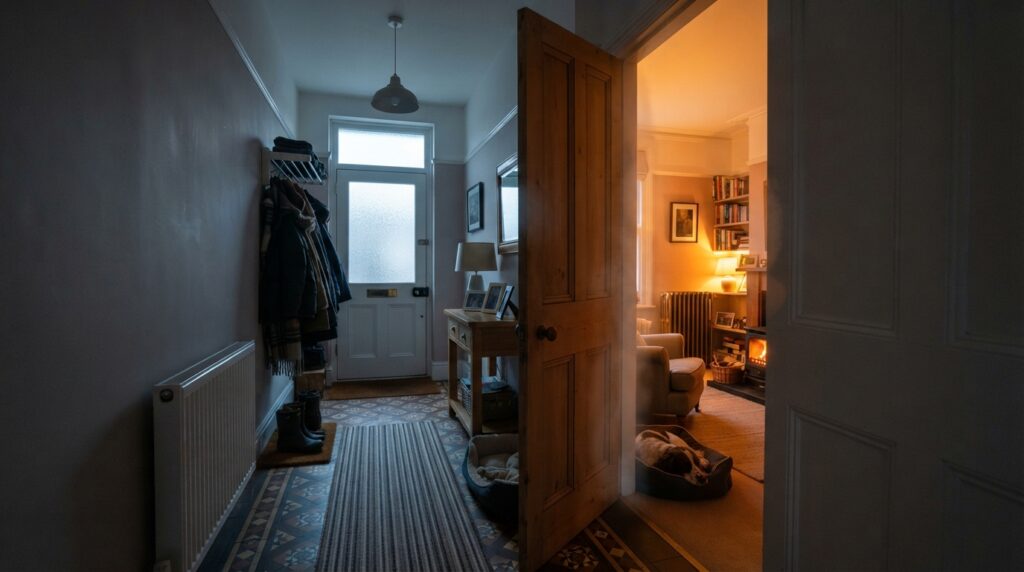
Yes — but only if you’re also turning down the radiators in the rooms you’ve closed off. Shutting a door on a radiator that’s still running full blast doesn’t save anything; it just heats a room nobody’s in, behind a closed door. The saving comes from the combination: close the door and turn the thermostatic radiator valve down, so your boiler spends its output on the rooms you’re actually using. Two caveats matter — don’t let closed-off rooms get cold enough to grow mould, and never close doors in a way that blocks ventilation to a fuel-burning appliance.
This is one of those pieces of household advice that’s roughly right but frequently misapplied. Here’s the version that actually works.
What closing a door does and doesn’t do
A closed door does two useful things.
It reduces the volume being heated. Warm air doesn’t migrate into the hall, up the stairs and into unused bedrooms. In a house with an open staircase this matters — warm air rises, and an open plan route from living room to landing is an efficient chimney for the heat you’ve paid for.
It creates a buffer. A closed unheated room between your living room and the outside wall acts as a thermal layer. That’s the same principle as an unheated porch or an internal door to a conservatory.
What it doesn’t do is reduce your boiler’s output. If the radiator behind that door is still on, the boiler is still working to heat it. You’ve just made the heat less useful to you.
The combination that actually saves
Closing the door is half of it. The other half is turning that room’s radiator down.
When you turn down TRVs in unused rooms, less of the system’s output goes there — so the rooms you are using reach temperature sooner and the whole system satisfies faster. That’s where the saving lives.
Our thermostat guide covers the settings, and our one-room heating guide covers going further and heating a single room properly.
The mould trap
Here’s where people get this wrong and create an expensive problem.
Closing a door and turning the radiator fully off leaves a cold room. Moisture from the rest of the house — cooking, showering, breathing, drying washing — migrates toward it and condenses on those cold surfaces. That’s why the closed-off spare room is so reliably the one with mould behind the wardrobe.
Turn unused rooms down, not off. A low background temperature costs far less than remediating mould, and damp is a genuine health issue rather than a decorating annoyance. Our condensation and damp guide covers this properly.
Also: give closed rooms some ventilation. Leave trickle vents open, and open the window for a few minutes when you go in. A sealed cold room is the worst combination.
Where it makes the most difference
- Houses with open staircases. A door at the bottom of the stairs is one of the highest-value doors in the house — it stops the whole ground floor’s warm air heading upstairs.
- Large or open-plan homes where one heated room opens onto a lot of unheated volume.
- Old houses with high ceilings, where there’s a lot of air to heat.
- Homes with a conservatory. The separating door should stay closed — a conservatory is a huge heat sink in winter, as covered in our cold conservatory guide.
- Anyone heating one room properly rather than the whole house.
Where it makes less difference
- Small flats, where there’s little volume to isolate and rooms share walls with other heated homes.
- Genuinely open-plan homes with no doors to close.
- Well-insulated modern homes, where internal temperature differences are smaller anyway.
- Where the thermostat is in the room you’ve closed off — see below.
Watch what it does to your thermostat
An underrated side effect.
Your thermostat controls the whole system from one location. Change the airflow in your house and you change what it reads.
If your thermostat is in the hall and you close the living room door, the hall gets less warm air — so the thermostat reads low and keeps the boiler running longer, potentially overheating the living room. Conversely, if the thermostat is in the room you’re heating, closing its door means it satisfies sooner and shuts the system down before the rest of the house catches up.
Neither is a disaster, but it’s worth knowing why the house behaves differently once you start closing doors. Our cold room guide covers thermostat placement, and our smart controls guide covers per-room control if the hall thermostat is fighting you.
Doors that earn their keep in summer too
The same principle runs in reverse.
Closing the door on a room you’re cooling is the single biggest free improvement to a portable air conditioner’s performance — you’re cooling a defined volume instead of attempting the house. Our air conditioner hacks list covers it alongside the other free wins.
And closing doors on sun-facing rooms during a heatwave keeps that heat contained rather than letting it spread, which is covered in our explainer on UK housing.
The practical routine
- Identify the rooms you actually use on a winter evening. For most households it’s fewer than they think.
- Turn TRVs down — not off — in the rest. Check they aren’t seized first.
- Close those doors, including the one at the bottom of the stairs if you have one.
- Leave trickle vents open in the closed rooms, and air them periodically.
- Never restrict air to a combustion appliance.
- Watch for condensation in the closed rooms for the first couple of weeks. If windows are streaming, turn the background heat up slightly and ventilate more.
Frequently asked questions
Should I close the door on a room with a radiator turned off?
Turn it down rather than off, and yes, close the door. Fully off plus closed door plus no ventilation is the combination that produces mould.
Does closing bedroom doors at night help?
For heating efficiency, yes. It also has a genuine fire safety benefit — a closed door slows fire and smoke spread considerably, which is why fire services recommend it. Make sure smoke alarms are fitted so you’d still be woken.
What about the bathroom door after a shower?
Keep it closed and run the extractor for the shower and fifteen minutes after. You want that moisture going outside, not migrating into the rest of the house.
Will a curtain over a doorway work?
Reasonably well where there’s no door — a heavy curtain across an open doorway or at the foot of stairs is a traditional and effective approach, and cheaper than fitting a door.
Sources
- Energy Saving Trust — Thermostats and heating controls
- Energy Saving Trust — Draught-proofing (ventilation boundaries)
- GOV.UK — Damp and mould: health risks
- GOV.UK — Approved Document F: Ventilation
- Gas Safe Register — Carbon monoxide safety
- National Fire Chiefs Council — Home fire safety (closing doors at night)
Related reading: our one-room heating guide and thermostat guide.
Related guides

Compare current prices, stock and reviews on portable air conditioners at Amazon UK. Prices and stock move fast in a heatwave, so it is worth checking before you commit.
Browse air conditioners →