Does Reflective Window Film Actually Work? An Honest UK Verdict
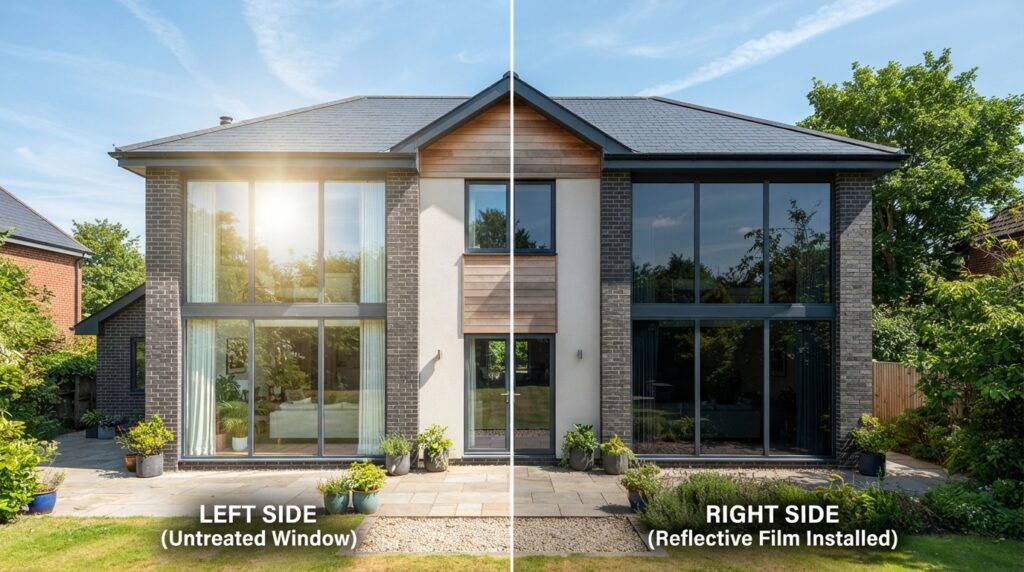
Yes — solar-control window film genuinely reduces heat gain, and because it acts at the glass it tends to beat an internal curtain or blind for cutting solar heat. But it isn’t free of downsides, and the honest verdict is “it works, with real trade-offs.” It darkens the room all year — unwelcome in a dim British winter — the mirror effect only gives daytime privacy (not at night with the lights on), and on some windows it carries a risk of thermal-stress cracking or affecting a sealed unit’s warranty, so check the manufacturer’s guidance for your glazing. External shading still does more. Film is best where you can’t shade outside and want a permanent fix at the glass.
This is the “does it actually work” answer, downsides included — because most articles selling window film skip the caveats.
What it does, and why it beats a curtain for heat
Solar-control film is a thin layer applied to the glass that reflects and absorbs some of the sun’s energy before it fully enters the room. Because it acts at the glass rather than inside, it stops more of the heat becoming trapped indoors than an internal curtain — which is working on light that’s already through. For solar gain specifically, treating the glass is a step up from managing it after the fact. Our window and curtain guide sets out that hierarchy.
The trade-offs nobody mentions
- It darkens the room year-round. The film doesn’t know it’s winter. The same reflectivity that’s welcome in July makes a north-facing room gloomier in December, when you want all the light and warmth you can get. This is the biggest real drawback in a UK climate.
- The “one-way mirror” only works by day. The privacy effect depends on it being brighter outside than in. After dark, with your lights on, that reverses — and people can see in. Don’t rely on it for night-time privacy.
- Glazing risk. On some glass — particularly certain toughened, tinted or sealed double-glazed units — adding film can increase the risk of thermal-stress cracking, and it may affect the glazing manufacturer’s or installer’s warranty. Check the film’s suitability against your specific glazing before applying. When in doubt, ask the glazing manufacturer.
- Application is fiddly. Getting a large pane bubble- and crease-free takes patience and a clean, wet technique. It’s doable, but it’s not effortless.
The types, briefly
Films vary a lot, and performance figures differ between products — so rather than quote numbers we can’t verify for a given film, here’s what to look for:
- Reflective / mirrored films — the most solar rejection, but the most visually reflective and the most darkening.
- Tinted (non-reflective) films — subtler look, generally less solar rejection than a mirrored film.
- Spectrally-selective films — designed to reject infrared (heat) while letting more visible light through, so they darken the room less. These cost more, and they’re the ones to look at if the year-round dimming is your main worry.
- Static-cling films — cling to the glass without permanent adhesive, so they peel off cleanly. Less durable, but the sensible choice for renters (see below).
Whichever type, check the product’s stated suitability for your glazing and orientation rather than assuming a headline figure applies to your window.
The picks
Solar-control window film
Permanent fix at the glass
Acts at the glass
Check glazing suitability
For a window you can’t shade from outside — a flat, a wall onto the street — a solar-control film is a genuine, permanent way to cut the heat at source. Choose a spectrally-selective type if the year-round darkening worries you, and confirm it’s rated for your glazing.
Good for: west- or south-facing windows with no external shading option; owners happy with a permanent change; anyone wanting more than an internal curtain can give.
Less good for: north-facing or already-dim rooms (the winter gloom outweighs the summer gain); some sealed or toughened glazing (thermal-stress and warranty risk — check first); renters, who should use a removable static-cling film instead; anyone wanting night-time privacy, which it doesn’t provide.
Static-cling (removable) film
The renter-friendly option
Peels off cleanly
Reusable season to season
Clings by static rather than glue, so it comes off cleanly at the end of summer or when you move — which makes it the sensible choice for a rental, or if you only want the effect through the hot months. Less durable and generally less powerful than a permanent film, but far lower commitment.
Good for: renters; seasonal use; testing whether film suits a room before committing to a permanent one.
Less good for: maximum solar rejection or years of durability — a permanent film does more and lasts longer. It can also be trickier to get perfectly flat on a large pane.
The honest bottom line
Window film works — it’s a real, physics-backed way to cut solar heat, and better than an internal curtain for that one job. But in the UK its year-round darkening is a genuine cost, external shading beats it where you can manage that, and you must check it’s safe for your glazing. Use it where those conditions line up: a hot-facing window you can’t shade outside, in a room where you won’t miss the winter light.
Frequently asked questions
Does reflective film really reduce heat, or just glare?
It reduces both — it reflects and absorbs solar energy at the glass, cutting heat gain, not only glare. How much depends on the specific film, so check the product’s stated performance for your glazing.
Will it give me privacy?
By day, yes — the mirror effect works when it’s brighter outside than in. At night with your lights on it reverses and people can see in, so don’t rely on it after dark.
Can it crack my windows?
On some glazing — certain toughened, tinted or sealed units — film can raise the risk of thermal-stress cracking and may affect a warranty. Check the film’s suitability for your specific glass before applying, and ask the glazing manufacturer if unsure.
Is it a good idea for a rented flat?
Use a removable static-cling film rather than a permanent adhesive one, so it peels off cleanly when you leave. Check your tenancy too, and avoid anything that could damage the glass.
Sources
- Energy Saving Trust — Keeping your home cool in summer
- GOV.UK — Approved Document O: Overheating (managing solar gain)
- Glass and Glazing Federation — GGF (glazing and applied films guidance)
Related reading: our window and curtain guide and external shading guide.
Solar-control film cuts heat at the glass — check it suits your glazing first. Compare current options at Amazon UK.