Should You Block Air Bricks and Trickle Vents in Winter? (UK)
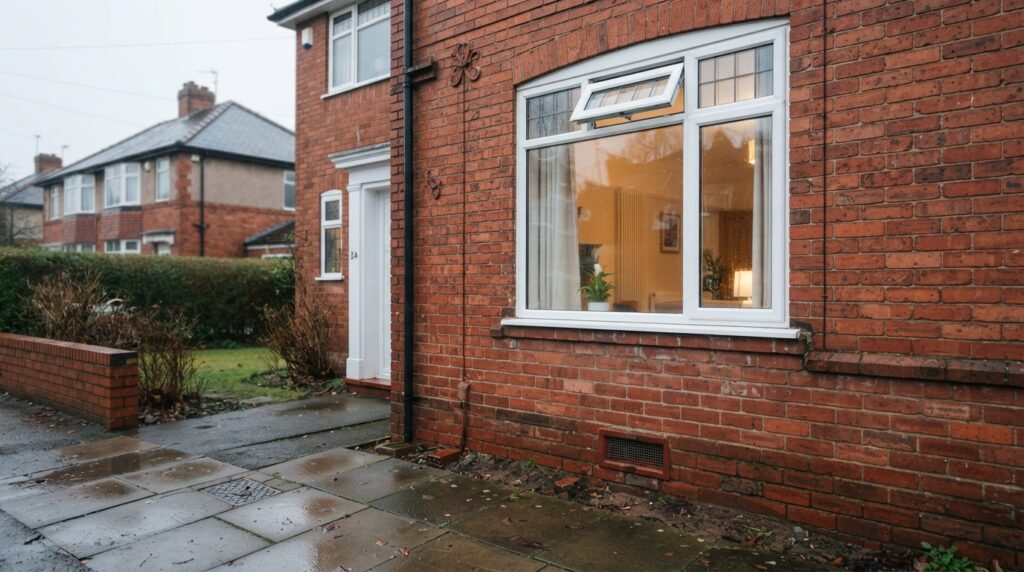
Air bricks ventilate the space under suspended timber floors; blocking them leads to damp, wood rot and mould, according to damp specialists, and they’re a Building Regulations requirement in the first place. Trickle vents are the small vents at the top of modern windows that let a controlled amount of air in without you opening the window. Under the current Approved Document F (in force since 15 June 2022), replacement windows in England normally have to include them. If cold air whistling through them is the problem, close them for the odd bitterly cold hour, but don’t seal them up permanently — the moisture from cooking, showering and breathing has to go somewhere, and if it can’t escape it ends up on your walls.
The instinct to block up anything letting cold air in is understandable. It’s also one of the most expensive winter mistakes you can make in a British home. Here’s what each of these vents does, why they’re there, and what to do instead.
Air bricks: what they are and why they matter
Air bricks are the small perforated bricks — usually metal or plastic grilles set into a brick-sized frame — that you’ll see near ground level on many British houses. Their job is to ventilate the space under a suspended timber floor, the void where the joists sit. That void needs a constant, gentle through-flow of air. Without it, moisture from the ground rises, has nowhere to go, and condenses on the underside of the floorboards and on the joists. That’s how you end up with wet rot, dry rot and, in the worst cases, joists that need replacing.
Damp specialists are unequivocal about it: don’t block air bricks. Blocking them can lead to damp, wood rot and mould growth. Air bricks are also a Building Regulations requirement precisely to prevent this.
Trickle vents: the ones you can actually control
Trickle vents are the small slotted vents you’ll see at the top of most double-glazed windows fitted in the last few decades. They provide a controlled amount of background ventilation — enough to let out the moisture and stale air from a room without needing to open the window itself. Under the 2021 edition of Approved Document F, which came into force on 15 June 2022, replacement windows in existing English dwellings normally have to include trickle vents. If the window they’re replacing had them, the new ones can’t be smaller. If it didn’t, they typically still need them unless there’s mechanical ventilation with heat recovery.
They exist because modern homes are far more airtight than older ones. That’s brilliant for winter fuel bills, but a house with no ventilation at all becomes a damp, stuffy box. The trickle vent is the deliberate leak that keeps the moisture load moving.
What happens if you close them anyway
The moisture doesn’t disappear. A family of four generates several litres of water a day just by breathing, showering, cooking and drying washing indoors. In an airtight home with the vents closed, that water condenses on the coldest surfaces — the corners of bedrooms above the window, behind wardrobes on external walls, on the reveals of windows themselves. Given time, it turns into black mould. That’s the pattern our winter condensation and mould guide covers in detail.
You can close trickle vents temporarily — a really cold night, an unusually windy storm — without harm, provided you open them again the next day. What causes trouble is closing them all winter and forgetting they exist.
The right way to feel less draughty
If the room feels cold and draughty, the fix isn’t the vents that are there on purpose. It’s the ones that aren’t:
- Doors. Front and back doors, and any door to an unheated room. A brush strip along the bottom and foam strip around the frame are the biggest wins. Our draught excluder guide covers this.
- Letterboxes and keyholes. Both are surprisingly draughty. Letterbox brushes and keyhole covers are pennies to fit.
- Gaps under floorboards, particularly around skirting boards.
- Unused chimneys. A chimney balloon or a sheep’s-wool draught excluder sits inside the chimney breast and stops it acting as a cold-air funnel.
- Old window frames where the seal has gone, before you even think about the trickle vent at the top.
Our whole-home draught-proofing guide works through them in order. Do those first, and you’ll be surprised how much the trickle vent stops mattering.
An air brick cover with mesh (not a blocker)
Keeps pests out, keeps air flowing
Sits over the existing air brick
Screws or clips to the wall
If an air brick is letting in mice or wasps but you don’t want to block ventilation, a proper external mesh cover is the answer. Look for one designed as a cover, not a plug — the whole point is that air still flows through it. Stainless steel meshes last longest outside; plastic ones are cheaper. Measure the outside dimensions of your existing air brick before buying, since standard sizes vary. Never fit anything that closes off the air brick completely.
Good for: keeping mice, rats and larger insects out; tidying a scruffy old air brick without blocking it; homes with pest issues near the base of walls.
Less good for: stopping cold air, which isn’t what an air brick cover is for. If cold air rising through the floor is the problem, the fix is underfloor draught-proofing between the floorboards, not sealing the vent.
Frequently asked questions
Can I block my air bricks in winter?
No. Damp specialists are clear that blocking air bricks causes damp, wood rot and mould in the void under a suspended timber floor, and Building Regulations require ventilation to that space in the first place.
Are trickle vents required by law?
Under Approved Document F (2021 edition, in force 15 June 2022), replacement windows in England normally have to include trickle vents. If the original windows had them, replacements can’t be smaller.
Can I close my trickle vents on a really cold night?
Closing them for an unusually cold or windy night is unlikely to do harm as long as you open them again the next day. Leaving them shut all winter is what causes condensation and mould, because the moisture your household generates has nowhere to go.
What can I do to feel less draughty instead?
Deal with the draughts that aren’t on purpose — letterboxes, doors, gaps around skirting boards, unused chimneys, worn window seals — before touching the ones that are.
Sources
- Local Authority Building Control (LABC) — Replacement windows and trickle vents
- Anke Damp Proofing — Should I block air bricks in winter?
Related reading: our draught-proofing guide, winter condensation and mould and door draught excluders and window seals.
Compare current mesh air brick covers at Amazon UK.