Burning or Electrical Smell From an Air Conditioner: What to Do
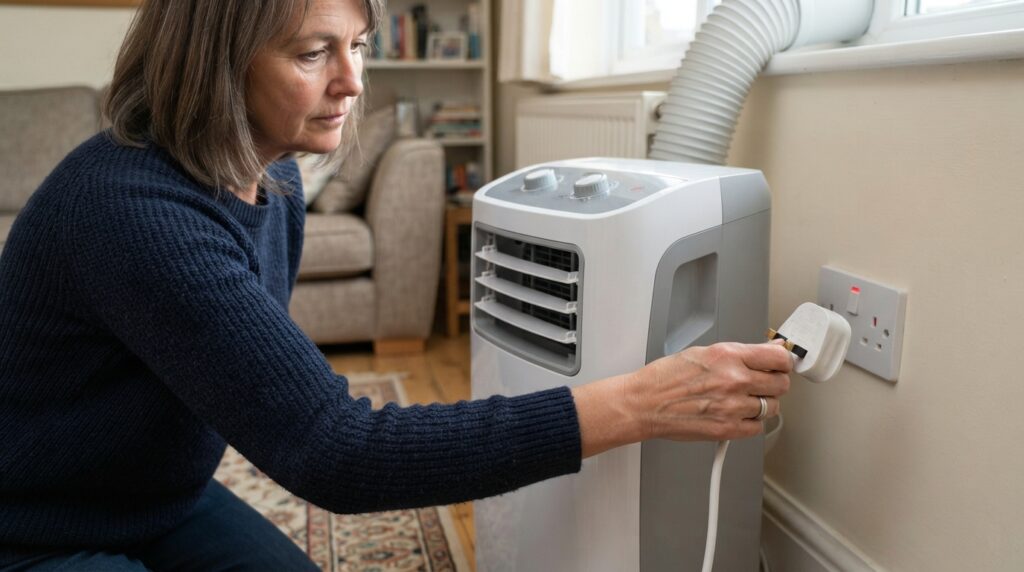
Switch the unit off and unplug it at the wall. If it’s safe to reach the plug, remove it. If there is smoke, visible flame, or the plug or socket is too hot to touch, do not touch it — switch the circuit off at the consumer unit instead, leave the room, close the door behind you, and call 999.
Do not switch it back on “to see if it does it again”. A burning smell from an electrical appliance is not a fault to test — it is a reason to stop using it until someone qualified has looked at it.
There are two very different causes and it matters which you have. A dusty, slightly scorched smell on the first run of the season is usually dust burning off internal components — it should clear within an hour and not return. Anything acrid, chemical, or smelling of burning plastic or hot electrical insulation is a different matter entirely: that suggests overheating wiring, a failing motor or a compressor problem, and the unit should be unplugged and not used again until checked. A smell that returns every time you run it is never just dust.
Telling the two apart
Probably dust — the benign case
- First run after months in storage
- Smells dusty or faintly scorched, like a radiator or oven warming up
- Fades within an hour and doesn’t return next time
- No visible smoke, no marks, nothing hot to touch
Open a window while it clears. That’s the whole treatment. Prevent it next year by vacuuming the intake grille and cleaning the filter before the first run — part of the routine in our spring reset checklist.
Not dust — stop using it
- Acrid, chemical, or burning-plastic smell
- Any smell that returns each time you run the unit, or persists beyond an hour
- Smoke, however slight
- Scorch marks or discolouration on the plug, socket, cable or casing
- A plug, socket or cable that is warm or hot to the touch
- Buzzing, crackling or arcing sounds
- The unit tripping the breaker or RCD alongside the smell
- A melted or deformed plug, or a cable with damaged insulation
Any of these means unplug and stop. None of them improves on its own.
What causes the serious version
Not so you can fix it — most of these need a qualified person — but so you understand why it isn’t something to run through.
- Overheating supply cable, plug or socket. A portable air conditioner draws high current for hours at a time. A marginal connection heats up under sustained load, and heat degrades insulation, which makes the connection worse. That’s a self-worsening cycle, and it’s a common cause of domestic electrical fires. It’s the main reason to plug these units directly into a wall socket rather than an extension lead — our electrical safety guide covers this properly.
- A failing fan motor, where windings overheat.
- A compressor working against restricted airflow. A badly clogged filter or blocked exhaust makes the compressor labour, drawing more current and running hotter. Our maintenance guide covers filter cleaning.
- Something in contact with a hot surface — a curtain against the exhaust, a rug under the vent, packaging left inside.
- Debris drawn into the unit and burning on a warm component.
- Water where it shouldn’t be. A leak or overflowing tank reaching electrical components. Our leaking water guide covers the causes.
What to do next
- Unplug it and leave it unplugged.
- Inspect the plug and socket once cool. Discolouration, melting or scorching means neither should be used again until an electrician has checked the socket as well as the appliance.
- Check the cable along its length for damage, crushing or cuts.
- Look at the intake and exhaust for obstructions, and check nothing is resting against the unit.
- Check the filter. Heavily clogged is a plausible contributing cause and worth cleaning regardless.
- Check whether it’s still under warranty. If so, contact the manufacturer rather than opening it — and don’t attempt a repair that would void cover.
- If in doubt, replace it. An older unit with an electrical fault is rarely worth repairing, and this is not the category of fault to gamble on.
Other smells, and what they mean
- Musty or damp — moisture trapped in the unit, usually from being stored wet. Unpleasant rather than dangerous. Our smell guide covers clearing it, and our storage guide covers preventing it.
- Sweet or chemical, faintly like ether — possible refrigerant leak. Stop using it, ventilate the room, and contact the manufacturer or an F-Gas certified engineer. Many modern units use R290, which is flammable, so keep it away from ignition sources.
- Sewage or drains — usually not the unit at all, more often a dried-out trap in a nearby sink or a drainage issue.
- Cigarette or cooking smells — absorbed into the filter. Cleaning it usually resolves it.
Smoke alarms
Worth stating plainly on a page about burning smells: if you run a high-current appliance overnight — and bedroom cooling is the main use case — you need working smoke alarms.
Test them. Check the expiry date, since alarms don’t last indefinitely. Fire services recommend closing internal doors at night, which slows fire and smoke spread considerably, and that also happens to improve your air conditioner’s performance.
Preventing it
- Plug directly into a wall socket. Not an extension lead, not a multi-way strip, and never a coiled cable reel.
- Check the socket isn’t already overloaded with other appliances on the same circuit.
- Clean the filter fortnightly during heavy use — weekly with pets.
- Keep clearance around intake and exhaust as the manual specifies, and keep curtains and furniture away from the unit.
- Don’t run it with the hose kinked or blocked.
- Check the plug and cable at the start of each season, before the first run.
- Buy from reputable retailers. Counterfeit and substandard electrical goods are a genuine problem online, and a plug that doesn’t meet UK standards is exactly the failure point discussed here.
Frequently asked questions
It smelled burning once and now seems fine. Is that OK?
If it was the first run of the season, it faded within an hour, hasn’t returned, and there are no marks or heat on the plug — that’s consistent with dust. Check the plug and cable anyway. If it returns at all, stop using it.
Can I use it while waiting for a replacement?
No. If the smell is anything other than brief first-run dust, the appliance stays unplugged. A fan is a safe stopgap.
Who do I call?
The manufacturer if it’s under warranty. Otherwise a qualified electrician for anything involving the plug, cable or socket — findable via NICEIC, NAPIT or the Electrical Competent Person register. Anything involving the refrigerant circuit needs an F-Gas certified engineer.
Should I report it?
If an appliance has caused a fire risk, it’s worth reporting to your local Trading Standards service, which can act on unsafe products. Manufacturers also issue recalls, so it’s worth checking whether yours is subject to one.
Sources
- Electrical Safety First — Electrical safety around the home
- Electrical Safety First — Overloading sockets
- Electrical Safety First — Product recalls
- National Fire Chiefs Council — Home fire safety
- GOV.UK — Fluorinated gases (F-gases): rules
- Electrical Competent Person Register — Find a registered electrician
- Citizens Advice — Report to Trading Standards
Related reading: our electrical safety guide and maintenance guide.
Related guides




Compare current prices, stock and reviews on portable air conditioners at Amazon UK. Prices and stock move fast in a heatwave, so it is worth checking before you commit.
Browse air conditioners →