10 Things to Check Before Turning On Your Heating for the First Time This Winter (UK)
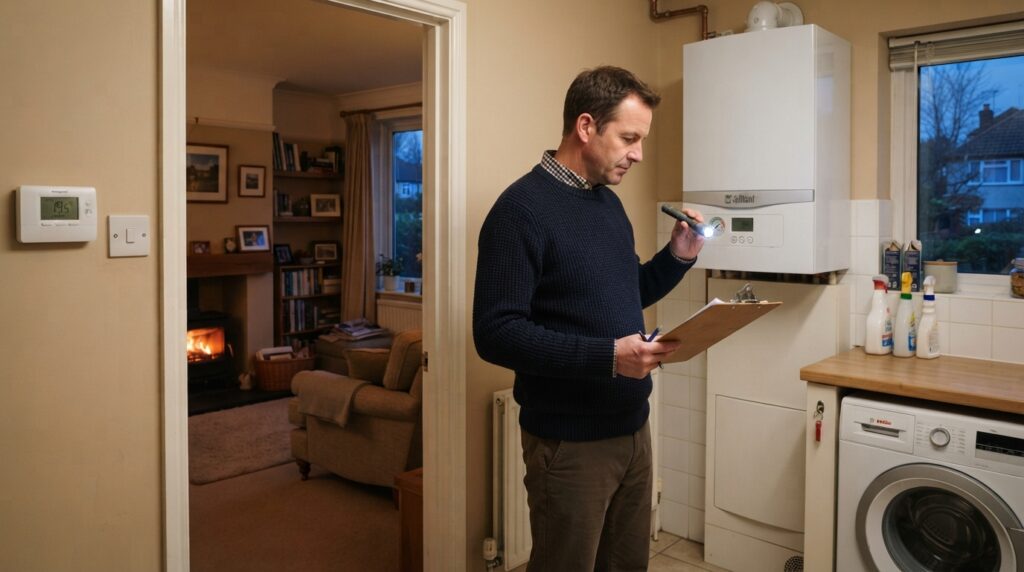
Don’t wait for the first cold snap. A 20-minute check now catches the problems that turn into a £400 call-out in December. Work down this list in order: service and safety first, radiators next, controls last. Any gas work needs a Gas Safe registered engineer — that’s the law, not a preference. If your boiler is still under warranty, missing its annual service can void it.
The first cold morning of autumn is not the day you want to discover your boiler won’t fire. Here’s a practical checklist you can work through in an hour, in the order that gets the most important things covered first.
1. Book the annual boiler service (if you haven’t)
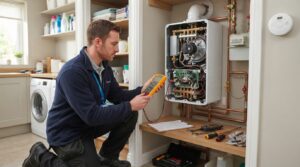
Manufacturer warranties usually require an annual service by a Gas Safe registered engineer to remain valid. Gas Safe Register’s landlord guidance also requires an annual gas safety check on all gas appliances and flues, with a Landlord Gas Safety Record kept for at least two years. Even if you’re an owner-occupier and not a landlord, the annual service is what keeps small problems small. Book it in September or early October, before every engineer in the country is fully booked.
2. Test your carbon monoxide alarm
An audible carbon monoxide alarm near every fuel-burning appliance is a basic safety measure. Press the test button. If it doesn’t chirp, replace the battery. If it’s over 5–7 years old, replace the whole unit — sensors have a shelf life.
3. Turn the heating on for 10 minutes now
Not to warm the house — to find the problems. On a mild day, put the heating on for 10 minutes. Walk around and check every radiator: does each one warm up? Are any cold at the top and warm at the bottom (trapped air)? Any leaks around the valves? Any funny smells? Our why heating smells of burning guide covers what’s normal and what isn’t.
4. Bleed the radiators
Cold-at-the-top, warm-at-the-bottom means trapped air. Bleeding takes minutes with a radiator key. Do the downstairs ones first, then upstairs. Our bleed a radiator guide walks through it.
A radiator bleeding kit
The right tool costs pennies
Some kits include a cup or bleed tool
Reusable indefinitely
A radiator key is the single tool most households can’t find when they need it. Buy a small kit and hang it somewhere obvious. Modern radiator keys sometimes have a built-in reservoir that catches the water that spits out, which saves cloths. Check that the key size matches your radiators — most UK radiators use a standard 5mm square, but some older ones need a different fitting.
Good for: quick DIY radiator bleed; keeping in a kitchen drawer for when a radiator suddenly stops warming.
Less good for: radiators with automatic bleed valves, where a manual key isn’t needed. Won’t fix a valve that’s seized shut.
5. Check the system pressure
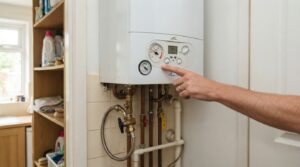
Most modern combi boilers show a pressure gauge on the front. When cold, it should sit between around 1.0 and 1.5 bar (check your manual for the exact range). Too low and the boiler won’t fire; too high and it locks out. If it’s low, top it up via the filling loop, then bleed the radiators, then top up again if needed. If it keeps dropping, book an engineer.
6. Test the timer and thermostat
Set the timer to a period you don’t need heat, then override manually to check the boiler fires. Now set the thermostat above and below room temperature and confirm the boiler follows. If your thermostat is battery-powered, replace the batteries in autumn.
7. Move the furniture off the radiators
A sofa across a radiator absorbs the heat and blocks the convection current. Our things making your house colder guide has this on its list — it’s one of the most common reasons a room doesn’t warm up.
8. Check every TRV turns
Thermostatic radiator valves seize in summer, when nothing calls for heat. Twist each one from off to hot and back. If any are stuck, gently work them free with an adjustable spanner on the shaft (not the head), or call an engineer if you’re not comfortable. A seized-open TRV heats a room to 25°C for no reason; a seized-shut TRV leaves a room cold no matter what the thermostat says.
9. Look at the flue and boiler outside
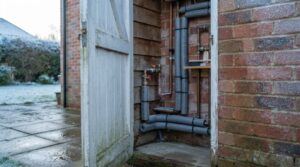
Walk outside and check the flue outlet is clear (no leaves, nests or covers), and the condensate pipe running down to the drain is intact and insulated where it’s exposed. A frozen condensate pipe is one of the most common winter breakdowns — see our condensate pipe guide.
10. Lag the pipes and stock the kit
Finally, do the winter-proofing your future self will thank you for: lag exposed pipes (see our pipe lagging guide), fit an outside tap cover, top up the salt in the salt bin if you have one, dig out the kettle-and-torch power cut kit, and know where your stop tap is.
Frequently asked questions
How often should I service my boiler?
Once a year, by a Gas Safe registered engineer. Manufacturer warranties usually require this to remain valid. Landlords must have an annual gas safety check on all gas appliances by law, with the record kept for at least two years.
What pressure should my boiler be?
Most combi boilers should sit between around 1.0 and 1.5 bar when cold. Check your specific boiler manual, as the exact range varies by model.
Why do some radiators warm up and others stay cold?
Common causes: trapped air (bleed the radiator), a seized TRV, sludge in the system (needs a power flush by an engineer), or a closed lockshield valve. Our things making your house colder guide covers each.
Can I service my own boiler?
No. Any gas work in the UK, including a service, must be carried out by a Gas Safe registered engineer. It’s the law, and DIY work on a gas boiler is dangerous and illegal.
Sources
- Gas Safe Register — Landlord gas responsibilities
- Energy Saving Trust — Thermostats and heating controls
Related reading: our how to bleed a radiator, pipe lagging guide and frozen condensate pipe guide.
Compare current radiator bleeding kits at Amazon UK.