Best Dehumidifiers for a Damp UK Home
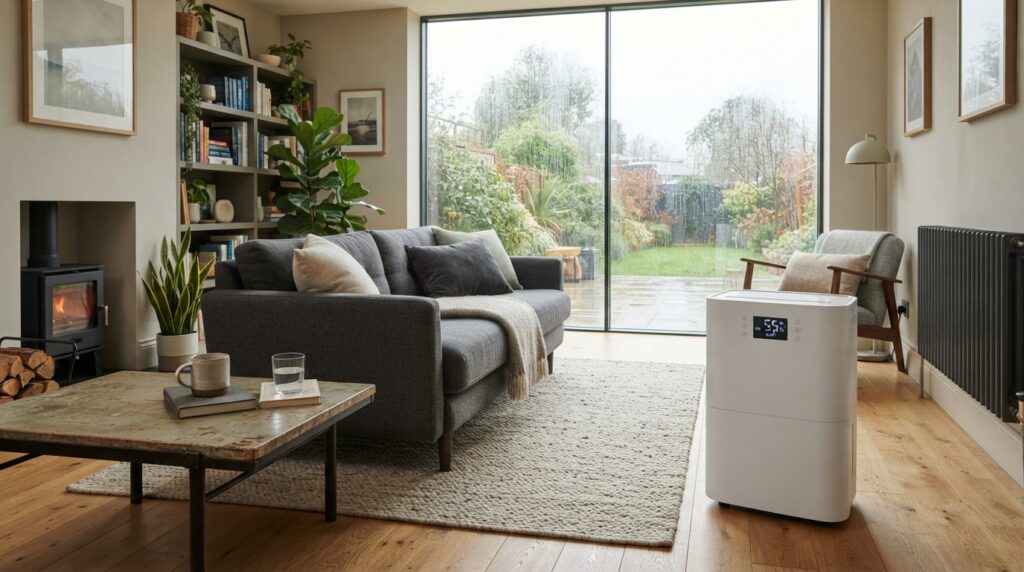
For most UK homes with everyday condensation damp — steamed-up windows, mould creeping into corners, that musty smell in a bathroom or bedroom — a compressor (refrigerant) dehumidifier is the right choice for a normally heated room, since it’s generally more energy-efficient at typical indoor temperatures. If you need to dehumidify somewhere cold and unheated, like a garage, conservatory or caravan in winter, a desiccant dehumidifier works better, because it doesn’t rely on refrigeration and keeps performing even in low temperatures where a compressor model struggles. Whichever type, size it to the room using the manufacturer’s own published figure for that model rather than guessing, and run it consistently in the worst-affected room rather than moving it around.
Damp and mould are a genuinely common complaint in UK homes, especially through autumn and winter — here’s how to choose the right dehumidifier, and how to tell when a dehumidifier isn’t actually the answer.
Where condensation damp actually comes from
Every UK household produces a surprising amount of water vapour every day without thinking about it: cooking, boiling a kettle, showering and bathing, drying laundry on radiators or an airer indoors, and simply breathing while you sleep all add moisture to the air. That moisture has to go somewhere — and if it isn’t ventilated outside, it settles as condensation on the coldest available surfaces: window glass, cold external walls, behind furniture pushed against an outside wall, and corners where airflow is poorest. Left unaddressed, condensation on a surface for long enough encourages mould growth, which is the black spotting many people notice in bathrooms, on window frames, and in bedroom corners.
The two main types, honestly compared
Compressor (refrigerant) dehumidifier
Best for normally heated rooms
Works like a small fridge in reverse
Less effective in cold spaces
A compressor dehumidifier draws air across a cold coil, condensing moisture out of it, then reheats and releases the drier air — much like a fridge or a portable air conditioner’s dehumidify mode, but purpose-built for the job. It’s generally the more energy-efficient choice for a room at normal living temperatures.
Good for: living rooms, bedrooms and kitchens at typical indoor temperatures; efficient moisture extraction in a warm-enough space.
Less good for: cold, unheated spaces — a compressor’s efficiency drops off noticeably as the room temperature falls, and it can struggle or even ice up in a genuinely cold room.
Desiccant dehumidifier
Best for cold or unheated spaces
No refrigerant/compressor to lose efficiency in cold
Typically uses more energy
A desiccant dehumidifier uses a moisture-absorbing material rather than refrigeration, so its performance doesn’t drop off in the cold the way a compressor model’s does — making it the better choice for a garage, unheated conservatory, static caravan or workshop in winter. The trade-off is that desiccant models typically use more energy to run and can release slightly warm air as a by-product, which is a bonus in a cold space but unwelcome in a warm one.
Good for: garages, sheds, conservatories, caravans and other spaces that get genuinely cold; consistent performance regardless of temperature.
Less good for: running costs in a normally heated home, where a compressor model is usually the more efficient choice; and the mild warm exhaust can be unwelcome in summer.
Sizing it properly
Dehumidifiers are typically rated by how many litres of moisture they can extract per day, and manufacturers publish a recommended room size for each model. Check the specific model’s own published figure against your room (or, for a persistently damp whole house, consider a larger-capacity unit rather than a small one working flat out). An undersized unit for a genuinely damp room will run constantly without ever quite getting on top of the problem.
Common condensation sources — and fixing them, not just extracting the water
A dehumidifier treats the symptom; tackling the moisture source reduces how hard it has to work:
- Cover pans while cooking and use the extractor fan or cooker hood, ideally one that vents outside rather than recirculating — our hot kitchen guide covers extraction in more depth.
- Ventilate the bathroom during and after a shower or bath, using the extractor fan and keeping the door closed so steam doesn’t spread through the house.
- Dry laundry outside where possible, or in a well-ventilated room with a window cracked open and the door shut — drying clothes on radiators throughout the home is one of the biggest everyday sources of indoor moisture.
- Don’t block airflow — leave a small gap between furniture and external walls, since stagnant air against a cold wall is exactly where condensation and mould take hold first.
- Check cold-bridging spots — single-glazed windows or poorly insulated sections of wall are colder than the surrounding surface, so condensation forms there first. Our secondary glazing guide covers one way to address a cold window specifically.
Where to position it, and how to run it
- Keep the door closed to the room you’re dehumidifying so it isn’t constantly pulling in moist air from elsewhere in the house.
- Give it space to draw air in freely — pushed into a corner or blocked by furniture, it works less efficiently.
- Continuous drain vs empty-the-tank — most units offer both; a continuous drain hose to a nearby sink or drain saves emptying a tank daily in a persistently damp room, while tank models are simpler to move around.
- Clean the filter regularly and, on models with a water tank, keep it clean too — standing water in a dirty tank is its own source of odour.
Frequently asked questions
Will a dehumidifier get rid of mould?
It can help stop mould coming back by reducing the moisture that feeds it, but it won’t remove existing mould growth on its own — that needs cleaning with an appropriate product. Reducing the humidity that allowed it to grow is the long-term fix; treating existing mould is a separate, immediate step.
Compressor or desiccant for a cold garage or caravan?
Desiccant — its performance doesn’t drop off in low temperatures the way a compressor model’s does, so it keeps working effectively in an unheated space through winter.
Can a dehumidifier fix damp patches on my walls?
Only if the damp is condensation-related. If it’s rising damp or penetrating damp from a structural or building-fabric issue, a dehumidifier won’t resolve it — that needs a builder or damp specialist to identify and fix the actual cause.
Is it worth running a dehumidifier in summer as well as winter?
It depends on your home — condensation damp is most common in colder months when windows stay shut and heating creates temperature differences, but a persistently humid room can benefit year-round. Our air conditioner vs dehumidifier guide covers the summer-comfort side of the question.
Sources
- NHS — Damp and mould in the home
- Energy Saving Trust — Condensation and damp advice
Related reading: our air conditioner vs dehumidifier guide and secondary glazing guide.
Compare current compressor and desiccant dehumidifiers at Amazon UK.