Does Double Glazing Keep Heat Out in Summer?
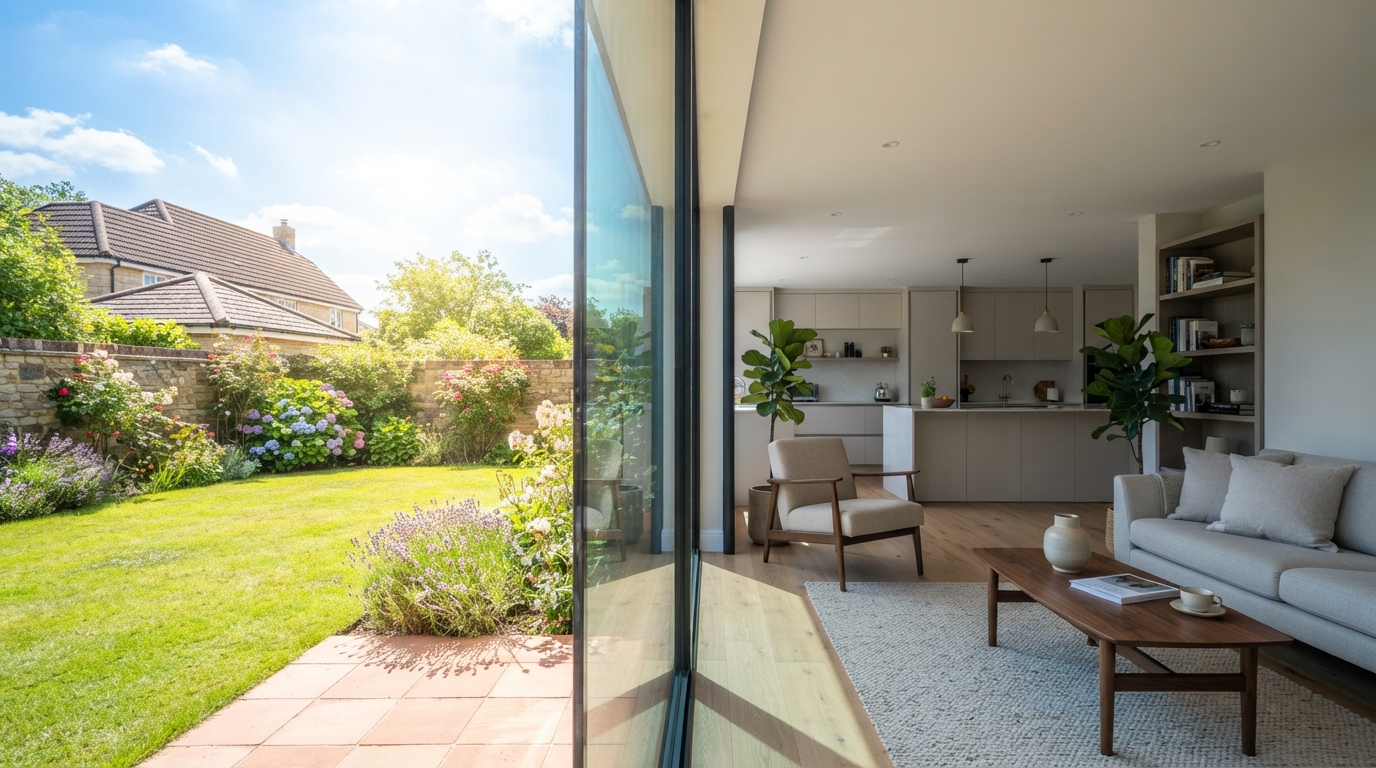
A little, but it’s not what double glazing is mainly designed to do — and that mismatch is why so many double-glazed rooms still overheat. Ordinary double glazing is optimised to reduce conductive heat loss, keeping warmth in during winter, and that same insulating layer does give a genuine (if smaller) benefit on the hottest summer days by slowing heat entering through conduction too. But conduction isn’t the main way a room overheats in summer — solar radiation streaming directly through the glass and being absorbed by everything it hits is the dominant mechanism, and standard double glazing does relatively little to block that, unless the glass has a specific solar control coating designed for exactly this purpose. If overheating is your problem, shading the glass — ideally from outside — does far more than the glazing itself.
“We’ve got double glazing, why is this room still an oven?” is one of the most common frustrations we hear, and it comes down to a genuine mix-up between two different things double glazing can do. Here’s the honest physics.
Two separate jobs: stopping conduction, and stopping radiation
Heat moves through a window in two quite different ways, and double glazing only really addresses one of them well:
- Conduction — heat transferring directly through the glass and the air gap because of a temperature difference between inside and outside. This is what double glazing is fundamentally built to reduce: the sealed air (or gas-filled) gap between the two panes acts as an insulating layer, slowing heat moving through in either direction. It’s the main reason double glazing keeps a room warmer in winter — and by the same principle, it slows heat entering on a very hot day when the outside air is significantly hotter than the inside.
- Solar radiation — sunlight passing straight through the glass, striking surfaces inside the room, and being absorbed and re-radiated as heat (the same “greenhouse” effect that makes a parked car unbearably hot). This is the dominant way a sunny room overheats in summer, and it has very little to do with the insulating air gap that makes double glazing good at stopping conduction. Ordinary glass — single or double glazed — lets most solar radiation straight through.
What actually blocks solar heat gain: solar control glass
Glass manufacturers do make products specifically designed to reduce solar heat gain — often called solar control or solar reflective glass, which uses a coating to reflect or absorb a meaningful share of incoming solar radiation before it enters the room, while still letting visible light through. This is a genuinely different specification from standard double glazing, and it isn’t automatically included just because a window is double glazed. If you’re specifying new windows, replacing existing units, or extending a room with a lot of glazing and overheating is a real concern, it’s worth asking specifically about solar control glass — not just “double glazing” — since the two solve different problems.
So is double glazing worth anything for summer heat?
Yes, just not as the main solution. The reduced conduction genuinely helps on the hottest days, when a big temperature difference between a scorching exterior and a cooler interior would otherwise let heat flow in faster through single glazing. But because solar radiation through the glass is the bigger contributor to a room overheating, double glazing alone rarely solves a genuinely hot, sunny room — which is exactly why shading matters so much more for summer comfort than the glazing specification itself.
What genuinely stops a room overheating
- External shading first — a shutter, awning or well-positioned shade blocks solar radiation before it ever reaches the glass, which is far more effective than anything the glazing itself can do. Our external shading guide covers the options.
- Internal blinds and curtains as a backup, ideally close-fitted and light-coloured or reflective-backed — see our blinds vs curtains guide.
- Reflective window film applied to existing glass can meaningfully cut solar gain without replacing the windows — our reflective film guide covers what it does and doesn’t achieve.
- Solar control glass specifically, if you’re already replacing windows or glazing an extension.
Secondary glazing and triple glazing — the honest summary
Secondary glazing (an additional internal pane fitted to an existing window) is mainly chosen for insulation and noise reduction rather than summer solar control, though it adds a further air gap that helps conduction slightly, similar to standard double glazing — our secondary glazing guide covers it in full. Triple glazing adds a further insulating layer again, giving a marginally better U-value than double glazing, but by default it’s still primarily addressing conduction rather than solar radiation — the summer benefit is incremental unless it’s also specified with a solar control coating.
Frequently asked questions
Will upgrading to double glazing stop my room overheating in summer?
It will help a little through reduced conductive heat gain on very hot days, but it won’t solve overheating caused by direct sun through the glass, since that’s a different mechanism (solar radiation) that standard double glazing doesn’t specifically address.
What’s the difference between double glazing and solar control glass?
Double glazing is specified mainly for its U-value — how well it resists conductive heat loss, important for winter warmth. Solar control glass has a coating specifically designed to reduce how much solar radiation passes through, which is the dominant cause of summer overheating. A window can be double glazed without being solar control, and vice versa.
Is triple glazing better than double glazing for keeping a room cool in summer?
Only marginally, by default — triple glazing improves conductive insulation further but doesn’t inherently address solar radiation any better than double glazing unless it’s also specified with a solar control coating.
What’s more effective than glazing for stopping a room overheating?
Shading — ideally external shading that blocks solar radiation before it reaches the glass at all. This consistently does more for summer comfort than the glazing specification alone.
Sources
- Energy Saving Trust — Windows and glazing advice
- CIBSE — Building services and overheating guidance
Related reading: our secondary glazing guide and external shading guide.
Reflective film and shading tackle the solar side directly. Compare current options at Amazon UK.