How to Keep a South- or West-Facing Room Cool (UK)
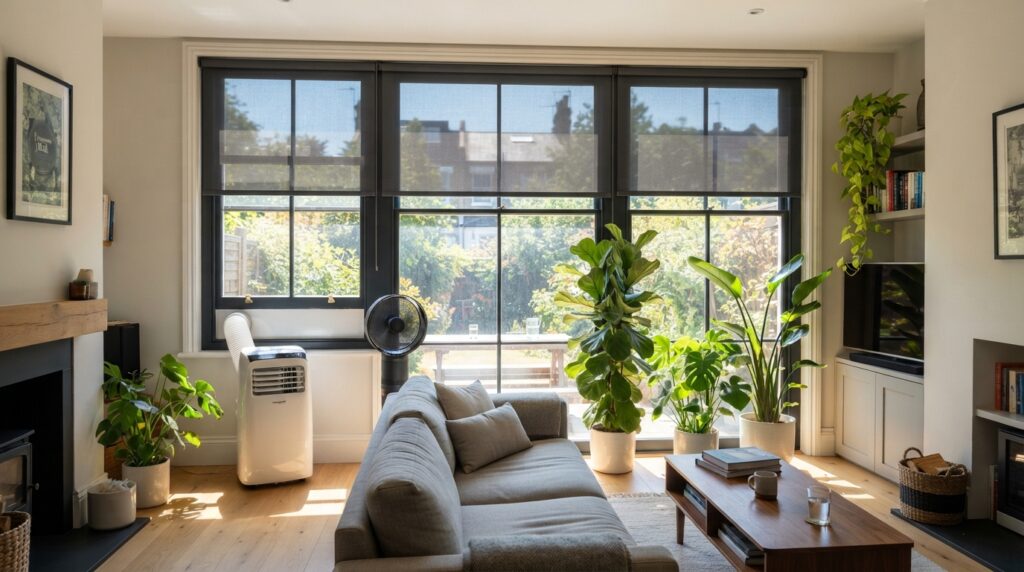
These two orientations overheat for genuinely different reasons, which is why a one-size-fits-all fix often underperforms. A south-facing room gets sun for most of the day, but in a UK summer the sun sits high overhead around midday, so a well-placed overhang or awning can block a surprising amount of it. A west-facing room is usually the harder problem: it catches sun in the afternoon and evening, exactly when outdoor temperatures are already at their peak, and because the sun is low in the sky at that time of day, it slips under horizontal shading like an overhang or a standard awning and penetrates deep into the room. West-facing rooms typically need vertical or side shading — shutters, blinds, or angled screens — rather than the horizontal shading that works well on a south wall, and they often stay warm well after sunset because the wall itself has spent the afternoon absorbing heat.
If you’ve tried the general advice in our window-timing guide and a south- or west-facing room is still stubbornly hot, the orientation itself is usually the missing piece. Here’s why, and what actually helps.
Why south-facing rooms overheat — and why the fix is often simpler
A south-facing room in the UK receives sunlight for the greatest number of hours across the day of any orientation, which is exactly why south-facing rooms and conservatories have a reputation for running hot. But there’s a useful nuance: in British summer, the sun climbs high in the sky around midday, and the higher the sun’s angle, the more directly it strikes a horizontal shading device — an overhang, a fixed canopy, or an awning angled correctly — rather than sneaking underneath it. This is why a well-sized awning or overhang on a south-facing window can be genuinely effective: it’s blocking the sun at close to the angle it’s designed for.
The trade-off is that a south wall is in the sun for a long stretch of the day, so even a good shading solution is working hard for many hours, and any gaps in coverage (early morning or the shoulders of the day, when the sun sits lower) still let some heat through.
Why west-facing rooms are usually the harder problem
West-facing rooms catch the sun later in the day — the afternoon and into the evening — which compounds two things at once. First, that’s when outdoor air temperature is typically at or near its daily peak, so the room is absorbing solar heat on top of an already-hot exterior. Second, the sun sits much lower in the sky in the afternoon than it does at midday, and low-angle sun behaves very differently against a building: it comes in almost side-on, which means it can slip underneath a horizontal overhang or a standard awning that would block higher, more vertical sun perfectly well. This is the single biggest reason people find a south-facing room easier to shade than a west-facing one with the same type of external shading.
The “afterglow” problem: why a west room stays hot after sunset
Brick, render, glass and other building materials absorb heat through the afternoon and release it slowly, over hours, rather than instantly. A west-facing wall or window that’s been in direct sun until early evening keeps radiating that stored heat into the room well after the sun has actually gone down — which is exactly the time you’d expect the room to start cooling. This delayed release (sometimes called thermal lag) is why simply opening the window at sunset often isn’t enough on its own for a west-facing room: the wall itself is still acting like a low, slow radiator for a while afterwards. Our window-timing guide covers the general principle of when to open and close windows; for a west-facing room specifically, expect to need a bit longer of active ventilation or cooling into the evening than a room that doesn’t get late sun.
What actually helps, by orientation
South-facing
- Horizontal external shading — an awning, canopy or overhang sized and angled for your window works well against the higher midday sun. Our external shading guide covers options.
- Internal blackout blinds or thermal curtains as a backup for the hours shading doesn’t fully cover — our blinds vs curtains guide covers which suits you.
West-facing
- Vertical or side shading — external shutters or angled blinds cope with low afternoon sun far better than a horizontal awning. Our external shutters guide covers the planning side of fitting them.
- Reflective window film can help specifically because it works regardless of the sun’s angle, unlike shading that’s designed for one angle of approach — see our reflective film guide.
- Plan for evening cooling — because of the afterglow effect, a west-facing room often needs a fan or air conditioner running into the evening rather than assuming it’ll cool down naturally once the sun’s gone.
- Exterior planting on the west side — a tall shrub, small tree or a trellis with climbing planting can intercept low afternoon sun before it reaches the window at all, and it’s a genuinely effective, low-tech option where space allows.
Both orientations: get the basics right too
- Close curtains or blinds before the room heats up, not after — once the sun’s been hitting bare glass for a while, you’re managing heat that’s already inside.
- Cross-ventilate using a window on a cooler-facing wall to create airflow through the room, rather than relying on the hot-side window alone.
- Check the glazing itself — our double glazing and summer heat guide explains what standard glazing does and doesn’t help with for solar heat specifically.
Frequently asked questions
Is a west-facing room really hotter than a south-facing one?
Often, yes, in practice — even though south gets the most total hours of sun, west-facing rooms catch sun later in the day when it’s already hot outside, at a low angle that’s harder to shade, and the wall keeps releasing stored heat into the evening.
Why doesn’t my awning stop the afternoon sun in my west-facing room?
Standard awnings and overhangs are designed for higher-angle sun and can let low, late-afternoon sun pass underneath them. West-facing windows generally need vertical or side shading — shutters or angled blinds — rather than horizontal shading alone.
Why is my room still hot after the sun’s gone down?
Walls and glass absorb heat through the afternoon and release it slowly over several hours — a west-facing room that’s been in direct sun until early evening can keep radiating that heat well after sunset, which is why it often needs longer active cooling or ventilation than other rooms.
Does planting outside a window actually help?
Yes, genuinely — a tall shrub, small tree or climbing plant on a trellis can intercept low afternoon sun before it reaches a west-facing window, and it works regardless of the sun’s angle in a way some fixed shading doesn’t.
Sources
- Energy Saving Trust — Keeping your home cool in summer
- CIBSE — Building services and overheating guidance
- Met Office — Understanding UK heatwaves
Related reading: our window-timing guide and external shading guide.
Reflective film and vertical shading work well against low, late-day sun. Compare current options at Amazon UK.