Door Draught Excluders and Window Seals: The Cheapest Way to Cool a Room
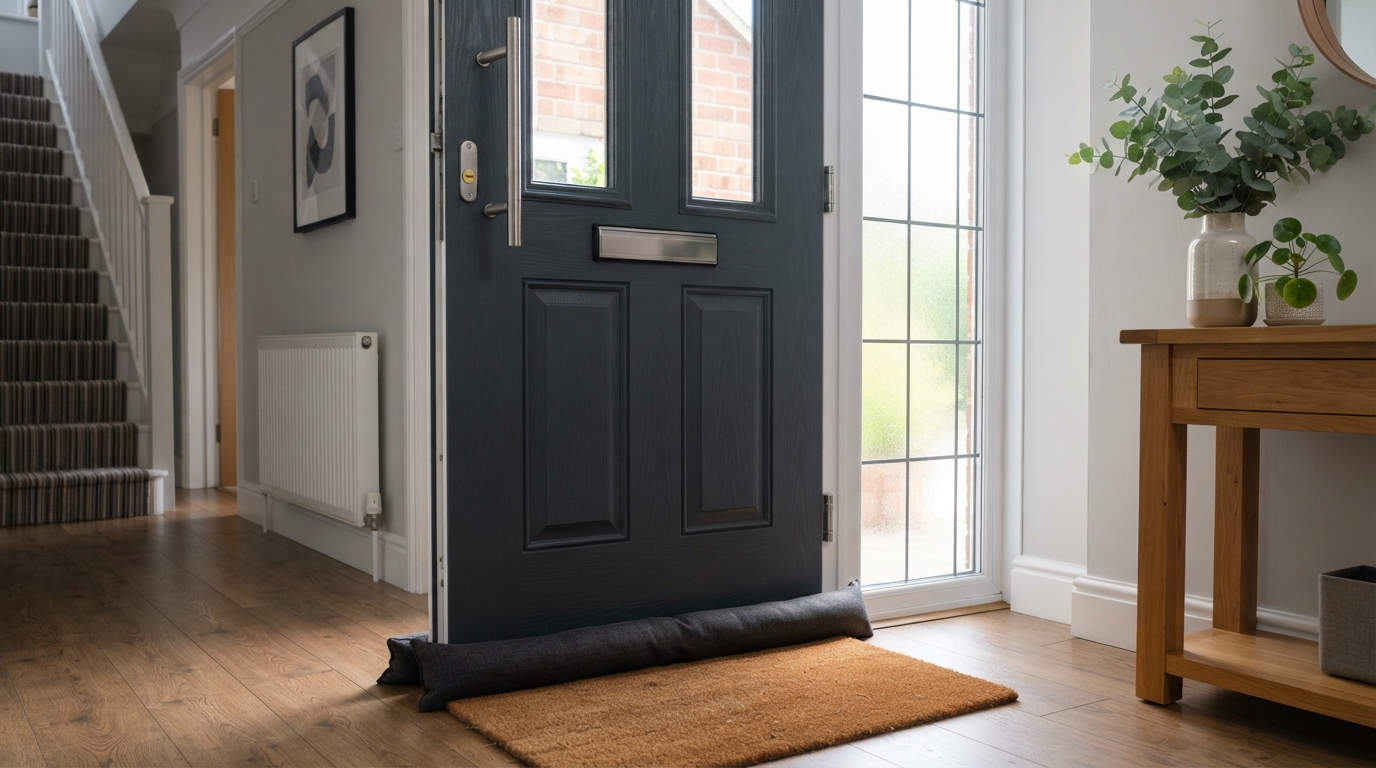
A few pounds of draught excluder and weather-seal tape is the cheapest cooling upgrade there is — because the gaps that lose heat in winter let warm air in during a heatwave and dilute a cooled room. For keeping one room cool, the highest-value buy is a door draught excluder that seals the gap under the door, so the cool you’ve made doesn’t diffuse into the warmer rest of the house. After that, self-adhesive weather-seal tape around leaky windows and doors. The one rule: seal the accidental gaps, but never block a vent that’s there on purpose — trickle vents, extract fans, and any air supply for a boiler or fire.
This is the shopping list. For the wider strategy — where the gaps are and how sealing fits with night ventilation — see our draught-proofing guide.
Ranked by cooling per pound
Roughly in order of effect for the money, for keeping a room cool:
A door draught excluder
Biggest single win
A few pounds
Keeps cool in one room
The gap under a door is the main route by which a cooled room bleeds into the warmer rest of the house. Sealing it keeps the cool where you made it — the single most effective cheap move for one room. Options range from a simple fabric “sausage” you lay against the door, to a brush or rubber strip fixed to the door itself for a permanent seal.
Good for: keeping one cooled room cool; anyone running a fan or portable AC in a single room; renters (the lay-against-the-door type needs no fixing).
Less good for: a door you use constantly, where a loose fabric excluder gets kicked aside — there a fixed brush strip is better. And it does nothing for gaps elsewhere, so pair it with window seals.
Self-adhesive weather-seal tape (foam or E-profile)
Cheapest per metre
Pennies per metre
Peel-and-stick
For the gaps around opening windows and doors that don’t quite close tight. Foam tape is cheapest; rubber E- or P-profile strip lasts longer and seals better. It stops the continuous leak around a poorly-fitting sash or casement, so a closed window is genuinely closed.
Good for: draughty older windows and doors; a whole-home tidy-up for very little money; winter benefit too.
Less good for: badly warped frames (seal tape can’t bridge a big or uneven gap — that needs the frame fixing); and cheap foam perishes in a year or two, so rubber profile is the better long-term buy. Clean and dry the surface first or it won’t stick.
Brush strips and threshold seals for external doors
For the front and back doors
Fixed, durable
Works both seasons
An ill-fitting external door is a large, direct route for outside heat. A brush strip along the bottom, plus edge seals, closes it. A letterbox brush or flap and a keyhole cover deal with the smaller holes.
Good for: external doors with a visible gap; a permanent, durable fix; year-round benefit.
Less good for: renters who can’t fix anything to the door — a lay-against draught excluder is the removable alternative. Measure the door width and gap before buying, as brush strips come in set lengths and depths.
The rule that keeps this safe
Don’t forget the timing
Sealing only helps if you close the room up at the right time. Seal and shut through the heat of the day; open right up when it’s cooler outside — usually overnight — to flush the heat out. Our window timing guide covers the daily rhythm, and a box fan in a window speeds the night flush.
Frequently asked questions
Does draught-proofing really cool a room?
It keeps a cooled room cool — it stops warm air seeping in to dilute the cool you’ve made by night ventilation, shading or a fan. It won’t cool a hot room on its own; it preserves cool you’ve already created.
What’s the cheapest single thing to buy?
A door draught excluder for the room you’re cooling — sealing the under-door gap stops the cool diffusing into the rest of the house, for a few pounds.
Foam tape or rubber tape?
Foam is cheapest but perishes faster; rubber E- or P-profile costs a little more and lasts longer with a better seal. For anything you want to last, rubber profile is the better buy.
Can I block my trickle vents to keep heat out?
No — those manage condensation and air quality year-round, and some feed appliances. Seal the accidental gaps, keep the deliberate vents, and open windows fully at night to ventilate.
Sources
- Energy Saving Trust — Draught-proofing
- Energy Saving Trust — Keeping your home cool in summer
- GOV.UK — Approved Document F: Ventilation
Related reading: our draught-proofing strategy guide and window timing guide.
A door excluder and a roll of weather-seal tape cost very little and pay back both seasons. Compare current options at Amazon UK.