Best Blackout Thermal Curtains for a Cooler Bedroom (UK)
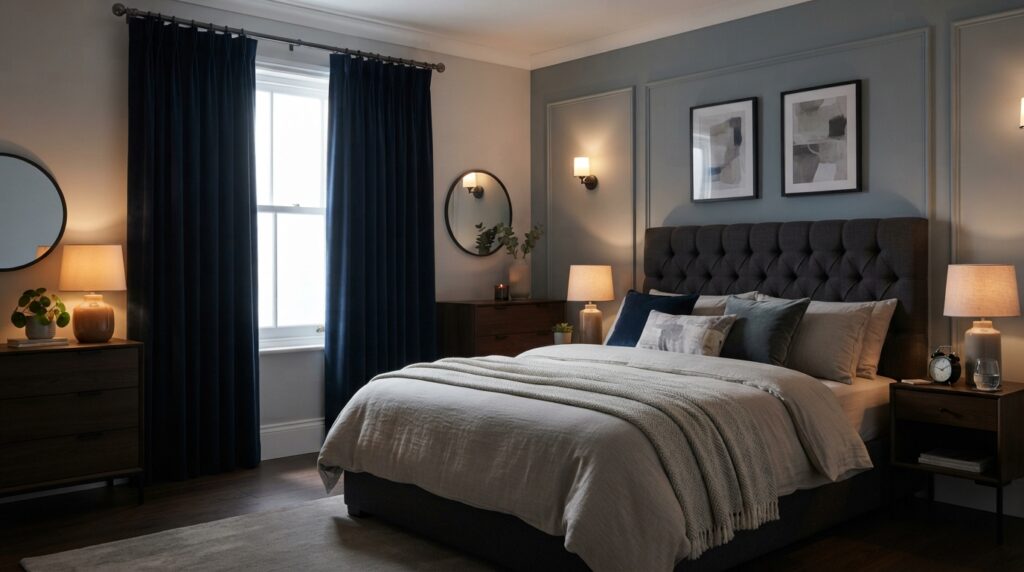
For a bedroom, thermal blackout curtains do two useful jobs at once: they’re the most effective internal shading you can buy — a dense weave and thermal lining slow the heat coming off a sun-struck window — and they block the early summer dawn that wakes you at 4am. Two things matter more than the brand: closing them before the sun hits the window, and fit — a curtain that’s wider and longer than the window and sits close to the wall traps far less warm air behind it than one that leaves gaps. And the honest caveat: an internal curtain works on heat that’s already through the glass, so external shading beats it where you can manage that.
This is the product guide for choosing them. For where curtains sit in the bigger picture of keeping heat out, see our window and curtain guide.
What actually makes a curtain keep a room cooler
Not all “blackout” curtains are made to manage heat. The features that matter:
- A thermal lining. The insulating layer is what slows heat transfer through the fabric — it’s the same feature that keeps a room warmer in winter, working in reverse. A blackout curtain without a thermal layer blocks light but does less for heat.
- Dense, heavy fabric. Weight and weave density both slow heat and block light better.
- A light or reflective face toward the window. A pale or reflective-backed curtain bounces more sunlight back through the glass; a dark face absorbs it, warms up, and then radiates that heat into the room. If the curtain is dark on the room side, a lighter lining facing the glass is what you want.
Fit matters as much as the curtain
- Wider than the window — extend the pole well past each side so light and heat don’t leak around the edges.
- Longer than the window — ideally to the floor, so warm air can’t spill out of the bottom.
- Close to the wall — mount the pole near the wall, or add a pelmet or return at the top, to reduce the gap where warm air rises and circulates into the room.
Close them at the right time
The commonest mistake: drawing the curtains once the room is already hot. By then the sunlight has been through the glass for hours. Close them before the sun reaches that window — for an east-facing bedroom that means overnight or first thing; for a west-facing one, before the fierce afternoon and evening sun arrives. Our window timing guide covers the daily rhythm.
The picks
A thermal-lined blackout curtain
Most effective internal option
Blocks dawn light
Winter benefit too
The core buy. Look specifically for a thermal or insulated blackout curtain rather than a plain blackout one, buy it generously oversized for the window, and hang it close to the wall. It earns its keep year-round — cooler in summer, warmer in winter, and a dark bedroom for sleep.
Good for: bedrooms that catch morning or evening sun; light sleepers woken by the summer dawn; anyone wanting one purchase that helps in both seasons.
Less good for: the hottest days on its own — it manages heat already through the glass rather than stopping it, so pair it with external shading where you can. Measure carefully; the common regret is buying to the exact window size rather than generously oversized. And a very dark room by day isn’t to everyone’s taste.
A thermal curtain lining for curtains you already have
If you like your current curtains
Keeps your existing curtains
Cheaper than replacing
If you’ve got curtains you like, a separate thermal blackout lining that hangs behind them adds the insulating and light-blocking layer without replacing the lot. A tidy, cheaper route to the same effect.
Good for: keeping curtains you already own; renters who don’t want to change much; a lower-cost upgrade.
Less good for: a truly seamless look — a separate lining can be fiddlier to hang neatly than an integrated curtain, and you still need to get the width and drop generous to avoid gaps.
Curtains, blinds or film?
All three treat the window from the inside, and they suit different rooms:
- Thermal blackout curtains — the most effective internal option and best for a bedroom, where the dawn-light blocking is a bonus.
- Blackout blinds — neater where curtains don’t suit; our blinds guide covers them.
- Reflective window film — treats the glass itself and can beat an internal curtain for solar gain, but darkens the room year-round; our film guide covers the trade-offs.
Frequently asked questions
Do blackout curtains actually keep a room cooler, or just darker?
A thermal blackout curtain does both — the lining slows heat, the blackout layer blocks light. A plain blackout curtain with no thermal layer mostly just darkens. And you have to close it before the sun hits.
What colour should they be?
For heat, a light or reflective face toward the window is best, since it bounces sunlight back out. If you want dark curtains for the room, look for ones with a lighter thermal lining facing the glass.
How much bigger than the window should they be?
Generously — wider than the frame on both sides and long enough to reach the floor, hung close to the wall. Gaps around the edges let warm air circulate and undo much of the benefit.
Are they worth it if I have air conditioning?
Yes — less solar heat coming in means the unit has less to remove, so it runs less and costs less. Shading and cooling work best together.
Sources
- Energy Saving Trust — Keeping your home cool in summer
- Energy Saving Trust — Curtains and blinds
- NHS — Sleep and tiredness (a dark, cool bedroom)
Related reading: our window and curtain guide and blackout blinds guide.
Look for a thermal lining, and buy generously oversized for the window. Compare current options at Amazon UK.