How to Keep Heat Out of Your Home: The Window and Curtain Guide
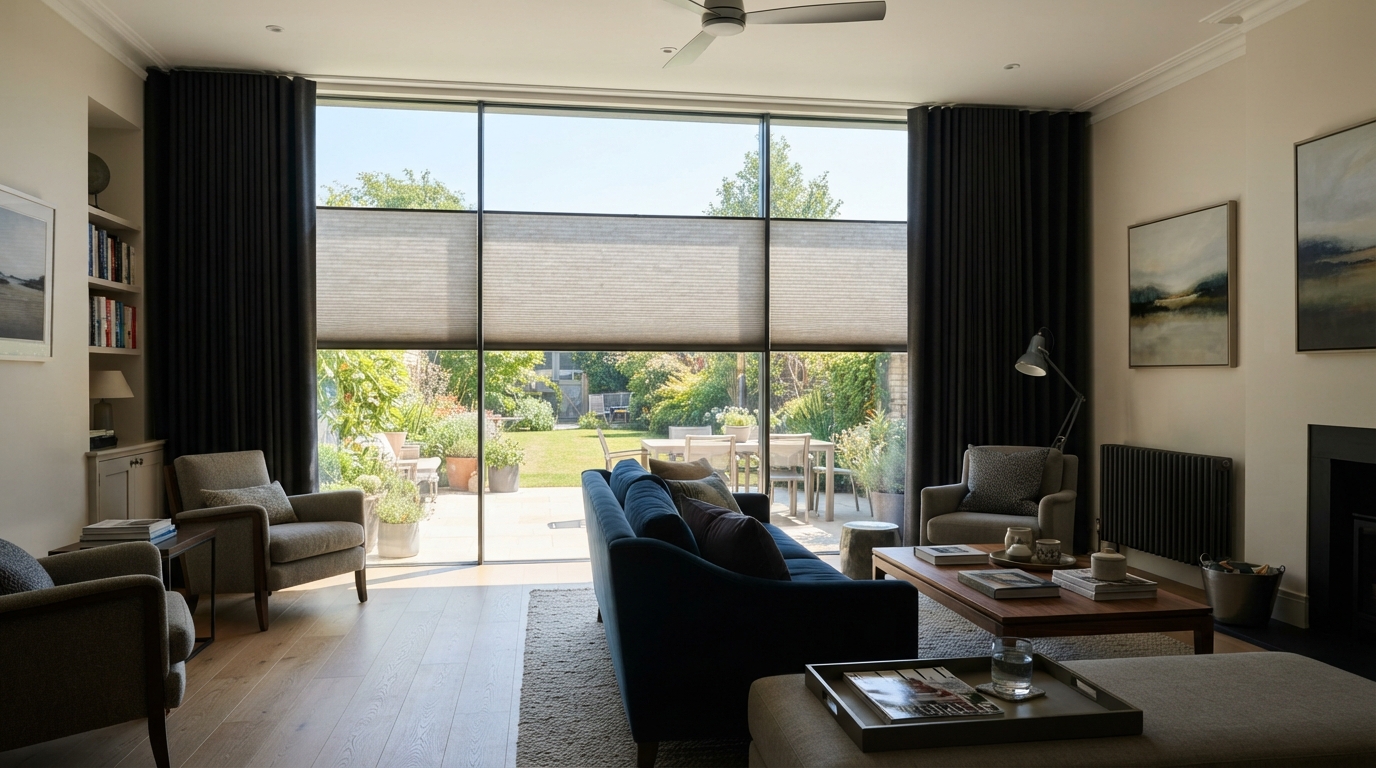
The most effective, cheapest thing you can do is stop the sun’s heat before it gets through the glass — and the single rule that governs everything else is this: shading on the outside of the window beats shading on the inside, every time. Once sunlight has passed through the glass it becomes heat trapped in the room, and a curtain or blind can only re-radiate some of it back. So the order of effectiveness is: external shade first (awnings, shutters, a well-placed tree), then reflective measures at the glass, then light-coloured internal curtains and blinds. Combine that with closing up during the day and ventilating when it’s cooler outside, and you can take the edge off a hot room for almost nothing.
This is the hub for keeping solar heat out. It sets the order of what actually works, then points you to the detailed guide for each measure.
The one rule: outside beats inside
It’s worth understanding why, because it explains every recommendation below. Sunlight is short-wave radiation — it passes straight through glass. When it lands on a surface inside the room (a curtain, the floor, your sofa) it’s absorbed and re-emitted as long-wave heat, which can’t easily pass back out through the glass. That’s the greenhouse effect, working against you.
So the goal is to block or reflect the sunlight before it crosses the glass. Anything on the inside is dealing with heat that’s already arrived — useful, but always second-best to stopping it outside.
Tier 1: external shading (the biggest win)
Standard in hot climates for exactly this reason. If you can shade the glass from outside, you stop most of the heat before it’s a problem.
- External blinds, shutters or awnings — the most effective domestic option, and the norm across southern Europe. Our external shading guide covers whether they’re worth the outlay.
- Position matters more than you’d think. East-facing glass takes the morning sun, west-facing takes the fierce afternoon and evening sun — the west side is usually where a room overheats worst.
- Planting and trees — a deciduous tree or tall shrub shading a window shades in summer and lets light through in winter. Slow, but free and effective.
Tier 2: at the glass
If you can’t shade outside — a flat, a rental, a north-facing wall onto the street — the next best thing is treating the glass itself.
Reflective window film sits on the glass and reflects some solar energy before it fully enters the room. It genuinely helps with solar gain, though it’s less effective than external shading and there are real trade-offs (it darkens the room year-round, and some types affect glazing). We’ve given it its own honest assessment — see our reflective window film guide, which covers what it does and doesn’t do.
Tier 3: internal curtains and blinds
The most common approach, and still worth doing — just understand it’s working on heat that’s already through the glass, so it manages the problem rather than preventing it.
- Light or reflective-backed is better than dark. A pale or foil-backed curtain reflects more sunlight back toward the glass; a dark curtain absorbs it and warms up, then radiates that heat into the room.
- Close them before the sun hits, not after. Curtains drawn against a window that’s already been baking are shutting the stable door after the horse has bolted.
- Thermal / blackout curtains do the most of any internal option — the dense weave and lining slow heat transfer both ways. Our blackout thermal curtains guide covers choosing them, especially for a bedroom.
- Blackout blinds are a neat alternative where curtains don’t suit — our blinds guide covers them.
The daily routine that ties it together
Shading works best alongside sensible timing — none of this costs anything:
- Close windows and shading during the day when it’s hotter outside than in. An open window in full afternoon sun lets heat in, not out.
- Open up when it’s cooler outside — usually late evening into early morning — to flush the day’s heat. Our window timing guide covers getting this right.
- Seal the cool in. Once you’ve cooled a room, stopping warm air leaking back in matters — our draught-proofing guide covers it.
- Cut internal heat sources — electronics, the oven, incandescent bulbs all add heat you can avoid.
When shading isn’t enough
On the hottest, most humid days, passive measures take the edge off but won’t deliver a genuinely cool room — that’s the honest limit. A fan helps you feel cooler by moving air, and if you need to actually lower the temperature, that’s where cooling comes in. Our fan vs air conditioner guide covers where the line sits.
Frequently asked questions
Do curtains keep heat out or just block light?
They help with both, but for heat they’re working on sunlight that’s already through the glass. Light-coloured or reflective-backed curtains, closed before the sun hits, do the most — external shading does more still.
Should I close windows during a heatwave?
Yes, when it’s hotter outside than in — an open window then lets heat in. Open up when the outside air is cooler, typically overnight, to flush the day’s heat.
Is reflective film better than curtains?
For solar gain specifically, treating the glass tends to beat an internal curtain, because it acts before the light fully enters. But film darkens the room year-round and has trade-offs — our film guide covers them.
Which window should I prioritise?
The one taking direct sun — usually west-facing for the fierce afternoon heat, and south-facing through the middle of the day. Shading a north-facing window does little.
Sources
- Energy Saving Trust — Keeping your home cool in summer
- Met Office — Heat-health advice
- GOV.UK — Approved Document O: Overheating (solar gain in dwellings)
Related reading: our blackout thermal curtains guide and window timing guide.
Thermal-lined curtains are the most effective internal measure. Compare current options at Amazon UK.