Are Portable Gas Heaters Safe to Use Indoors? (UK)
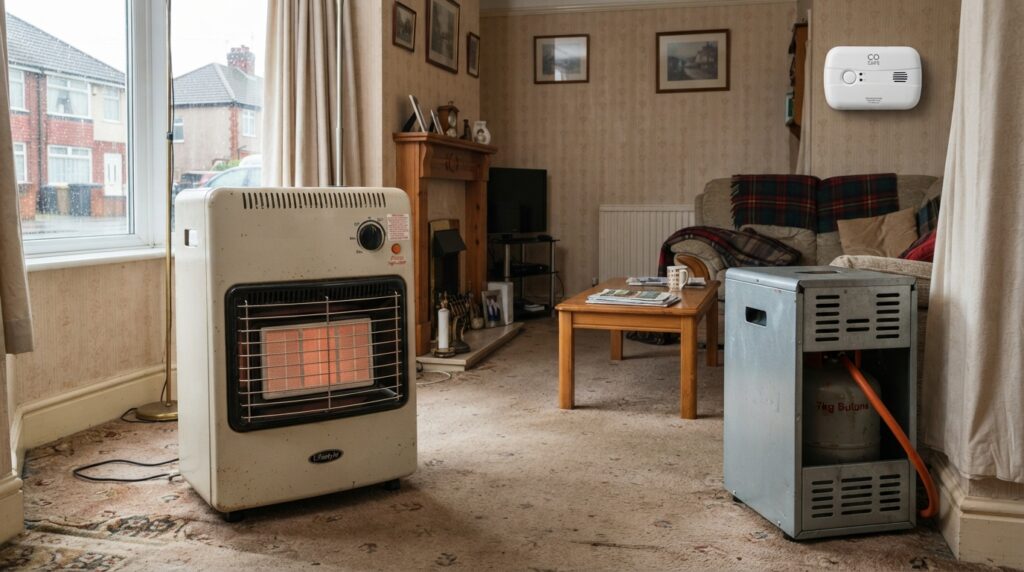
They can be used indoors in the UK, but only in the right room and under strict conditions. Calor, the best-known supplier, says the room must be well ventilated, and that mobile gas heaters should not be used in bathrooms, bedrooms, garages or any sleeping accommodation, or in rooms smaller than the manufacturer specifies. There are limits on flats too: Calor says they may only be used in traditionally built flats of up to four storeys, and not in high-rise large-panel system blocks. Many council tenancies ban them outright. Every flame heater gives off carbon dioxide and water vapour, and if something goes wrong, carbon monoxide. For most homes, an electric oil-filled radiator is the safer way to heat a room.
Bottled gas cabinet heaters are a familiar sight in British conservatories, garden rooms and draughty back rooms, and they’re often sold as a cheap way to heat one room without touching the central heating. They have real advantages — lots of heat, no plug needed — but they also burn fuel inside your home. Here’s what the manufacturer, the fire service and the safety bodies actually say.
How a portable gas heater works
A cabinet heater holds a gas cylinder, usually butane, in the back and burns it through a front panel. Calor’s buyer’s guide says outputs typically come in steps of 1 to 1.4kW, 2 to 2.8kW and 3 to 4.2kW, depending on the model. Its Super Heat model, for example, runs at 1.4, 2.8 or 4.2kW and lists a maximum gas use of 315 grams an hour. On the highest setting, a full 15kg cylinder would therefore last roughly 48 hours (15,000 ÷ 315).
Calor says all its gas heaters are supplied with an oxygen depletion sensor (ODS), which automatically turns the heater off if oxygen levels drop to a dangerous level. That’s an important safety feature, but it isn’t a carbon monoxide detector, and it’s not a substitute for ventilation or a CO alarm.
Rooms where you must never use one
Calor’s mobile heater guidelines and its gas heater buyer’s guide say they should not be used in:
- Bathrooms or shower rooms
- Bedrooms, tents or any sleeping accommodation
- Garages
- Caravans, motorhomes and other leisure vehicles
- Rooms smaller than the size the manufacturer specifies
Humberside Fire & Rescue gives the same advice: only use portable gas heaters in well-ventilated rooms, not in bedrooms or bathrooms.
Room size: check before you buy
Heaters come with a minimum room size, and it’s often bigger than people expect. Calor’s Super Heat lists a minimum of 82 cubic metres for a living area and 41 cubic metres for other rooms. At a ceiling height of 2.4 metres, 82 cubic metres is a floor area of about 34 square metres, and 41 cubic metres is about 17 square metres. Measure your room — length × width × height — and compare it with the figure in the manual for the specific heater before you buy.
Ventilation and condensation
Calor says it’s essential that adequate ventilation is provided and maintained in rooms where these heaters are used. Burning gas uses oxygen from the room and, as Calor’s guidelines explain, produces carbon dioxide and some water vapour during normal operation. That water vapour is why councils dealing with damp often advise against them: Renfrewshire Council, for example, tells tenants to avoid bottled gas and paraffin heaters because they produce high levels of vapour. In a cold room with single glazing, you’ll often see it running down the windows. Our winter condensation guide explains why that leads to mould.
Carbon monoxide: the real danger
The Gas Safe Register explains that carbon monoxide is produced by the incomplete burning of carbon fuels, including liquefied petroleum gas (LPG). London Fire Brigade’s carbon monoxide safety booklet lists portable LPG heaters among the sources of carbon monoxide in the home. You can’t see, smell or taste it.
The NHS lists the symptoms of carbon monoxide poisoning as including a headache, dizziness, feeling or being sick, feeling weak, tiredness and confusion, chest and muscle pain, and shortness of breath, and notes that symptoms may come and go. The Health and Safety Executive warns that early symptoms are easily confused with food poisoning, viral infections, flu or simple tiredness. If symptoms ease when you leave the room and return when you go back in, treat that as a warning sign.
Flats and rented homes
Cylinders: storing and changing them
- Give it space. Calor’s guidelines say to keep at least one metre of clear space around the heater.
- Change cylinders outdoors. London Fire Brigade says gas heater cylinders should be changed in the open air.
- Never store spares in a basement, under the stairs, or in a cupboard with the electricity meter. That’s also London Fire Brigade’s advice.
- Keep the amount indoors to a minimum. Calor’s own documents disagree here: its mobile heater guidelines say no more than 15kg of butane per home, while its gas bottle storage page says up to 30kg indoors. The safer reading is the lower figure — in practice, the cylinder that’s in the heater, with spares kept outside in a secure, ventilated place.
- Turn the cylinder valve off when the heater isn’t in use, and check the hose and regulator for cracks at the start of each winter.
The safer alternatives
For most homes, an electric heater removes the combustion risks altogether. An oil-filled radiator gives steady, gentle heat with no flame, no fumes and no water vapour, and can run from a thermostat and timer. Because a gas heater doesn’t need electricity, some people keep one for power cuts; if you do, the same rules about rooms and ventilation still apply. Our cheapest way to heat one room guide compares the running costs of the main options, and our heat pump versus electric heater guide covers the longer-term choices.
A carbon monoxide alarm (EN 50291)
Essential in any room with a flame heater
Certified to EN 50291
Test button
London Fire Brigade advises always fitting a carbon monoxide alarm in rooms with solid fuel, gas or paraffin heaters. Choose one certified to EN 50291, follow the manufacturer’s placement instructions, test it regularly, and replace it when it reaches the end of its stated life — the sensor wears out even if the battery doesn’t. It’s worth having near any gas appliance in the house, not just a portable heater.
Good for: any room with a gas, oil or solid-fuel heater; peace of mind if you use bottled gas.
Less good for: making an unsuitable room safe — an alarm warns you, it doesn’t replace ventilation or the rules about bedrooms and bathrooms.
An oil-filled radiator with thermostat and timer
The flame-free alternative
Thermostat holds the room temperature
Timer on many models
An oil-filled radiator heats a room more slowly than a gas heater, but it doesn’t burn anything, so there’s no carbon monoxide risk and no extra condensation. Look for an adjustable thermostat so it cycles off once the room is warm, a timer, tip-over and overheat protection, and a wattage that suits your room. Plug it straight into a wall socket rather than an extension lead.
Good for: bedrooms and flats where gas heaters aren’t allowed; damp-prone rooms; people who want heat without combustion.
Less good for: very fast heat in a large cold room — it takes a while to warm up. Running costs depend on your electricity rate.
Frequently asked questions
Can I use a Calor gas heater in my living room?
Potentially, if the room is well ventilated and larger than the minimum size in the heater’s manual, and you’re not in a flat or tenancy where they’re restricted. Calor says they mustn’t be used in bathrooms, bedrooms, garages or sleeping accommodation.
Can I use a gas heater in a bedroom?
No. Calor’s guidance and Humberside Fire & Rescue both say portable gas heaters must not be used in bedrooms or any sleeping accommodation.
Do portable gas heaters cause condensation?
Yes. Calor’s guidelines say they produce carbon dioxide and some water vapour during normal operation, and councils such as Renfrewshire advise avoiding bottled gas heaters because they produce high levels of vapour.
Do I need a carbon monoxide alarm with a gas heater?
Yes. London Fire Brigade advises always fitting a carbon monoxide alarm in rooms with gas heaters. The heater’s oxygen depletion sensor is a useful safety cut-out, but it isn’t a CO detector.
Sources
- Calor — Gas heater buyer’s guide
- Calor — Guidelines for the safe use of mobile heaters
- Calor — Storing gas bottles
- Calor — Super Heat 4.2kW cabinet heater
- London Fire Brigade — Portable heaters, gas fires and open fires
- Humberside Fire & Rescue Service — Heater safety advice
- Gas Safe Register — Carbon monoxide poisoning
- NHS — Carbon monoxide poisoning
- Health and Safety Executive — Carbon monoxide
- Renfrewshire Council — Condensation, damp and mould
- London Fire Brigade — Carbon monoxide safety booklet
- Brighton & Hove City Council — Large panel system high-rise building safety
- Highland Council — Keeping your home safe and secure
- Reading Borough Council — Tenancy information: gas (section 11)
- Calor — Emergencies
Related reading: our cheapest way to heat one room, conservatory too cold in winter and winter condensation and mould guide.
Compare current EN 50291 carbon monoxide alarms at Amazon UK.