Can You Use a Water Filter During a Boil Water Notice? (UK)
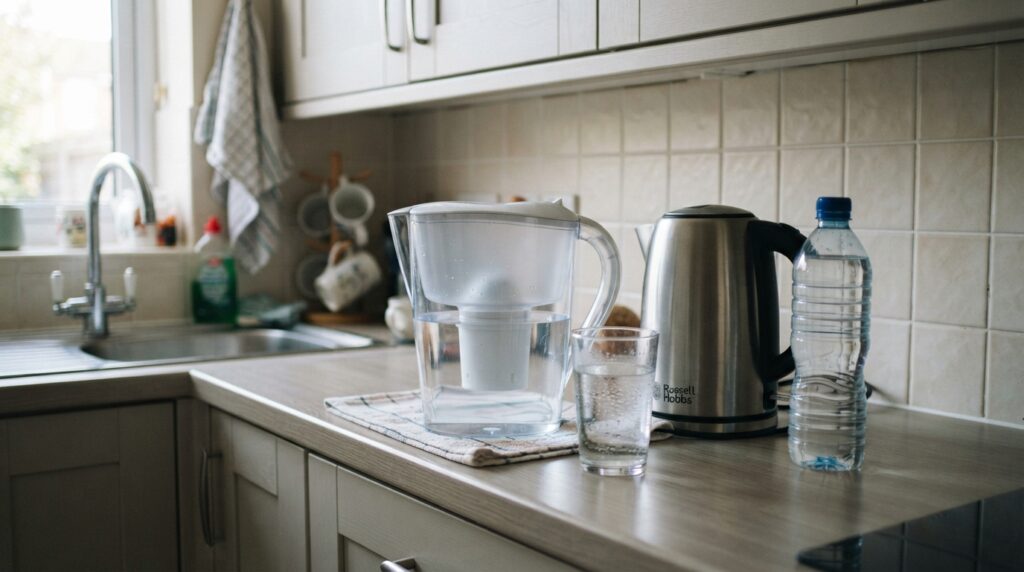
No, not a jug filter or a plumbed-in filter. Anglian Water says “you cannot rely on domestic water filters to remove bacteria”, and Thames Water says “do not use domestic water filters or water purification tablets during the notice”, because a filter “may concentrate any potential contamination”. Brita’s own manual says that if you’re told to boil water, “BRITA filtered water must also be boiled”. So boil your water instead: bring it to the boil, let it cool, and keep it in a clean container in the fridge for no more than 24 hours. When the notice is lifted, replace your filter cartridges. Portable filters such as LifeStraw and Sawyer remove bacteria and parasites, but their makers say they don’t remove viruses, so they’re no substitute for boiling during a notice.
Since the government launched its Be Ready campaign on 22 October 2026, many people have been stocking up on emergency supplies, including bottled water. If your water company issues a boil water notice, it’s tempting to think the filter jug in the fridge will do the job. It won’t. Here’s what UK water companies actually say about filters, what portable filters and purification tablets can and can’t do, and what to do when the notice ends.
Why boil water notices happen
The Drinking Water Inspectorate (DWI) says “tap water in the UK is safe to drink without boiling”, but that “on rare occasions, the systems can fail”, usually because of weather emergencies or engineering works. A boil notice means your water “might contain bacteria, viruses or parasites”.
One parasite causes particular problems. United Utilities says Cryptosporidium “is resistant to chlorine, the chemical we most commonly use to disinfect our drinking water”. In May 2024, South West Water issued a boil water notice in parts of Brixham in Devon after tests found Cryptosporidium. By 17 May, Torbay Council said the UK Health Security Agency had confirmed 46 cases of cryptosporidium.
Can you use a filter jug or a plumbed-in filter?
No. The water companies below, and Brita, all say the same:
| Source | What it says about filters |
|---|---|
| Anglian Water | “Water should always be boiled before use as you cannot rely on domestic water filters to remove bacteria.” |
| SES Water | “Domestic water filters should not be relied upon to purify the water.” It recommends not using the filter during the notice, “since the filter may concentrate any potential contamination”. |
| Thames Water | “Do not use domestic water filters or water purification tablets during the notice.” |
| Brita (MAXTRA manual) | Its filters are “designed for use only with municipally treated tap water”, and during a boil instruction “BRITA filtered water must also be boiled”. |
Jug filters are designed to improve taste and reduce limescale in water that’s already safe, not to make unsafe water safe. Thames Water says not to use domestic filters at all during a notice, so it’s safest to put your jug away until the notice is lifted. Don’t pour boiled water through the old cartridge, as SES Water says a filter “may concentrate any potential contamination”. If you do filter water, boil it afterwards. Brita says filtered water must also be boiled.
How to boil water properly
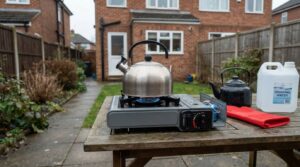
- Bring it to the boil. The DWI says to boil water “until it reaches a rolling ball”. Anglian Water says “prolonged boiling isn’t necessary”, and SES Water says “using an electric kettle is fine”.
- Let it cool naturally. Thames Water says water “can take 45 minutes to cool”. Don’t pour hot water into glass bottles, as Thames warns they “could crack or shatter”.
- Store it safely. The DWI says to keep boiled water “in a clean container, in the fridge” and throw it away if it’s not used within 24 hours.
- Watch for scalds. The DWI reminds people that “boiling water can cause scalds”, so keep kettles and hot water away from children.
What needs boiled water, and what doesn’t
| Use boiled (or bottled) water for | Unboiled tap water is fine for |
|---|---|
| Drinking | Showering and bathing (keep it out of your mouth) |
| Brushing teeth | Washing clothes |
| Making ice cubes | Flushing the toilet |
| Preparing food | |
| Cleaning feeding equipment, such as baby bottles | Washing dishes in hot water (dry them thoroughly) |
| Your pets’ drinking water |
This follows the DWI’s advice. Anglian Water also says to throw away “any ice cubes that have been made using unboiled water”.
What about LifeStraw, Sawyer and other portable filters?
Portable “microfilters” are designed for walkers and campers drinking from streams. They block bacteria and parasites with a very fine membrane. Here’s what the makers say:
| Filter | Removes (maker claims) | Doesn’t remove |
|---|---|---|
| LifeStraw Personal | 99.999999% of bacteria; 99.999% of parasites, including Cryptosporidium; 99.999% of microplastics | Viruses |
| Sawyer Squeeze | 99.99999% of bacteria; 99.9999% of protozoa, including Cryptosporidium; 100% of microplastics | Viruses, dissolved chemicals, salt, heavy metals |
LifeStraw says its filters “do not remove viruses”, and Sawyer says its filter “does not remove viruses”. The DWI says UK boil notices can involve viruses as well as bacteria and parasites. So during a notice, follow your water company’s advice and boil the water, even if you own one of these filters.
Portable filters are most useful in a long outage, if your stored water runs out and you have to treat water from another source. Bottled water is still the safest choice. The government’s Be Ready advice says “bottled water is the safest way to prepare for water outages”, and that “most alternative water sources will also need to be filtered before using the tablets”. It also says not to drink water collected in a rain butt, as it “could contain bacteria or disease”. Use rainwater for flushing the toilet instead.
Water purification tablets
Thames Water says not to use purification tablets during a boil notice. Boil the water instead. SES Water says it does “not recommend water purification tablets as an alternative to boiling”. If you can’t boil water during a notice, use bottled water. Tablets are for an emergency when you have to treat water from another source.
- Follow the label. Be Ready says to “always follow instructions on the product label as the tablets come in different strengths”.
- Know their limits. MSR, which sells Aquatabs, says they’re effective against “viruses, bacteria and Giardia cysts”, but “not effective against Cryptosporidium”, the parasite behind the Brixham outbreak.
- Combine methods. NHS Fit for Travel advises that you “combine chemical treatments with another method such as boiling or filtration”. A microfilter, which stops parasites, plus a tablet, which deals with viruses, covers more than either one alone.
When the boil water notice is lifted
- Replace filter cartridges. Anglian Water says “your water filters should be replaced”. South West Water says this applies to “filter jugs and plumbed-in water filters”, and Welsh Water adds fridge filters and under-sink systems. Brita’s manual says to clean the jug thoroughly and fit a new cartridge.
- Flush the ice maker. South West Water says to make a fresh batch of ice to flush the plumbing, throw it away and repeat. “The second batch of fresh ice will be safe to use.” Throw away any ice already in the freezer and wash the trays.
- Run your taps if needed. If you have a cold water storage tank, or were away during the notice, South West Water says to “run all your cold taps on full for 30 minutes to flush your system through”.
The kit worth having (for outages and the outdoors)
None of these replaces boiling during a notice. They’re for walks, camping and long outages when you have to use a different water source.
Sawyer Squeeze water filter
Best for: filling bottles and containers
Removes bacteria and protozoa
Rated to 100,000 gallons
Sawyer says the Squeeze removes 99.99999% of bacteria such as E. coli, 99.9999% of protozoa and cysts such as Cryptosporidium, and 100% of microplastics, using a 0.1 micron hollow fibre membrane. You fill the pouch, then squeeze the water through the filter into a bottle or container, so you can store filtered water. Sawyer rates it to 100,000 gallons and backs it with a lifetime limited warranty.
Good for: camping; walking; treating water from another source in a long outage, with a purification tablet.
Less good for: viruses, chemicals and heavy metals, which Sawyer says it doesn’t remove. It needs backwashing when the flow slows, and Sawyer says to replace it if you think it has frozen.
LifeStraw Peak Solo
Best for: a light filter for walks and grab bags
48g
Fits standard screw-top bottles
UK retailer Facewest says the Peak Solo removes 99.999999% of bacteria, 99.999% of parasites and 99.999% of microplastics. It lists it at 48g, rated for 2,000 litres, with a flow of 3 litres a minute, and says it fits “any standard screw top bottle”, so you can drink straight from a bottle.
Good for: grab bags; walking; travel.
Less good for: treating water for the whole family, as it’s designed for one person drinking through it. LifeStraw says its filters don’t remove viruses.
Aquatabs water purification tablets
Best for: treating water from another source
30-minute treatment
Check the dose on the pack
MSR, which sells Aquatabs, says they’re effective against “viruses, bacteria and Giardia cysts”, with a 30-minute treatment time. Its box of 30 treats up to 60 litres, but other packs come in different strengths. Check how much water each tablet treats on your pack before you use it. They’re small and light, so they’re easy to keep in a grab bag or car.
Good for: pairing with a microfilter; grab bags; travel.
Less good for: Cryptosporidium, which MSR says they’re not effective against. They don’t remove chemicals either, and Thames Water says not to use tablets during a boil notice.
Frequently asked questions
Does a Brita filter make water safe during a boil water notice?
No. Brita’s manual says its filters are designed only for treated mains water, and that during a boil instruction “BRITA filtered water must also be boiled”. Replace the cartridge once the notice is lifted.
How long do you need to boil water for a boil water notice?
Just bring it to the boil. Anglian Water says “prolonged boiling isn’t necessary”, and SES Water says an electric kettle is fine. Let it cool, and store it in a clean container in the fridge for up to 24 hours.
Can I use a LifeStraw instead of boiling water?
Not during a UK boil notice. LifeStraw says its filters remove bacteria and parasites but not viruses, and the DWI says a notice can mean the water may contain viruses. Follow your water company’s advice and boil it.
Can I shower during a boil water notice?
Yes. The DWI says the water is still safe to shower and bathe in, “but make sure it does not get into your mouth”. You can also wash clothes and flush the toilet as normal.
Do I need to change my water filter after a boil water notice?
Yes. Anglian Water, South West Water and Welsh Water all say to replace filters once the notice is lifted, including filter jugs, plumbed-in filters and fridge filters.
Sources
- Drinking Water Inspectorate — Receiving a boil water notice
- Anglian Water — Boil notice FAQs; SES Water — Boil notice FAQs (PDF); Thames Water — Boil water notice
- South West Water — Lifting a boil water notice and Brixham boil water notice, May 2024 (PDF); Welsh Water — Boil water notice
- Torbay Council — Cryptosporidium update, 17 May 2024; United Utilities — Cryptosporidium (PDF)
- Brita — MAXTRA water filter user manual
- GOV.UK Be Ready — Water supply interruptions or outages
- NHS Fit for Travel — Water purification
- LifeStraw — Do I need purification tablets? and LifeStraw Personal performance sheet (PDF); Facewest — LifeStraw Peak Solo
- Sawyer — Squeeze water filter and FAQs; MSR (Cascade Designs) — Aquatabs
Related reading: how to store emergency drinking water, how to make up baby formula when the water is off and how to flush the toilet when the water is off.
Compare portable water filters for camping and emergencies at Amazon UK.