Air Conditioning for Allergies and Asthma: What Actually Helps
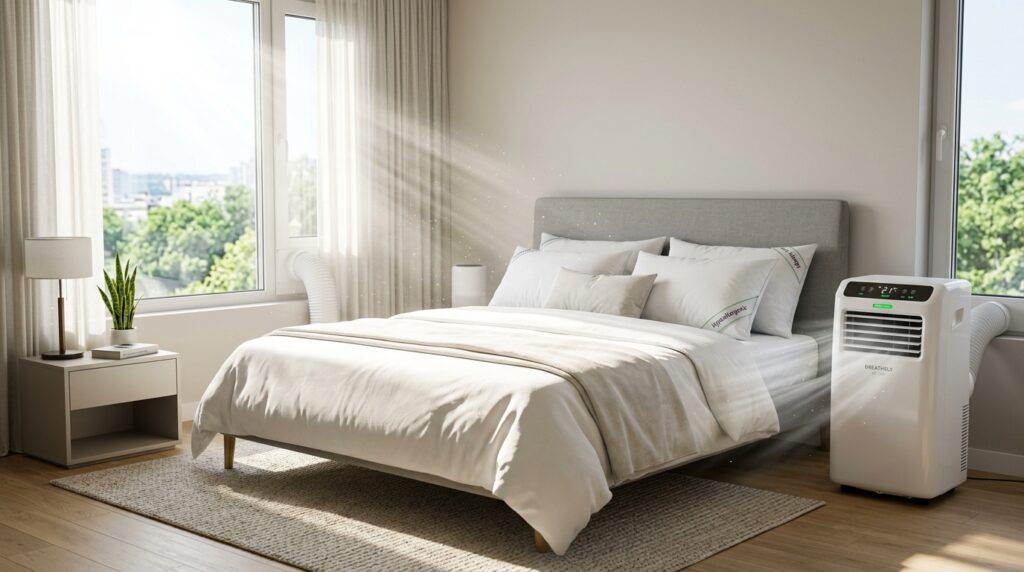
Here’s the thing most articles on this topic won’t tell you: the filter in a portable air conditioner is a mesh screen to stop dust damaging the machine. It is not an air purifier. It won’t remove pollen or fine particles in any meaningful way, whatever the listing implies. What air conditioning genuinely does help with is keeping windows closed during high pollen and reducing humidity, which matters because dust mites and mould thrive in damp air. If you want filtration, buy a separate HEPA air purifier — that’s a different machine doing a different job.
What air conditioning genuinely does
It lets you keep the windows shut
The most underrated benefit, and for pollen allergy it’s the real one.
Standard hay fever advice is to keep windows closed when pollen counts are high — but in a British summer, closing the windows makes the room unbearable, so people open them anyway. An air conditioner breaks that trade-off: you can keep the room sealed and still sleep.
Pollen counts are typically highest in the early morning and evening, which is exactly when you’d otherwise be purge ventilating. Our hay fever guide covers the timing.
It reduces humidity
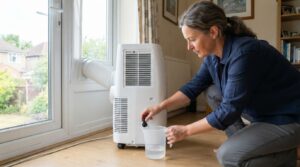
An air conditioner removes moisture as it cools — that’s where the tank water comes from.
That matters because house dust mites thrive in humid conditions and struggle in drier air, and mould needs moisture. Both are common allergy and asthma triggers. Keeping indoor relative humidity in a reasonable range — broadly 40–60% — is a recognised part of managing them.
A hygrometer tells you where you actually are rather than guessing. Our thermometers guide covers options.
It helps some people with heat-triggered symptoms
Hot, humid air is a recognised asthma trigger for some people, as is a sudden change in air temperature. If heat is on your personal trigger list, a stable cooler room can help — though a blast of cold air can itself be a trigger for others, which is why airflow direction matters.
What it does not do
It also doesn’t bring in fresh air. A portable unit recirculates room air. It doesn’t remove carbon dioxide or ventilate the room, which is why background ventilation still matters — leave trickle vents open even with the window shut.
The risk: a neglected unit makes things worse
This is the part that matters most for anyone with asthma, and it reverses the benefit entirely if you get it wrong.
An air conditioner produces moisture internally. A damp, dark filter and coil is exactly where mould grows — and then the machine blows it around a room you sleep in.
If you have asthma or allergies, treat filter maintenance as non-negotiable:
- Clean the filter fortnightly during use, weekly in a dusty room or with pets. Our pets guide covers why fur clogs filters so quickly.
- Let it dry completely before refitting — hours, not minutes. A damp filter refitted is the commonest cause of a musty unit.
- Run fan-only for 20–30 minutes after cooling sessions to dry the coil. Many units do this automatically on shutdown; leave that setting on.
- Dry it thoroughly before storage — two to four hours of fan-only. Our storage guide covers the routine.
- Deal with any musty smell immediately rather than living with it. Our smell guide covers diagnosis.
- Don’t sit in the direct airflow continuously — cool the room, not the person.
A well-maintained unit helps. A neglected one is worse than no unit at all.
What actually helps more
Honest ordering, cheapest first:
- Deal with damp and mould. If there’s visible mould anywhere in the home, that’s the priority — it’s a recognised health risk and government guidance is clear about it. Our damp guide covers what works. In rented housing this is the landlord’s responsibility.
- Reduce humidity. Extractor fans used properly, don’t dry washing on radiators in a closed room, ventilate after showering. A dehumidifier if readings are persistently high — our dehumidifier guide covers choosing one.
- A separate HEPA air purifier if filtration is what you want. Different machine, different job, and it works year-round rather than only when you’re cooling.
- Bedding and soft furnishing measures for dust mite allergy — wash bedding hot, consider barrier covers. Asthma + Lung UK has specific guidance.
- Then air conditioning, for the closed-windows and lower-humidity benefits.
The picks
A separate HEPA air purifier
If filtration is the goal
Works year-round
Low running cost
If your reason for looking at air conditioning is allergies rather than heat, this is the machine you actually want. Look for a stated true HEPA filter grade rather than “HEPA-type”, a clean air delivery rate suited to your room size, and a quiet mode if it’ll run overnight. Check the cost and availability of replacement filters before buying — that’s the ongoing expense.
Good for: pollen, fine particles and dust; running all year rather than a few weeks; bedrooms, where most allergen exposure happens.
Less good for: heat. It doesn’t cool at all, and the motor adds a little warmth. It also does nothing about humidity, so if dust mites or mould are your trigger it addresses the symptom rather than the cause. Filters are a recurring cost.
MeacoCool MC Series 9000 (MC9000)
For the closed-window benefit
16–26m²
Dehumidify mode
A-rated
Meaco publish 16–26m², an A energy rating and a 53 dB minimum noise figure, with a dehumidify mode that earns its place here specifically. The reason to pick a documented brand for this use: you can find the filter type, the replacement schedule and the warranty terms, which matters when maintenance is the thing standing between help and harm.
Good for: sleeping with windows shut during high pollen; bringing humidity down in a room where dust mites or mould are a trigger.
Less good for: filtration — the filter is a mesh screen, not a HEPA element, and it won’t remove pollen from the air. It also needs diligent cleaning, and a neglected unit will actively worsen symptoms. If heat isn’t a problem for you, a purifier and a dehumidifier do the relevant jobs better.
Frequently asked questions
Will air conditioning help my hay fever?
Indirectly and genuinely — by letting you keep windows closed when pollen is high, which standard guidance recommends but most people can’t manage in hot weather. It won’t filter pollen already in the room.
Can air conditioning trigger asthma?
It can for some people — a sudden change in air temperature is a recognised trigger, as is very dry air. Don’t sit in the direct airflow, avoid setting it much colder than you need, and discuss your own triggers with your asthma nurse. A dirty unit blowing mould spores is a separate and avoidable problem.
What humidity should I aim for?
Broadly 40–60% relative humidity is the usual comfortable indoor range, and dust mites do less well at the drier end. Measure it rather than guessing — a hygrometer costs very little.
Is the dryness from air conditioning a problem?
It can cause a dry throat or eyes if the room is over-dried or you’re sitting in the airflow. Our dryness guide covers the fixes, most of which are free.
Sources
- Asthma + Lung UK — Asthma + Lung UK (free nurse-staffed helpline)
- NHS — Asthma
- NHS — Hay fever
- NHS — Can damp and mould affect my health?
- GOV.UK — Damp and mould: health risks
- GOV.UK — Approved Document F: Ventilation
- Met Office — Pollen forecast
Related reading: our air purification guide and hay fever guide.
Compare options at Amazon UK. If filtration rather than heat is your reason for looking, a separate HEPA purifier is the machine that does that job.