Why Does My House Feel Cold at 20°C?
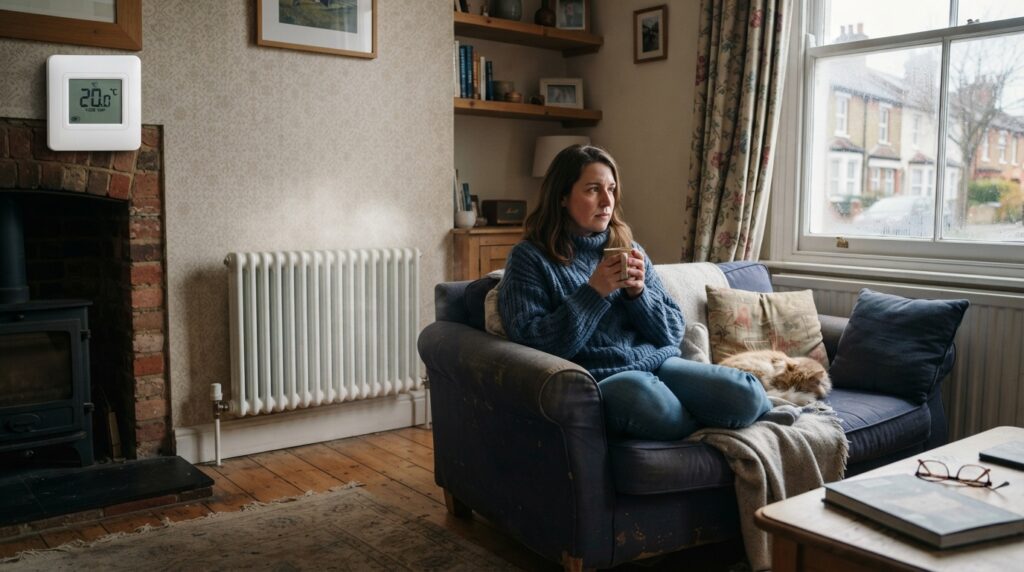
Because your thermostat measures air temperature, and your body responds to something broader. You also lose heat by radiating it to cold surfaces — walls, windows, floors — and by convection from moving air. A room at 20°C with cold single-glazed windows and a draught across the floor feels genuinely colder than a room at 20°C with warm, dry, well-insulated surfaces. It isn’t in your head, and turning the thermostat up is the expensive way to fix it.
This is one of the most common winter household complaints, and it usually gets met with “just turn the heating up” — which works, costs money, and doesn’t address why the room feels wrong in the first place.
What your body is actually responding to
Thermal comfort isn’t a single number. Your body loses heat by several routes at once, and a thermostat measures only one of the things that affect them.
- Convection — heat carried away by air moving across your skin. Faster air, more loss. This is why a draught feels cold.
- Radiation — you radiate heat toward any surface colder than you, continuously. A large cold window or an uninsulated external wall is a constant drain.
- Conduction — direct contact, mostly your feet on the floor.
- Evaporation — mostly relevant in the heat, but humidity affects how a room feels in winter too.
Your thermostat measures air temperature at one point on one wall. It has no idea about the other three.
Cause 1: Cold surfaces (usually the main one)
This is the biggest and least-understood factor.
Sit beside a large single-glazed window on a cold night and you will feel cold at 21°C, because you’re radiating heat toward glass that may be at 8°C. Move to an armchair against an internal wall and the same room feels fine.
Building services engineers use the concept of operative temperature — roughly an average of air temperature and the mean radiant temperature of surrounding surfaces — precisely because air temperature alone doesn’t predict comfort. It’s why an old, poorly insulated house needs a higher air temperature to feel as comfortable as a well-insulated one.
What helps:
- Thermal or lined curtains, closed at dusk — the cheapest meaningful fix
- Secondary glazing film on single-glazed windows
- Moving seating away from large windows and external walls
- Insulation, which raises internal surface temperatures — our loft insulation guide covers the biggest one
Cause 2: Draughts
Moving air strips heat from your skin faster than still air. A room can be 20°C and still have a cold current tracking across the floor from an ill-fitting door.
Cold air is denser, so it pools low — which is why you can feel warm enough from the waist up and have genuinely cold feet in the same chair. Our cold hands and feet guide covers that specifically.
Our draught-proofing guide covers fixing it, and it’s the cheapest permanent improvement available to most households.
Cause 3: Cold floors
Enormously underrated. A suspended timber floor with a ventilated void beneath, or a solid uninsulated floor, can sit several degrees below air temperature. Bare feet or thin socks lose heat to it by direct conduction, which is much faster than losing it to air.
Rugs, proper slippers with insulating soles, and filling floorboard gaps all help. Don’t block the airbricks ventilating the void — that causes damp.
Cause 4: Damp
Two mechanisms, both real.
Wet walls conduct heat away faster than dry walls. Saturated masonry from a blocked gutter or failed pointing makes a room genuinely colder as well as damp — which is why the autumn jobs in our storm-proofing guide are thermal jobs too.
Humid air feels cooler on skin and makes clothing and bedding feel clammy. Our condensation and damp guide covers reducing it.
Cause 5: The thermostat is lying to you
Not maliciously — it’s just reporting one spot.
- It’s in the wrong place. A thermostat in a warm hallway satisfies early and stops the boiler before your living room catches up.
- It’s near a heat source — a radiator, a lamp, sunlight, a TV — reading high and shutting the system down.
- It’s in a draught, reading low and overheating everything else.
- It’s inaccurate. Cheap thermostats drift. Put an independent thermometer next to it and compare — our thermometers guide covers options.
Our cold room guide covers the wider diagnosis, and our smart controls guide covers per-room control if the hall thermostat is the problem.
Cause 6: You, and it’s legitimate
Individual thermal comfort varies genuinely, and several factors change with age.
- Circulation and thermoregulation change over time, and several common conditions affect cold tolerance — worth a GP conversation if it’s new or worsening, as covered in our cold extremities guide.
- Activity level. Sitting still for two hours, you’ll feel colder than someone who’s been moving.
- What you last ate and drank.
- Acclimatisation. The first cold week of autumn feels far worse than the same temperature in February.
Two people in one room genuinely disagreeing about the temperature is normal, not one of them being difficult.
The fix order
- Free: close curtains at dusk; move seating away from windows and external walls; put a rug down; wear proper slippers; check the thermostat isn’t near a heat source.
- Cheap: draught-proof; add thermal curtain linings; secondary glazing film on single glazing.
- Moderate: loft insulation top-up; fix any damp cause; relocate or upgrade the thermostat.
- Larger: wall or floor insulation; glazing upgrade.
Only after all of that does turning the thermostat up make sense — and by then you probably won’t need to.
Frequently asked questions
What temperature should my living room be?
Comfort guidance for living spaces generally sits around 18–21°C, with 18°C often cited as a sensible minimum for health, particularly for older people. But the point of this article is that the number alone doesn’t determine comfort — surfaces and draughts matter as much.
Why does my old house feel colder than a new build at the same temperature?
Colder internal surfaces and more air leakage. A well-insulated modern home has warmer walls and windows, so it feels comfortable at a lower air temperature. That’s the same reason new builds overheat in summer — our explainer covers the trade-off.
Would underfloor heating fix it?
It addresses cold floors and warms surfaces rather than just air, which is why it often feels comfortable at a lower thermostat setting. It’s a significant expense though — try rugs, draught-proofing and curtains first.
Is it cheaper to turn the thermostat up or wear a jumper?
Wearing more layers is obviously cheaper, and the advice is sound within limits. But a home that’s genuinely too cold is a health issue rather than a comfort preference — cold remains a larger cause of temperature-related mortality in England and Wales than heat. If cost is forcing you to under-heat, check what support exists rather than simply enduring it.
Sources
- Energy Saving Trust — Thermostats and heating controls
- Energy Saving Trust — Draught-proofing
- NHS — Keep warm, keep well
- ONS / BBC — Heat and cold related deaths in England and Wales
- GOV.UK — Approved Document L
- Citizens Advice — Grants and benefits to help pay energy bills
Related reading: our cold room guide and draught-proofing guide.
Related guides


Compare current prices, stock and reviews on portable air conditioners at Amazon UK. Prices and stock move fast in a heatwave, so it is worth checking before you commit.
Browse air conditioners →