The Urban Heat Island Effect: Why UK Cities Stay Hot at Night
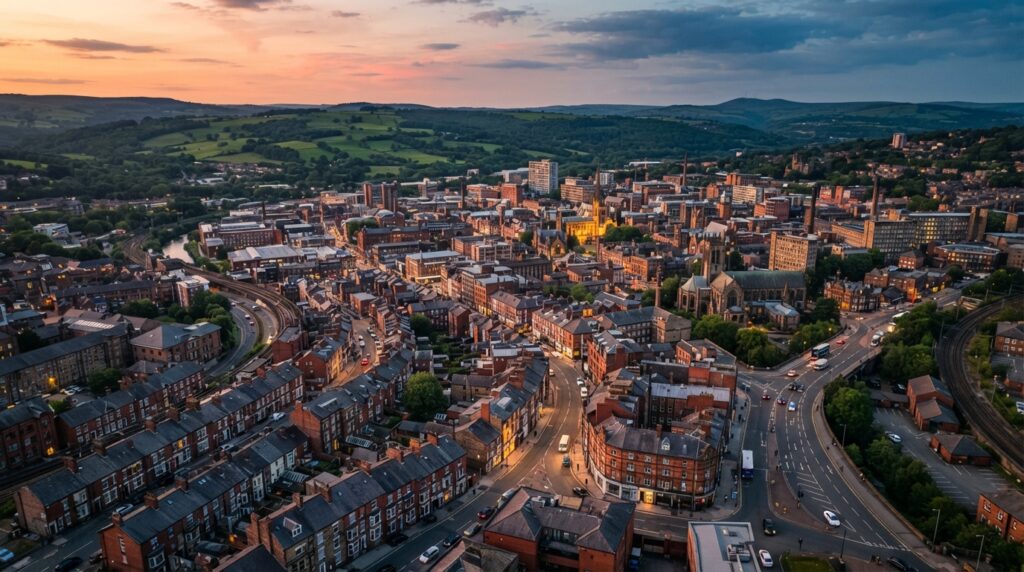
Cities genuinely run hotter than the surrounding countryside, especially overnight — a well-documented phenomenon called the urban heat island effect. The main cause is thermal mass: concrete, brick, tarmac and glass absorb huge amounts of solar heat during the day and release it slowly, over many hours, rather than cooling quickly once the sun goes down — so city centres are often still radiating the day’s stored heat well into the night, when a nearby rural area has already cooled. This is made worse by less vegetation (fewer plants to provide shade and evaporative cooling), waste heat from vehicles, buildings and — somewhat ironically — the outdoor units of air conditioners themselves pumping heat straight into the street, and tall buildings blocking the airflow that would otherwise help disperse heat. If you live somewhere genuinely urban, this is often the reason your home never seems to properly cool down overnight, even when the forecast temperature drops.
If you’ve ever left a city for the countryside on a summer evening and felt the air noticeably cool as you got further out, you’ve experienced the urban heat island effect directly — here’s what’s actually causing it.
Thermal mass: the main driver
Building materials like brick, concrete, tarmac and glass absorb a significant amount of solar heat over the course of a sunny day, and — unlike the quicker-cooling countryside, with its soil, grass and open sky — they release that stored heat slowly, over many hours rather than quickly after sunset. This is the same thermal-lag principle behind why a west-facing room stays warm after sunset, just playing out across an entire city rather than one wall. Densely built areas, with more hard surfaces and less green space, have far more of this heat-storing material per square metre than a rural landscape — so the whole area radiates stored heat well into the night.
Less vegetation means less natural cooling
Plants and soil provide two things cities are typically short of: shade, which stops surfaces heating up as much in the first place, and evaporative cooling, as moisture evaporating from soil and plant leaves genuinely cools the surrounding air (the same evaporative principle behind a misting fan, just happening naturally). A dense urban area with more concrete and fewer trees, parks and gardens loses both of these natural cooling mechanisms compared to the surrounding countryside.
Waste heat — including, ironically, from air conditioning
Tall buildings block the airflow that would help
A breeze that would otherwise sweep through open countryside and disperse accumulated heat is broken up and slowed by tall buildings in a dense urban area, creating pockets of relatively still, stagnant air between them. Without that natural air movement helping to clear warm air away, heat that would otherwise disperse overnight tends to linger longer in built-up areas.
Why this matters more than it might seem
The overnight period is exactly when your body and your home most need the temperature to drop — sleep quality depends heavily on the ability to cool down, and a home that’s absorbed heat all day needs cooler overnight air to actually shed it. If you live somewhere with a strong urban heat island effect, the classic advice to “just open the windows at night” can be noticeably less effective than it is for someone in a rural or suburban setting, simply because the outdoor air itself isn’t cooling as much. On a night where the minimum temperature barely drops at all, you may be dealing with what’s known as a tropical night — increasingly common in UK urban areas specifically because of this effect.
What actually helps, living in a city
- Ventilate as early as possible in the evening, rather than waiting until late at night for outdoor temperatures to fall — in a dense urban area, the temperature drop may be smaller and later than the general heatwave-timing advice assumes. Our window-timing guide covers the general principle to adapt.
- Expect to need active cooling more than a similar-sized rural home — if passive overnight ventilation genuinely can’t cool your flat or house enough because the outdoor air itself stays warm, a fan or air conditioner is doing a job that natural cooling simply can’t in your specific setting.
- Balcony and window planting genuinely helps at a small scale, adding a little shade and evaporative cooling right where you live, even if it can’t offset the whole city’s effect.
- Position an air conditioner’s outdoor unit or exhaust hose thoughtfully where possible, away from a neighbour’s window, both as good manners and because heat pumped into a tight enclosed space (like a light well) can reduce the unit’s own efficiency by warming the air it then has to work against.
Frequently asked questions
Why is my flat in the city centre always hotter than my friend’s house in the suburbs?
Dense urban areas absorb and store more heat during the day, in more concrete, brick and tarmac, and release it more slowly overnight — this is the urban heat island effect, and it’s a well-documented, genuine difference in local climate between city centres and surrounding areas.
Does air conditioning make the urban heat island effect worse?
It contributes a small amount — an outdoor unit pumps the heat it removes from indoors straight into the surrounding outdoor air, which adds up across many buildings running air conditioning simultaneously in a dense area. It’s a genuine trade-off, though a comparatively minor factor next to the thermal mass of the buildings themselves.
Does opening windows at night still help in a city?
Yes, but often less than in a rural area, since outdoor temperatures may not drop as much overnight. Ventilating earlier in the evening, and accepting that active cooling may be more necessary than general heatwave advice assumes, both help.
Sources
- Met Office — Understanding UK heatwaves
- Energy Saving Trust — Keeping your home cool in summer
Related reading: our what is a tropical night guide and window-timing guide.
If passive ventilation isn’t cutting it, active cooling fills the gap. Compare current options at Amazon UK.