Does Leaving Electronics on Standby Make a Room Hotter?
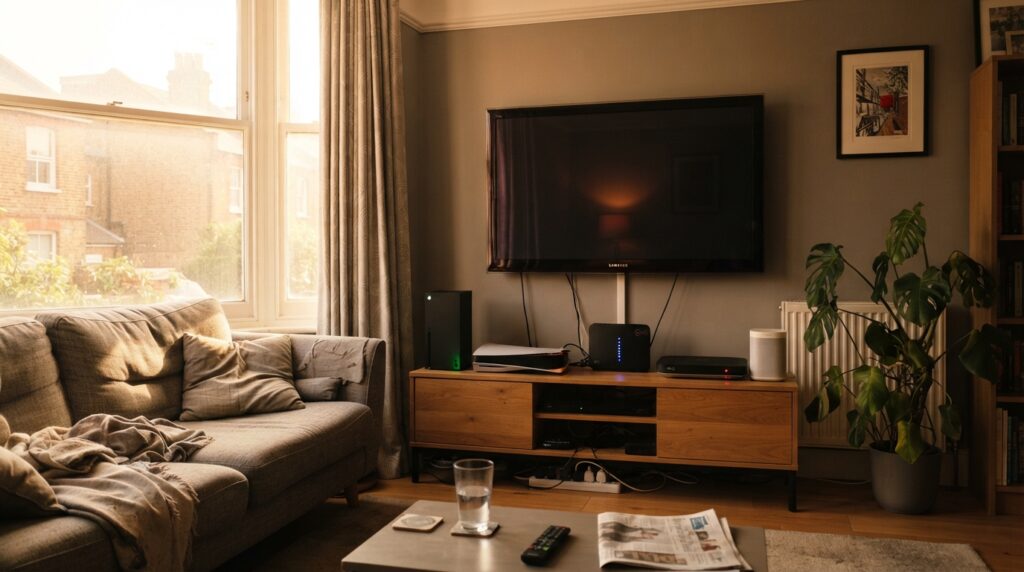
Technically yes, but not in any way that’s actually worth worrying about for cooling a room. Any electricity a device draws — even the small amount used on standby, sometimes called phantom load — ultimately becomes heat somewhere in the device, by basic physics. But the amount a single device draws on standby is genuinely tiny compared to what it uses actually running, and tinier still compared to a real heat source like an oven, a tumble dryer, or direct sunlight through a window. Where standby power is worth caring about is your electricity bill and overall energy use, not your room temperature — switching things off at the wall is a sensible energy-saving habit, just not a meaningful cooling strategy on its own.
This is one of those questions where the honest answer is “yes, technically, but it’s the wrong thing to focus on” — here’s the full picture.
Why standby power does produce some heat
Every electrical device that’s plugged in and drawing any power at all — even in standby mode, waiting for a remote control signal or keeping a clock or Wi-Fi connection alive — is consuming electricity, and by basic physics, that electricity has to go somewhere. In almost every case, it ends up as heat, dissipated by the device’s internal components. This is true of a television on standby, a games console in rest mode, a router that’s always on, or a phone charger left plugged in with nothing attached. None of this is myth or exaggeration — it’s genuinely how electricity and heat work.
But the scale matters enormously
Where it does matter: added up across a whole house
While one device on standby is genuinely negligible, most homes have several — a TV, a set-top box, a games console, a router, various phone and laptop chargers, kitchen appliances with a standby light or clock. Collectively, these do add up to a more noticeable amount of ongoing electricity use across a year than any single device would suggest, which is exactly why energy-saving guidance consistently recommends switching things off at the wall rather than leaving them on standby. The Energy Saving Trust publishes proper figures on this, and it’s worth checking their guidance if you want the real numbers for typical UK households rather than a guess — the honest answer genuinely depends on what you have plugged in and how much of it is left on standby around the clock.
The actual reasons a room runs hot
If a room genuinely feels warmer than it should, standby electronics are very rarely the explanation worth chasing. Far more significant factors include:
- Direct sunlight through unshaded glass — by a wide margin, usually the single biggest factor in any sunny room. Our window and curtain guide covers blocking this.
- Appliances actually running — an oven, a tumble dryer, or several devices being actively used at once, as opposed to sitting idle on standby.
- Poor ventilation — a room that isn’t exchanging air with anywhere cooler holds onto whatever heat it accumulates.
- The building itself — insulation, glazing, orientation and thermal mass all matter far more than anything plugged into a wall socket on standby.
So should you still switch things off?
Yes — just for the right reason. Switching devices off at the wall rather than leaving them on standby is a genuinely worthwhile energy-saving habit that reduces your electricity use and bill over a year, and it’s an easy, free thing to do. It just isn’t a meaningful strategy for cooling a hot room, and it shouldn’t be mistaken for one. If a room is genuinely too warm, the causes above — sunlight, ventilation, and the building itself — are where the actual, worthwhile effort belongs. Our running cost guide covers working out what different appliances actually cost to run, which is the more useful question for standby power specifically.
Frequently asked questions
Does turning off electronics on standby actually cool a room down?
Not in any noticeable way — standby power is genuinely tiny compared to real heat sources like sunlight through a window or an appliance actually running. It’s worth doing for your electricity bill, not for room temperature.
Do all devices produce heat on standby?
Any device drawing any power at all produces some heat as a by-product, including in standby mode — this is basic physics, not specific to any one type of device. The amount varies by device, but it’s small in every case compared to actual use.
Is it worth switching things off at the wall in summer specifically?
It’s a good habit year-round for energy saving, but summer heat isn’t the reason to do it — the electricity cost is the actual benefit. For genuinely cooling a hot room, shading windows and improving ventilation matter far more.
Sources
- Energy Saving Trust — Reducing your energy bills
- Ofgem — Energy price cap
Related reading: our running cost guide and window and curtain guide.
Shading and active cooling do far more than switching standby devices off. Compare current options at Amazon UK.