How to Keep Houseplants Alive in a UK Heatwave
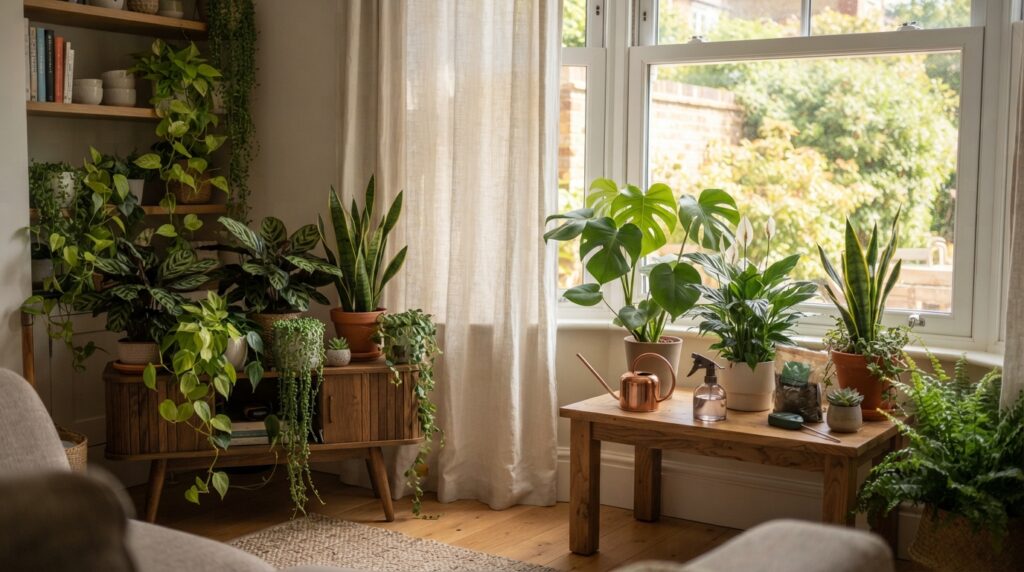
Move them off the windowsill first. The RHS notes that strong summer sunlight can scorch susceptible plants through glass, and that in summer bright shade — light that doesn’t cast a sharply defined shadow — is generally fine for most houseplants. Water when the surface of the compost is dry rather than on a schedule, and water thoroughly at a cooler time of day rather than a little and often. Group pots together and stand them on moist gravel to raise the humidity around them. Hold off on feeding and pruning while they’re stressed. And if you’re running a fan or air conditioner, don’t let it blow straight at them — the RHS warns that cold draughts can shock a plant into collapse.
Heatwave advice is full of guidance for the garden and almost none for the plants three feet from your sofa. Indoors is a different problem: no rain, no wind, glass concentrating the sun, and a room that may hold its heat long after the garden has cooled down. Here’s what the RHS’s own houseplant guidance actually says.
Sunlight through glass is the main danger
If you can’t move a plant, the shading you’d use for yourself works for them too. Closing blinds or curtains on the sunny side during the day is the single most effective thing for the room as a whole, which our keeping heat out guide covers, and it’s especially worth doing in a south or west-facing room.
Watering: by the pot, not by the calendar
The RHS is clear that houseplants should be watered when the surface of the compost becomes dry, not on a fixed weekly routine. It suggests judging by the weight of the pot, since drier pots feel noticeably lighter than wet ones — a skill worth practising, because it’s more reliable than poking a finger in the top inch. Water should be at room temperature.
The RHS’s heatwave advice for containers applies indoors as well: water thoroughly during the cooler parts of the day, aiming for deeper and less frequent watering rather than little-and-often sessions. In a heatwave that may mean checking daily and watering properly when needed, rather than giving everything a splash every morning.
Raise the humidity around them
A hot room is usually a dry room, and dry air is the half of the problem people forget. The RHS suggests three things for humidity, all of which cost nothing:
- Stand pots on a saucer of moist gravel, so water evaporates around the plant without the roots sitting in it.
- Group plants together, so they benefit from each other’s moisture. The RHS makes the same point about grouping containers outdoors to create a cooler microclimate.
- Mist regularly, particularly for tropical plants, which also do well in a steamy bathroom.
A soil moisture meter
Takes the guesswork out of “does it need watering?”
No batteries on basic probe models
Useful for large or deep pots
The RHS’s advice is to water when the compost surface is dry and to judge by pot weight, both of which work well once you’ve got the knack. A cheap probe meter is a useful crutch in the meantime, especially for big pots where the surface dries out long before the root ball does, and it’s the quickest way to settle whether a drooping plant is thirsty or waterlogged. Push it in at root depth rather than just at the top, and take a couple of readings in different spots.
Good for: deep or wide pots where the surface misleads you; diagnosing a wilting plant before you water it again; learning what “dry” actually feels like.
Less good for: precision — cheap meters are approximate and can read oddly in very peaty or very dry compost. It’s a guide, not a lab instrument.
Does air conditioning harm houseplants?
Not in itself, but where you point it matters. The RHS warns to keep houseplants away from cold draughts, which can shock a plant and cause it to collapse, and it makes a parallel point about radiators dehydrating leaves and browning the margins. A portable air conditioner or a fan blowing directly at a plant does both things at once: a sharp cold draught, plus constantly moving dry air pulling moisture from the leaves.
The fix is just placement. Keep plants out of the direct airflow, angle the louvres away from them, and remember that air conditioners remove humidity as part of how they cool — which is a benefit for you and a mild negative for a tropical plant. That’s the same trade-off covered in our air conditioner versus dehumidifier guide. Grouping plants and using a gravel tray offsets it easily.
Don’t feed or prune a stressed plant
The RHS’s heatwave guidance is to delay pruning and feeding, because both encourage soft new growth at exactly the moment a plant is least able to support it. The instinct when a plant looks unhappy is to do something for it. In a heatwave the more useful thing is usually to move it, water it properly and leave it alone until conditions improve.
What wilting actually tells you
A plant can wilt because it’s short of water, and it can wilt because it’s too hot and losing water from the leaves faster than the roots can supply it — even when the compost is damp. That second case is common on a hot afternoon and often recovers by evening once the sun is off it. Watering a plant that’s already wet makes things worse, which is where checking the compost first rather than reacting to the leaves pays off. If a plant droops in the afternoon and perks up overnight, it’s the heat, not thirst.
Frequently asked questions
Should I move houseplants off the windowsill in summer?
Usually yes. The RHS notes that strong summer sunlight can scorch susceptible plants through glass, and that bright shade is generally suitable in summer. Moving a plant back from the glass or to the side of the window is often enough.
How often should I water houseplants in a heatwave?
The RHS advises watering when the surface of the compost becomes dry rather than on a fixed schedule, judging by the weight of the pot. In a heatwave, check more often but still water thoroughly rather than little and often, at a cooler time of day.
Can air conditioning kill a houseplant?
Not by itself, but the RHS warns that cold draughts can shock a plant and cause it to collapse, so keep plants out of the direct airflow from a fan or air conditioner. Grouping pots and standing them on moist gravel offsets the drier air.
Sources
- Royal Horticultural Society — How to grow houseplants
- Royal Horticultural Society — Expert heatwave tips
Related reading: our garden plants in a heatwave guide, keeping heat out of your home and room thermometer and hygrometer guide.
Compare current soil moisture meters at Amazon UK.