Keeping Food and Medicine Safe in a Heatwave (UK)
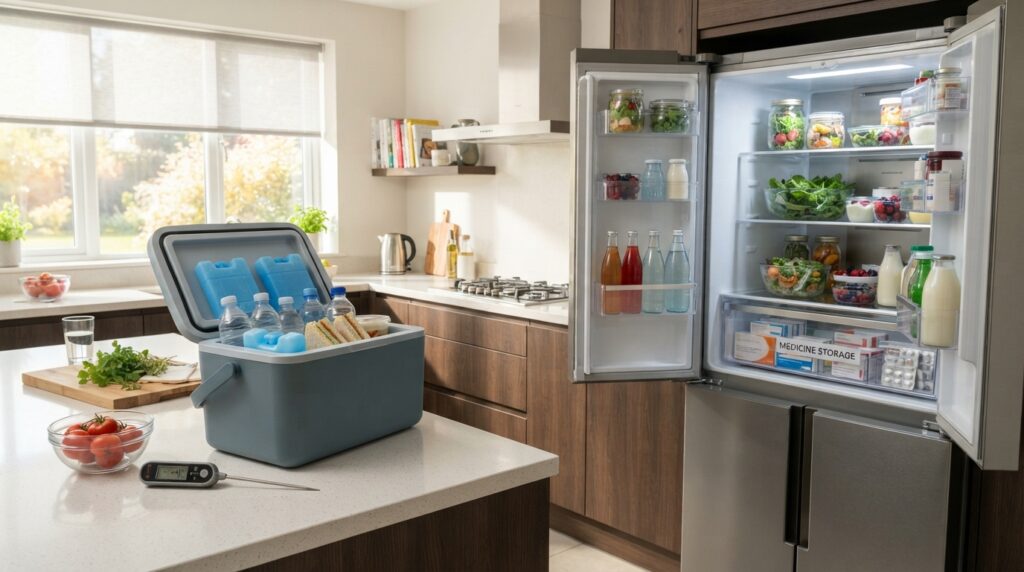
Heat is hard on both food and medicine, and the two need different care. For food: keep your fridge at around 5°C or below, don’t leave perishables out in the warmth, be extra careful with barbecues and picnics, and when in doubt throw it out — bacteria multiply fast in the heat. For medicine: many have a storage limit (commonly “store below 25°C” or “do not store above 30°C”), and a hot room, a sunny windowsill or — worst of all — a hot car can exceed it. Keep medicines somewhere cool and dark, keep fridge medicines in a reliable fridge, and ask a pharmacist about anything temperature-sensitive rather than guessing. Both problems get much worse in a power cut.
A heatwave quietly raises the risk on two things people don’t always connect to hot weather: the safety of the food in the kitchen, and the effectiveness of the medicines in the cupboard. Here’s how to protect both.
Part one: food safety in the heat
Why heat is the problem
Most food poisoning bacteria multiply fastest in warm conditions — roughly between fridge temperature and hot-holding temperature, with the quickest growth around the warmth of a summer kitchen. So the whole of food safety in a heatwave is about keeping cold food cold and not leaving perishable food sitting in the warmth.
The fridge and freezer
- Keep the fridge at around 5°C or below. Fridges work harder in a hot kitchen, and an overpacked one circulates cold poorly — a fridge thermometer is a cheap way to check it’s actually holding temperature, especially during a hot spell.
- Don’t overfill it with warm items. Letting cooked food cool before it goes in (but not for too long — see below) avoids warming everything else.
- Freezer around -18°C. A full freezer holds temperature better than an empty one, which matters if the power goes.
- Open the doors less. Every opening lets warm kitchen air in; in a heatwave that adds up.
Shopping and getting it home
The weak link is often the journey from shop to fridge:
- Take chilled and frozen items home quickly and get them into the fridge or freezer promptly — a hot car boot is exactly the wrong place for them.
- Use a cool bag or box with ice packs for the trip, especially on a hot day or a longer journey. Our cool boxes guide covers choosing one.
- Pack chilled and frozen food together so they keep each other cold, and don’t leave the shopping in the car while you run another errand.
Barbecues and eating outdoors
Summer’s classic food-poisoning setting, for two reasons — undercooking and food left out in the warmth:
- Cook meat thoroughly. Barbecues char the outside while leaving the inside undercooked, which is a common cause of illness. Make sure burgers, sausages and chicken are cooked all the way through — piping hot in the middle, no pink meat, juices running clear.
- Keep raw and cooked separate. Separate plates, utensils and surfaces for raw and cooked meat — never put cooked food back on a plate that held it raw.
- Don’t leave food out in the sun. Perishable food shouldn’t sit out in the warmth — and in hot weather the safe window is shorter than usual. Bring out what people will eat, and put the rest back in the fridge or cool box rather than leaving a spread out all afternoon.
- Keep salads, dips, desserts and anything with dairy or egg chilled until serving, and don’t leave them baking on a table.
- Wash hands — harder to do casually in the garden, so set up somewhere to do it.
Leftovers and doubt
- Cool leftovers quickly (ideally within a couple of hours) and refrigerate them — splitting a big dish into smaller containers helps it cool faster. Don’t leave a pan of food out overnight in a warm kitchen.
- When in doubt, throw it out. The cost of binning a questionable item is trivial next to food poisoning, which is genuinely dangerous for the vulnerable. Don’t rely on smell — harmful bacteria don’t always announce themselves.
During a power cut
Keep the fridge and freezer doors shut, take out what you need in one go, and check high-risk foods before eating if the outage runs long. Our power cut cooling guide covers the wider situation, and the Food Standards Agency has the detail.
Part two: medicine in the heat
Storage temperatures
Most medicines have a storage instruction on the packaging or leaflet, and a heatwave can push a room past it:
- Room-temperature medicines commonly say something like “store below 25°C” or “do not store above 30°C”. A bedroom under a hot roof, or a medicine left on a sunny windowsill, can exceed that in a heatwave.
- Keep them somewhere cool, dark and dry — an interior cupboard on a shaded side of the house, not a bathroom (humid), not a windowsill, not on top of or near anything warm.
- Fridge medicines (often stored at 2–8°C — insulin and some others) need a reliable fridge that genuinely holds that range. A cheap thermoelectric mini fridge often can’t guarantee it, especially in a hot room, as our mini fridges guide explains — check with a fridge thermometer and ask your pharmacist if unsure.
- Don’t put medicine in the freezer to keep it cool — freezing can damage many medicines, including some that are meant to be refrigerated. Follow the leaflet.
The hot car — the worst place of all
Travelling and days out with medication
- Carry it on you, not in a hot boot or glovebox.
- Use a small insulated pouch or cool bag with a cool pack for anything that needs to stay cold — but keep the medicine from touching the pack directly, so it’s kept cool without freezing.
- Plan ahead for holidays — a pharmacist can advise on keeping medicines safe while travelling in hot weather.
Heat, hydration and how you feel
Some medicines and some conditions change how your body handles heat — affecting hydration, temperature regulation or how much heat stresses you. This is exactly why heat is more dangerous for some people, and it’s individual to your medicines and health. If you take regular medication and are worried about a heatwave, ask your pharmacist or GP — they can advise on your specific situation, including staying hydrated. Our cooling and vulnerability guide and the NHS heat guidance cover the wider picture, and it’s why checking on vulnerable people during a hot spell matters so much.
A simple heatwave checklist
- ☐ Check the fridge is at 5°C or below with a thermometer.
- ☐ Get chilled shopping home fast, in a cool bag on hot days.
- ☐ Don’t leave perishable food out in the warmth — back in the fridge promptly.
- ☐ Cook barbecue food through and keep raw and cooked separate.
- ☐ Move medicines somewhere cool and dark, off windowsills and away from heat.
- ☐ Check fridge medicines are held at the right temperature.
- ☐ Never leave food or medicine in a hot car.
- ☐ Ask a pharmacist about anything temperature-sensitive, and don’t stop prescribed medicines because of the heat.
- ☐ When in doubt about food, throw it out.
Frequently asked questions
What temperature should my fridge be in a heatwave?
Around 5°C or below, the same as always — but check it with a thermometer during hot weather, because fridges work harder and an overpacked one holds temperature poorly. Open the doors as little as possible.
Is it safe to take medicine that got too hot?
Don’t assume either way — ask a pharmacist. Some medicines are affected by heat, and a pharmacist can tell you whether it’s still safe or you need a replacement. Don’t bin essential medication without checking how to replace it.
Where should I store medicine in hot weather?
Somewhere cool, dark and dry — an interior cupboard on a shaded side of the house, not a bathroom, windowsill or anywhere warm. Fridge medicines need a reliable fridge at the right temperature. Never leave any medicine in a hot car, and don’t freeze it.
How long can food be left out in hot weather?
Less time than usual — perishable food shouldn’t sit out in the warmth, and the safe window shrinks in the heat. Bring out only what will be eaten and refrigerate the rest. When in doubt, throw it out; don’t rely on smell.
Can a heatwave affect my prescription medicines?
It can affect storage, and some medicines change how your body copes with heat. Both are questions for a pharmacist or GP. Never stop or change a prescribed medicine because of the weather without advice.
Sources
- Food Standards Agency — Chilling food safely
- Food Standards Agency — Barbecues and cooking outdoors
- NHS — Heat exhaustion and heatstroke
- NHS — Medicines A to Z and storage (check the leaflet, ask a pharmacist)
- UKHSA — Adverse Weather and Health Plan
Related reading: our power cut cooling guide and heatwave checklist.
A fridge thermometer and a good cool bag are the two cheapest safeguards in a heatwave. Compare current options at Amazon UK.