How to Cool a Room During a Power Cut
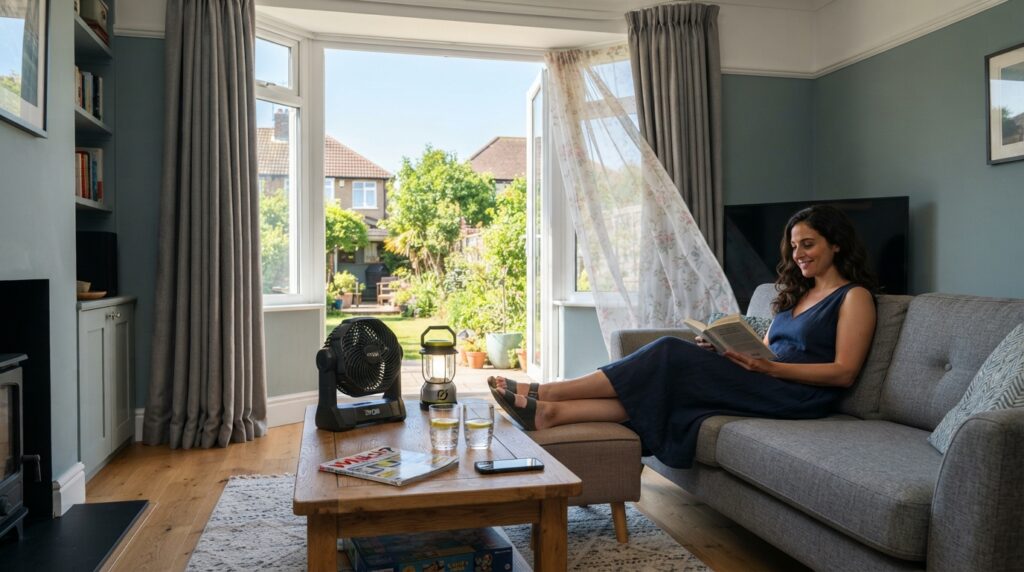
With no mains power, everything that cools a room without electricity still works — and it turns out to be most of what matters. Shade the windows, shut the room up during the day, and open it up to flush heat at night exactly as you would anyway. On top of that, cool yourself directly: damp skin at the pulse points, a hand fan, cool water for your feet, and light clothing. For a bit of powered airflow, a battery or USB fan run from a power bank keeps going through an outage, and a frozen bottle from the freezer is a useful cold source — used quickly, before it warms. Two safety musts: never run a petrol generator or any fuel-burning appliance indoors, and if someone in the home is vulnerable to heat, treat the outage as urgent.
A summer power cut takes your fan or air conditioner offline exactly when you want it — but cooling was never mostly about electricity. Here’s how to keep a room bearable without it.
The good news: passive cooling doesn’t need power
The most effective cooling measures in a British home use no electricity at all, so a power cut doesn’t touch them. If anything it’s a reminder of how much you can do without a plug:
- Shade the windows. Sunlight through glass is usually the biggest single heat source, and blocking it needs no power. Close curtains and blinds — external shade if you have it — before the sun reaches the window. Our shading guide covers the order of what works.
- Shut the room up during the heat of the day so warm outdoor air isn’t getting in.
- Open up and flush at night, once it’s cooler outside than in — ideally a through-draught across the house. Our window timing guide covers finding the crossover.
- Move to the coolest room. North-facing and downstairs rooms stay cooler, and they need no power to do it.
- Seal the gaps so the cool you gather at night lasts, per our draught-proofing guide.
In a power cut these stop being “nice extras” and become your whole strategy — and they’re genuinely enough to keep a room manageable on most UK hot days.
Cool your body, not the room
When you can’t cool the air, cool yourself — and this is often more effective anyway, because it targets the heat where you actually feel it:
- Damp skin at the pulse points. A wet flannel or a cooling towel on the neck, wrists and temples cools you as the water evaporates — no power needed, and cooling towels reactivate with a splash of water.
- Cool your feet. A bowl or basin of cool water for your feet is one of the most effective no-power cooling tricks there is.
- Stay hydrated with cool drinks, and eat light rather than cooking a hot meal.
- A hand fan or paper fan. Low-tech, but moving air across your skin genuinely helps, and it needs nothing but your arm.
- Light, loose, breathable clothing, and a cool damp cloth on the back of the neck.
Battery power for a bit of airflow
You can keep some powered cooling going through an outage if you’ve prepared:
- A battery or USB-rechargeable fan. A handheld, desk or neck fan that runs off its own battery or a power bank keeps working when the mains is down. Kept charged, it’s the single most useful bit of kit for a summer outage.
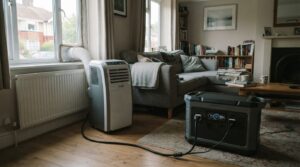
- A power bank to run or recharge USB fans (and keep your phone alive to check on the outage). A larger “power station” battery can run a mains fan for hours — overkill for most, but genuinely useful if outages are common where you are.
- Charge things before summer storms. If a storm is forecast — the usual cause of a summer cut — top up power banks and fan batteries in advance.
Using the cold you already have
Your freezer is a store of cold you can borrow from, briefly:
- A sealed frozen bottle (a large water bottle frozen solid) makes a good personal cold source — hug it, or set it near a battery fan — and it’s safer and tidier than an open bowl of ice, as our ice-and-fan guide explains.
- Use it early, not late. Without power the freezer is warming up, so take out what you’ll use in the first hour or two rather than opening it repeatedly — and see the food-safety note below.
- Cool packs and gel packs from the freezer, wrapped in a cloth, on the pulse points.
Keeping food and medicine safe during the outage
Safety: the things that genuinely matter in an outage
Candles are a fire risk — use torches or battery lanterns for light, not naked flames, especially if you’re tired or the household includes children.
Turn off or unplug appliances that were running when the power went, so they don’t all surge back on together when it returns — and so an unattended cooker or heater isn’t left on.
Who to call, and getting extra help
- Call 105 — the free national power-cut number connects you to your local electricity network operator, who can tell you what’s happening and when power is expected back. It works from any phone in England, Scotland and Wales.
- Register vulnerable people on the Priority Services Register, ideally before you need it. Run by network operators and suppliers, it provides extra support during outages for older people, those with disabilities or medical equipment that needs power, and households with young children. Sign up with both the network operator and your energy supplier — they’re separate lists. Our cooling and disability guide covers wider support.
- Check on neighbours, particularly older ones or anyone reliant on powered medical or mobility equipment.
Prepare a small summer outage kit
Most of this doubles for winter, so it’s worth having a kit ready year-round. For summer specifically:
- A charged power bank and a battery or USB fan.
- Torches or battery lanterns (not candles), with spare batteries.
- Cool packs in the freezer, ready to grab.
- Bottled water, and a plan to refill from the freezer’s frozen bottles as they thaw.
- A working carbon monoxide alarm, if you have any fuel-burning appliances.
- The 105 number saved, and Priority Services registration done in advance for anyone who needs it.
Frequently asked questions
How do I cool a room with no electricity?
Use the passive measures that never needed power — shade the windows, shut the room up by day, flush it with cooler air at night, and move to the coolest room. Then cool your body directly with damp skin, cool water for your feet and a hand or battery fan.
Can I use a generator to run my fan or AC?
Only ever outdoors, well away from windows and doors — generators produce carbon monoxide that is fatal indoors, and people die this way during outages. For most people a charged power bank running a USB fan is the safe, practical answer.
Will my freezer food be safe?
For a while, if you keep the door shut — a full freezer holds cold longer than an empty one. Take out what you need in one go rather than opening it repeatedly, and check chilled and high-risk foods before eating them if the outage is long. When in doubt, throw it out.
Who do I call in a power cut?
Call 105 — the free number connects you to your local network operator for updates on the outage. Register vulnerable household members on the Priority Services Register in advance for extra support.
What about medicines that need refrigerating?
A prolonged outage is a real concern for them. Keep the fridge shut, and don’t guess about safety — check the storage requirements and speak to a pharmacist about anything temperature-sensitive.
Sources
- Power Cut 105 — The free power cut number
- Ofgem — Priority Services Register
- Food Standards Agency — Chilling food safely
- NHS — Carbon monoxide poisoning
Related reading: our food and medicine safety guide and no-AC cooling guide.
A charged power bank and a USB fan keep some airflow going when the mains is down. Compare current options at Amazon UK.