The Best Cooling for Shift Workers Sleeping During the Day
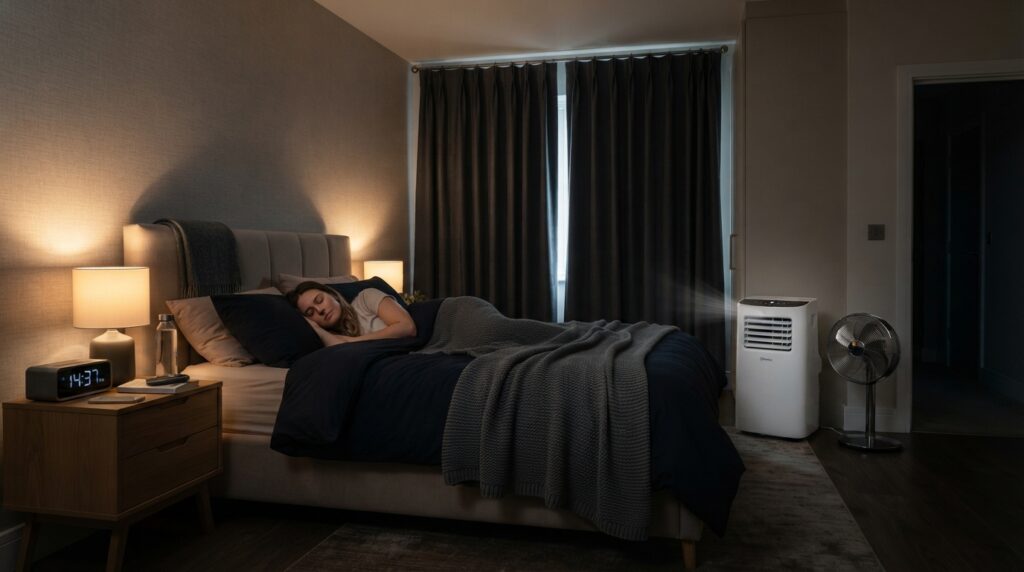
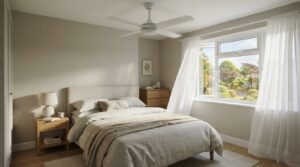
Sleeping during the day in summer is the hardest cooling problem there is, because you’re trying to sleep when it’s hottest, brightest, and your body clock is fighting you. The single most important thing is proper blackout — it blocks both the daylight that disrupts sleep and a large share of the heat coming through the window. The catch that makes day-sleeping different from night-sleeping: you can’t flush the room with cool night air while you’re asleep in it during the day, so the winning approach is to cool and seal the room in the cool early morning before you go to bed, then let it coast — and this is one of the few cases where running an air conditioner through the day genuinely makes sense. Add body-cooling, an eye mask and something to mask daytime noise, and a hot bedroom becomes survivable.
Night shifts, early starts, on-call rotations — sleeping out of sync with the sun is hard enough before you add a heatwave. This is the tailored version of our sleeping in a heatwave guide for people whose sleep lands in the hottest part of the day.
Why day-sleeping in summer is uniquely hard
Two things stack against you at once. First, your body wants to be awake in daylight — daytime sleep works against your circadian rhythm, so it’s naturally lighter and more easily broken. Second, you’re asking for that fragile sleep during the warmest, brightest, noisiest part of the day, when the sun is on the house and the world is active. Heat and light are exactly the two things that wreck sleep, and you’re getting the full dose of both.
The physiology underneath is the same as any hot night: your core temperature needs to drop to sleep well, and a hot, light-flooded room stops that happening — our heatwave sleep guide covers the mechanism. So everything below is aimed at making a daytime bedroom as dark, cool and quiet as a good night.
Blackout does double duty — start here
For a day-sleeper, blackout is the highest-value single measure, because it fixes two problems at once:
- It blocks the daylight that suppresses sleep and wakes you as the sun tracks across the window.
- It blocks a large part of the heat. A blackout thermal curtain or blind slows the solar heat coming through the glass as well as the light — our blackout thermal curtains guide covers choosing one, and fit matters as much as the product (wider and longer than the window, close to the wall).
External shading is better still for the heat half, because it stops the sun before it reaches the glass — an external blind or shutter, or even a well-placed parasol or awning, combined with internal blackout, gives you both a dark and a cooler room. Our shading guide and external shading guide cover it. Aim for genuinely full blackout — the thin strips of light leaking round the edges of a blind are exactly what wakes a day-sleeper.
The timing trick: pre-cool while it’s cool, then seal
Here’s what makes day-sleeping different from night-sleeping. At night you cool a bedroom by opening the windows to the cooler outside air. During the day you can’t — it’s hotter outside, and opening up would import heat. So the method flips:
- Cool the room in the early morning, the coolest part of the day, before you sleep. If you finish a night shift around dawn, that’s perfect timing — flush the bedroom with the cool early air, or run a fan or air conditioner then.
- Seal and black it out before the day heats up — windows shut, blackout closed, gaps sealed.
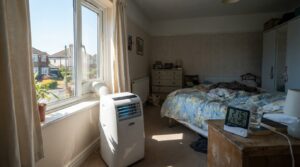
- Let it coast, or keep cooling. A shaded, sealed, blacked-out room holds its temperature far better than an exposed one. On milder days that coasting may be enough; on hot days, keep an air conditioner running.
Daytime AC: the one time running it through the day is right
No portable unit is silent, so if noise wakes you, the alternative is to pre-cool hard, seal, and rely on the room coasting with a fan for air movement — our quiet bedrooms guide covers that balance.
Pick the coolest room to sleep in
You may not have to sleep in the hottest room. A north-facing room takes no direct sun, and a downstairs room is usually cooler than an upstairs one, which bakes under the roof. If your normal bedroom is a hot upstairs west-facing room, moving your daytime sleep to a cooler, easier-to-black-out room for the summer can do more than any gadget.
Cool your body, and block the day out
- A lukewarm shower before bed — not cold, which constricts blood vessels and reduces heat loss afterwards, as our sleep guide explains.
- Light, breathable bedding and a low-tog duvet — our cooling bedding guide covers it, and a breathable mattress topper if the bed itself sleeps hot.
- An eye mask — cheap insurance against any light your blackout misses, and it lets you sleep without chasing perfect darkness.
- Mask the daytime noise. The day is louder than the night — traffic, deliveries, gardens, schools. Ear plugs help, and a fan does double duty: air movement to keep you cool, and steady white noise that masks intermittent sounds. Many day-sleepers find a fan indispensable for the sound alone.
- Damp skin at the pulse points and a cool water bottle at the feet, as for any hot night.
Consistency helps more than anything
Shift-sleep is fragile, so protect it. Keep your sleep window as consistent as your rota allows, keep the room set up the same way each time, and treat the wind-down seriously — the NHS and sleep charities have solid guidance on shift-work sleep, linked below. A room that’s reliably dark, cool and quiet every time you lie down trains your body to sleep there despite the daylight. Our work-from-home cooling guide also helps if you’re juggling home working around shifts.
A note on health
Persistent poor sleep affects health, and shift work carries its own recognised challenges — if you’re regularly unable to sleep or struggling with it, it’s worth raising with your GP rather than just enduring it. And in a serious heatwave, the usual guidance applies: heat is a bigger risk for some people, so follow NHS heat advice and keep hydrated.
Frequently asked questions
What’s the most important thing for sleeping during the day in summer?
Full blackout — it blocks both the daylight that disrupts sleep and much of the heat through the window. Combine internal blackout with external shading for the biggest effect, and make sure no light leaks round the edges.
Should I leave the air conditioner on while I sleep in the day?
Yes — this is the exception to the usual advice. You’re in the room, it’s the hottest part of the day, and you need it cool, so running it makes sense. Black out and seal the room, set a moderate temperature, and use sleep mode to keep it quiet and economical.
Can I cool the room the way I would at night?
Not while you’re asleep in it — it’s hotter outside during the day, so opening the windows imports heat. Instead, cool and seal the room in the cool early morning before bed, then let it coast or keep an air conditioner running.
How do I deal with daytime noise?
Ear plugs, and a fan running for its steady white noise as well as the airflow — many shift workers find the sound alone worth it. Choosing a quieter room away from the street helps too.
Which room should I sleep in?
The coolest and easiest to black out — usually a north-facing or downstairs room that takes no direct sun and stays cooler than an upstairs bedroom under the roof. Moving your daytime sleep there for the summer can beat any single gadget.
Sources
- NHS — Sleep and tiredness
- The Sleep Charity — Shift work and sleep
- NHS — Heat exhaustion and heatstroke
Related reading: our sleeping in a heatwave guide and blackout thermal curtains guide.
Full blackout is the single biggest help — it blocks the light and much of the heat. Compare current options at Amazon UK.