Best Mini Fridges for a Bedroom or Home Office (UK)
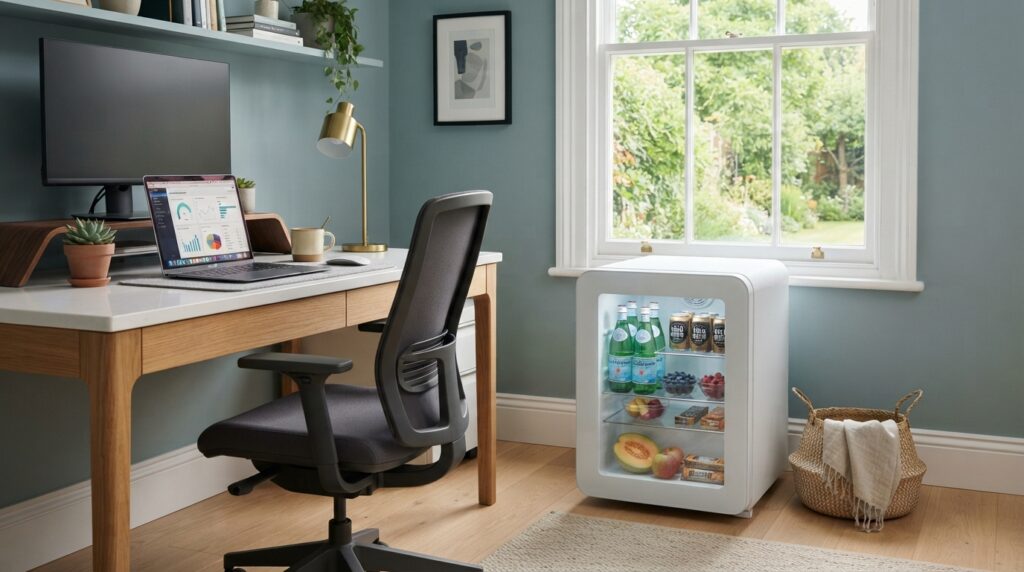
A mini fridge is a lovely convenience for a bedroom or home office — cold drinks and snacks without trekking to the kitchen — but two things decide whether you’ll be happy with it. First, the type: a compressor mini fridge gets genuinely cold and holds temperature like a real fridge but is heavier and can hum and vibrate; a thermoelectric one is quiet and light but only cools to roughly 15–20°C below the room, so in a hot room it’s weak. Second, noise — the single biggest factor for a room you sleep or work in. And be clear on what it is: it cools its contents, and actually adds a little heat to the room, so it’s a drinks fridge, not a way to cool the space.
Most mini-fridge regret comes from buying the wrong type for the room, or under-estimating the noise. Get those right and it’s a genuinely nice thing to have.
It cools drinks, not the room
Worth stating plainly, because it catches people out in a heatwave: a fridge moves heat from inside itself to outside itself — into your room. So running a mini fridge slightly warms the room it’s in. It’s brilliant for keeping drinks cold to hand; it does nothing to cool you. For cooling the room, see our no-AC cooling guide.
The two types — this is the key decision
Compressor
The same technology as a full-size fridge, shrunk down. It gets properly cold, holds a set temperature regardless of how hot the room gets, and some have a small freezer compartment.
Good for: genuinely cold storage; reliable temperature in a hot room or during a heatwave; anything you need kept consistently cool.
Less good for: silence and weight — a compressor cycles on and off with a hum and slight vibration (a real consideration by a bed), and these are heavier. Look specifically for a quiet-rated model if it’s for a bedroom.
Thermoelectric (Peltier)
Uses a solid-state element rather than a compressor — no moving compressor, so it runs quietly with only a small fan.
Good for: quiet running (good for a bedroom or office); light weight; often a hot/cold function that also keeps things warm; lower cost.
Less good for: serious cooling — it only reaches roughly 15–20°C below room temperature, so in a warm room in summer it may only get things cool rather than cold, and it can’t hold a low temperature in a heatwave. It also can’t reliably chill for anything temperature-critical (see the medication note).
What to check before buying
- Noise, first and foremost for a bedroom or office. Thermoelectric is generally quieter; if you want a compressor for the cold, seek out a low-decibel model and expect intermittent cycling.
- Capacity — enough for what you’ll actually keep in it (a few drinks, or lunch and snacks too), without hogging the room.
- Temperature range and reliability — how cold it gets, and whether it holds it when the room is hot. Compressor wins here.
- Energy use — it runs continuously, so efficiency affects your bill over a summer.
- Reversible door and shelving — handy for fitting it beside a desk or bed.
- Hot/cold function — some thermoelectric units also keep things warm, which can be a bonus for an office.
Which to choose
- Bedroom, want it near-silent, only need drinks cool → thermoelectric, accepting it won’t get truly cold in a hot room.
- Bedroom, want genuinely cold and can find a quiet model → a low-noise compressor fridge.
- Home office, drinks and lunch, some noise tolerable → compressor for reliable cold, or thermoelectric if quiet matters more than temperature.
- Heatwave reliability essential → compressor, every time — thermoelectric fades as the room heats up.
The picks
A compressor mini fridge (for genuine cold)
Reliable in the heat
Holds temp in a hot room
Look for low noise
If you want a mini fridge that actually keeps things cold — and keeps doing so through a heatwave — buy compressor and choose a quiet-rated model. It’s the reliable option for a room you use a lot.
Good for: genuinely cold drinks and food; heatwave reliability; a small freezer section on some models.
Less good for: a silent bedroom — even quiet ones cycle with a hum and slight vibration; and they’re heavier. Site it on something solid to reduce buzz, and leave clearance around it for the heat it sheds.
A thermoelectric mini fridge (for quiet)
Near-silent, light
Lightweight
Often hot/cold
If silence matters most and you only need drinks kept cool, a thermoelectric fridge is quiet, light and often cheaper, with some offering a keep-warm mode too. Just accept its cooling limit in a hot room.
Good for: bedrooms where noise is the priority; light, easy placement; an office where quiet beats maximum cold.
Less good for: real cold or heatwave reliability (it only cools so far below the room), and anything temperature-critical. In a very warm room it may only take the edge off rather than properly chill.
Frequently asked questions
Will a mini fridge cool my room?
No — the opposite. It cools its contents and sheds that heat into the room, warming it slightly. It’s for cold drinks and snacks, not for cooling the space.
Compressor or thermoelectric for a bedroom?
Thermoelectric is quieter and lighter but only cools so far below room temperature; a compressor gets genuinely cold and holds it, but hums and vibrates. Choose on whether silence or real cold matters more, and look for a low-noise compressor if you want both.
Is a thermoelectric fridge any good in a heatwave?
Less so — it cools only around 15–20°C below the room, so as the room heats up it struggles to keep things properly cold. For heatwave reliability, a compressor model is the safer buy.
Can I store medicine in one?
Only if it reliably holds the temperature the medicine requires — many thermoelectric units can’t, especially in a hot room. Check the required range, verify with a fridge thermometer, and ask your pharmacist. Don’t assume.
Sources
- Food Standards Agency — Chilling food safely (fridge temperatures)
- NHS — Medicines information (storage — check the leaflet and ask a pharmacist)
- Energy Saving Trust — Home appliances and energy use
Related reading: our portable ice makers guide and no-AC cooling guide.
Compressor for genuine cold, thermoelectric for near-silence. Compare current options at Amazon UK.