Is Secondary Glazing Worth It for Heat and Noise? (UK)
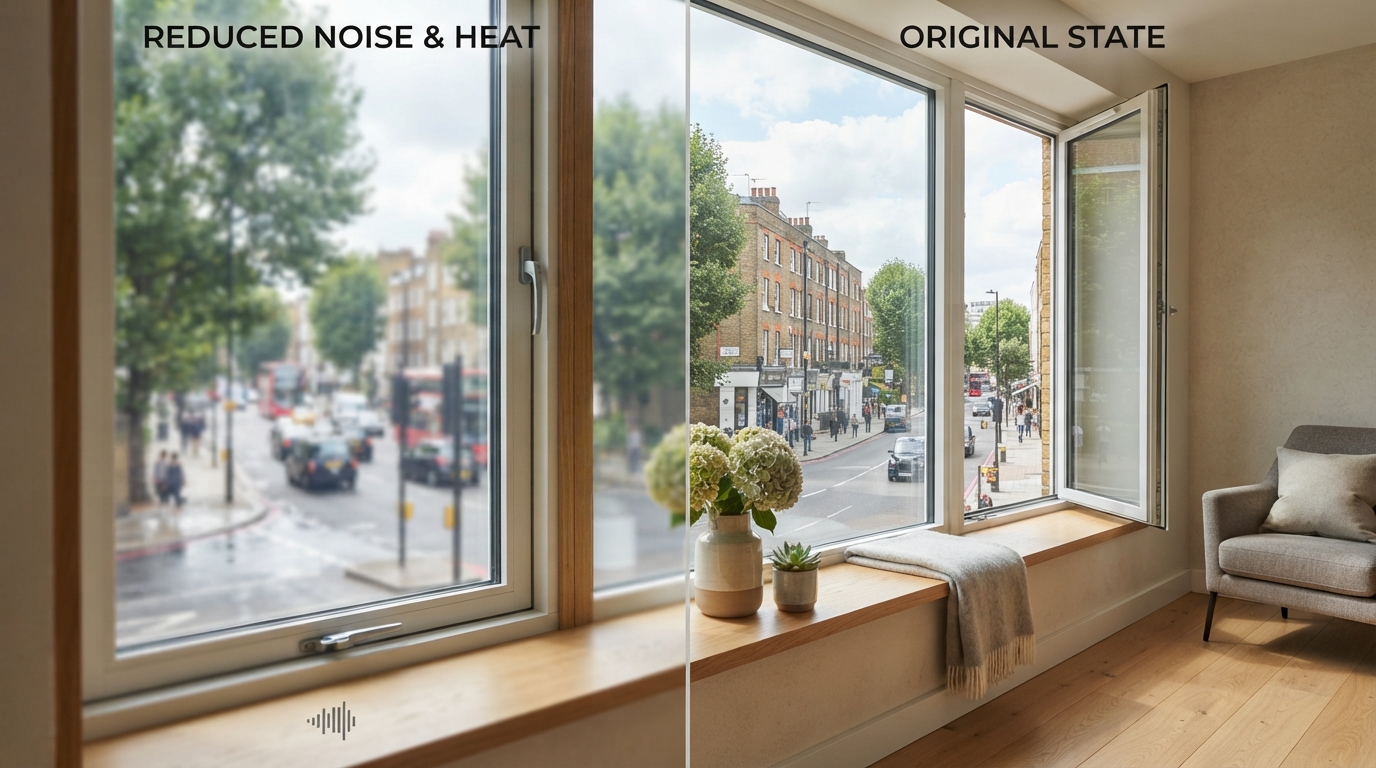
It depends which problem you’re solving, and the honest answer splits three ways. For noise, secondary glazing is outstanding — often better than replacement double glazing, because a wide air gap between two independent panes is exactly what blocks sound. For winter heat loss it’s a solid improvement on single glazing, cutting conduction and draughts. But for summer heat it does relatively little, and this is the part that’s routinely oversold: sunlight is radiation, and it passes through glass whether there’s one pane or two. If your problem is a room that bakes in the afternoon, shading will do far more than secondary glazing. Where it genuinely shines is listed buildings and conservation areas, because it’s reversible and leaves the original windows untouched.
Secondary glazing is an independent second window fitted on the inside of your existing one. It’s often the right answer — just not always for the reason people buy it. Here’s an honest breakdown by problem.
For noise: this is where it excels
If you live on a busy road, under a flight path or in a noisy street, secondary glazing is frequently the single most effective thing you can fit — and it can outperform modern replacement double glazing. The reasons are physical:
- A wide air gap. Sound insulation improves markedly with the distance between panes. Sealed double-glazed units have a narrow cavity (optimised for thermal performance, where a narrow gap is ideal). Secondary glazing can sit 100mm or more from the original window — a far better acoustic gap.
- Decoupling. The second pane is a separate frame, mechanically isolated from the original window, so vibration doesn’t transfer straight through. A sealed unit’s two panes are rigidly joined at the edge.
- Mass. Heavier or thicker glass blocks more sound, and secondary systems can use thicker or laminated glass without the weight constraints of a replacement sash.
- Sealing the leaks. A lot of noise comes through gaps rather than glass. A well-sealed secondary unit closes the draughty perimeter of an old window, which alone makes a noticeable difference.
If noise is your main complaint, this is the strongest case for secondary glazing there is — and worth specifying properly: the wider the gap and the heavier (or laminated) the glass, the better the result.
For winter heat: a genuine but moderate improvement
Against single glazing, adding a second pane and a sealed frame does two useful things: it creates an insulating air layer that slows conducted heat loss, and it dramatically cuts draughts around a rattly old window. Both make a room feel warmer and reduce heating demand.
It won’t match a modern high-performance sealed unit with low-emissivity coating and inert gas fill — but you’re usually comparing it against the realistic alternative, which in a listed or conservation property is often “do nothing”, because replacing the windows isn’t permitted. On that comparison, it’s a clear win. It also noticeably reduces the cold-radiation feeling of sitting near a single-glazed window in winter.
For summer heat: the honest limitation
There are two partial caveats worth knowing, because they can tilt the balance:
- Solar-control glass or film on the secondary unit. If the secondary glazing itself is specified with solar-control glass — or you apply film to it rather than to the original historic glass — then it does start reducing solar gain, and you get a reversible solar treatment without touching the original window. Our reflective film guide covers the trade-offs, including the year-round darkening.
- It slightly buffers a hot glass surface. A single-glazed window that’s been in the sun radiates heat into the room; a second pane and air gap take a little of the edge off that. Real, but small.
And one genuine summer drawback: if the secondary unit is awkward to open, you’ll ventilate less — and night ventilation is central to cooling a UK home without air conditioning. Specify openable panels.
Why it’s the go-to for listed and conservation properties
This is the context where secondary glazing is most often the only viable option, and where its advantages line up perfectly:
- It’s reversible. It can be removed later leaving the historic window as it was — the guiding principle in heritage work.
- The original windows survive. You keep historic glass, glazing bars and joinery rather than replacing irreplaceable fabric.
- It’s usually far more acceptable to conservation officers than replacement double glazing, which is frequently refused in listed buildings.
- It’s internal, so it typically doesn’t alter the external appearance.
That said, in a listed building it may still require listed building consent, because listing covers the interior too and the installation affects the window reveal and joinery. Discuss it with your conservation officer first — our listed buildings guide covers how that process works, and it’s usually a much easier conversation than one about air conditioning.
The types, from DIY to professional
- Film and magnetic systems. The cheapest, DIY end — an acrylic sheet or film held on a magnetic strip or tape. Helps with draughts and a little with heat; limited acoustically, and usually seasonal rather than permanent.
- Lift-out acrylic or glass panels. A rigid panel in a light frame that clips into the reveal and lifts out for ventilation and cleaning. A good middle ground, especially where you only need it in winter.
- Hinged or sliding aluminium systems. The proper job: slim-framed units that hinge open, slide horizontally or lift vertically to match the original window’s operation. Best sealing, best acoustics, easiest daily use — and the ones to choose if noise or ventilation matter.
- Specialist heritage systems. Designed to sit discreetly in historic reveals and align with existing glazing bars, so they’re barely visible.
What to check before committing
- Air gap — wider is better for noise. If acoustics are the priority, say so and ask what gap the design achieves.
- Glass specification — thicker or laminated glass for noise; solar-control glass if you also want to reduce summer heat.
- How it opens — you need to be able to ventilate easily in summer, and to clean between the panes.
- Fire escape. This is a safety point, not a detail: where a window is a designated means of escape, the secondary glazing must not prevent that escape. Make sure any unit on an escape window can be opened quickly from inside, without tools or a key you won’t find in the dark.
- Condensation management. Some systems include controlled ventilation to the outside so moisture doesn’t collect between the panes and sit against historic joinery. Worth asking about in an older building.
- Sightlines and finish — slim frames aligned with existing glazing bars look far better and matter in a heritage setting.
- Consent — confirm the position with your conservation officer if the building is listed, and check your lease if you’re leasehold.
So is it worth it?
Worth it if: noise is your problem; you have single-glazed windows you can’t or don’t want to replace; you’re in a listed building or conservation area; you want a reversible improvement that keeps original windows; or you want to cut winter draughts and cold-glass discomfort.
Not the right buy if: your actual problem is a room overheating in summer sun — shading will do far more for less money; or you’re free to fit modern replacement double glazing and thermal performance is your only concern.
For summer overheating specifically, the order that works is shade the glass, ventilate at night and seal by day, then cool what’s left — our no-AC cooling guide sets it out.
Frequently asked questions
Is secondary glazing better than double glazing for noise?
Often yes. The wide air gap and the mechanical decoupling of two independent windows block sound better than the narrow cavity of a sealed double-glazed unit, which is optimised for thermal rather than acoustic performance.
Will secondary glazing keep my room cooler in summer?
Only marginally. Sunlight passes through glass regardless of the number of panes, so it does little about solar gain. Shading — ideally external — is what actually keeps a sunny room cooler. Solar-control glass on the secondary unit is the exception.
Do I need listed building consent for secondary glazing?
Possibly — listing covers interiors, and the installation affects the reveal and joinery. It’s usually viewed far more favourably than replacement windows because it’s reversible, but check with your conservation officer before ordering.
Can I still open the window?
With a properly specified system, yes — hinged, sliding and lift-out designs all allow ventilation. Insist on this: if it’s awkward to open you’ll ventilate less, and on a fire-escape window it must open quickly from inside.
Will it cause condensation?
It can if moisture collects between the panes, particularly in older buildings. Good systems manage this with controlled ventilation to the outside rather than sealing moisture in against historic timber. Ask how the system handles it.
Sources
- Historic England — Energy efficiency and historic buildings
- Energy Saving Trust — Windows and doors
- GOV.UK — Approved Document O: Overheating (solar gain)
- GOV.UK — Approved Document B: Fire safety (means of escape)
Related reading: our listed buildings guide and reflective film guide.
Shading stops solar gain in a way extra glazing can’t. Compare current options at Amazon UK.