Can You Install Air Conditioning in a Listed Building? (UK)
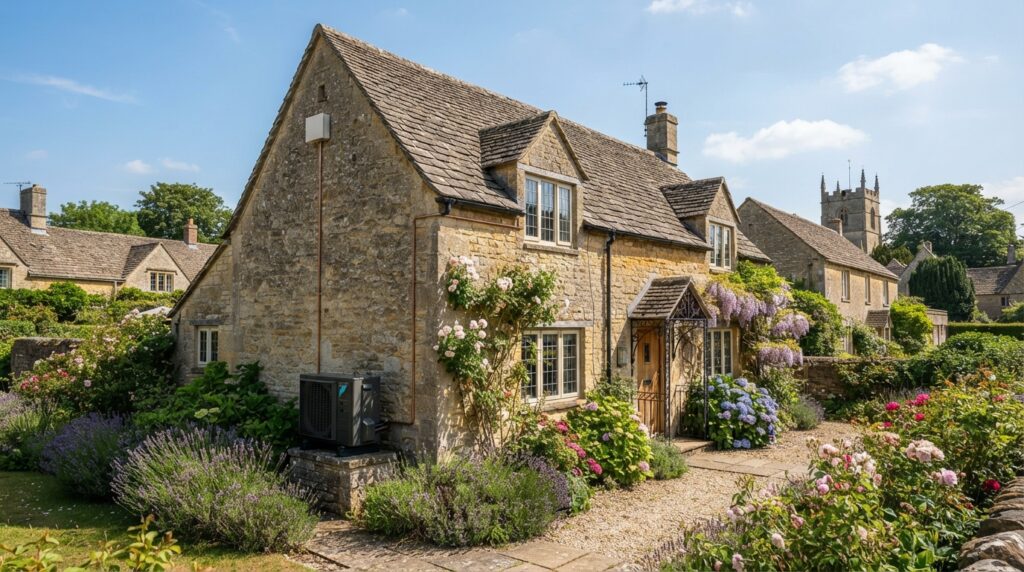
Yes, but it depends entirely on what kind. A portable unit vented through a window you can already open installs nothing and alters nothing, so it needs no consent of any kind — that’s the pragmatic answer for most people living in a listed home. A fixed installation is a different matter: a split system means an external condenser on the elevation and pipework through historic fabric, and that will almost certainly require listed building consent. It isn’t automatically refused — consents are granted — but success depends on reversibility, discreet siting and minimal damage to historic fabric. Start with the conservation officer, not the installer.
Listed buildings are often the ones that most need cooling — solid walls, single glazing, no ventilation strategy, and rooms that bake. They’re also the hardest to fit anything to. Here’s the realistic picture.
What listing actually covers
The single most common misunderstanding is that listing only protects the front of the building. It doesn’t. Listing protects the whole building — exterior and interior — and can extend to attached structures and objects within the curtilage. Later extensions are usually covered too.
The practical consequence: internal works can need consent just as external ones do. Chasing pipework through a historic wall, lifting original floorboards, cutting through panelling or altering a ceiling are all alterations to a listed building, even though nobody outside would ever see them.
Buildings are graded (in England, Grade I, II* and II, with the great majority Grade II). All grades require consent for works affecting special interest; the higher grades attract closer scrutiny. Scotland, Wales and Northern Ireland run comparable but separate systems.
Why air conditioning is a difficult fit
A split system asks for several things at once that conservation officers tend to resist:
- An external condenser unit — a modern industrial object fixed to a historic elevation, usually the single biggest objection.
- Penetrations through the fabric for refrigerant pipework, condensate drainage and cabling — irreversible holes through walls that may be of significant construction.
- Internal alterations to route services — through floors, ceilings, panelling or plasterwork.
- Fixings into historic masonry or timber, plus brackets, trunking and cable runs.
- Noise and visual impact on the setting, which can affect neighbouring listed buildings or a conservation area too.
The consent process, realistically
- Talk to the conservation officer first. This is free, it’s the single most valuable step, and it shapes the whole design. They will tell you early whether an approach is a non-starter — which saves you paying for drawings of something that was never going to be approved.
- Design around what’s acceptable rather than designing first and asking afterwards. The scheme that gets consent is usually one shaped by that early conversation.
- Apply for listed building consent. Applications are made to the local planning authority. There is normally no application fee for listed building consent itself, though you’ll pay for drawings and any specialist reports, and a separate planning application may also be needed.
- Expect to justify the works. You’ll typically need drawings and a heritage statement explaining the building’s significance and how your proposal affects it. For anything complex, a heritage consultant is money well spent.
- Expect conditions. Consent often comes with requirements on siting, finish, colour, making good, or removal at the end of life.
What tends to get approved
Conservation officers are not trying to make you uncomfortable — they’re protecting significance. Proposals that succeed usually share these features:
- Reversibility. The guiding principle. If the installation can be removed in twenty years leaving the building essentially as it was, you’re in far better territory.
- Discreet siting. A condenser at low level on a rear elevation, in a lightwell, screened by planting or joinery, or tucked out of public view, is a very different proposition to one on a principal frontage.
- Reusing existing openings and routes. An existing vent, a redundant flue, a previously drilled penetration, or a modern (non-historic) extension to route through.
- Minimal fabric loss. Fewer and smaller penetrations, placed in later fabric or mortar joints rather than through original stone, brick or timber.
- Sympathetic finishes — colour-matched casings, concealed trunking, careful making-good.
- A clear heat problem and evidence you’ve considered less invasive options first — which is where shading, ventilation and secondary glazing help your case.
What tends to get refused
- A condenser on a principal or highly visible elevation.
- Extensive chasing through historic plaster, panelling or structural fabric.
- Proposals that damage or remove historic features — original windows, shutters, cornices, floorboards.
- Multiple units across elevations for a whole-house system.
- Anything presented as a fait accompli after the fact.
The pragmatic answer: a portable unit
For most people living in a listed home, this is the route that actually works. A portable air conditioner vented through a window you can already open installs nothing, alters nothing and removes without trace — so there’s no listed building consent question at all, and no planning question either (as our planning guide explains).
A few sensible cautions specific to historic homes:
- Don’t drill anything — no screws into frames, no fixings into reveals, no permanent wall vent. That’s the whole point of staying consent-free.
- Be careful with historic windows. Sashes and slender historic frames are easily damaged; don’t force a slider kit, and don’t let a heavy hose hang from the frame. A cut panel or fabric kit that clamps nothing is safer — our seal kits guide covers the options.
- Watch condensation around single-glazed historic windows, and don’t trap moisture against timber.
- If you rent or hold a lease, check your agreement as well — and in a listed leasehold flat you may need the freeholder’s consent for anything fixed, per our leasehold guide.
Lower-impact alternatives worth doing first
These also strengthen any future consent application, because they show you’ve tried the least invasive options:
- Internal shutters — many listed homes already have original working shutters, which are excellent at blocking heat and cost nothing to start using again.
- Secondary glazing — frequently acceptable in listed buildings precisely because it’s reversible and doesn’t touch the original window. Our secondary glazing guide covers what it does and doesn’t do for heat.
- External shade that isn’t fixed to the building — a freestanding parasol or planting positioned to shade a hot window, per our external shading guide. External shutters on a listed building are their own consent question, covered in our shutters guide.
- Night ventilation and thermal mass. Solid-walled historic buildings often have real thermal mass — flush them with cool air overnight and they hold it well. Our no-AC cooling guide covers the method.
The enforcement and resale point
Frequently asked questions
Do I need consent for a portable air conditioner in a listed building?
No. Vented through a window that already opens, it installs and alters nothing, so no listed building consent or planning permission is involved. Just don’t drill or fix anything.
Is a split system ever approved in a listed building?
Yes — consents are granted. Success usually depends on reversibility, discreet siting of the condenser (rear, low level, screened), minimal penetrations through historic fabric, and engaging the conservation officer early.
Does listing only protect the outside?
No — it protects the whole building, inside and out, and can extend to curtilage structures. Internal works like chasing pipework or lifting original floors can need consent even though nobody outside would see them.
What happens if I install it without consent?
Unauthorised works to a listed building are a criminal offence, the authority can require them to be undone, and it can cause serious problems when you come to sell. Get consent first.
Is there a fee for listed building consent?
There is normally no application fee for listed building consent itself, but you’ll pay for drawings, a heritage statement and any specialist advice — and a separate planning application, if one is needed, does carry a fee.
Sources
- Historic England — Making changes to a listed building
- GOV.UK — Listed buildings and conservation areas
- Legislation.gov.uk — Planning (Listed Buildings and Conservation Areas) Act 1990
- Planning Portal — Listed buildings
- GOV.UK — Fluorinated gases (F-gases): rules (certified installers)
Related reading: our planning permission guide and installation law guide.
A portable unit vented through an existing opening window alters nothing. Compare current options at Amazon UK.