Best Room Thermometers and Hygrometers for Monitoring Heat and Humidity
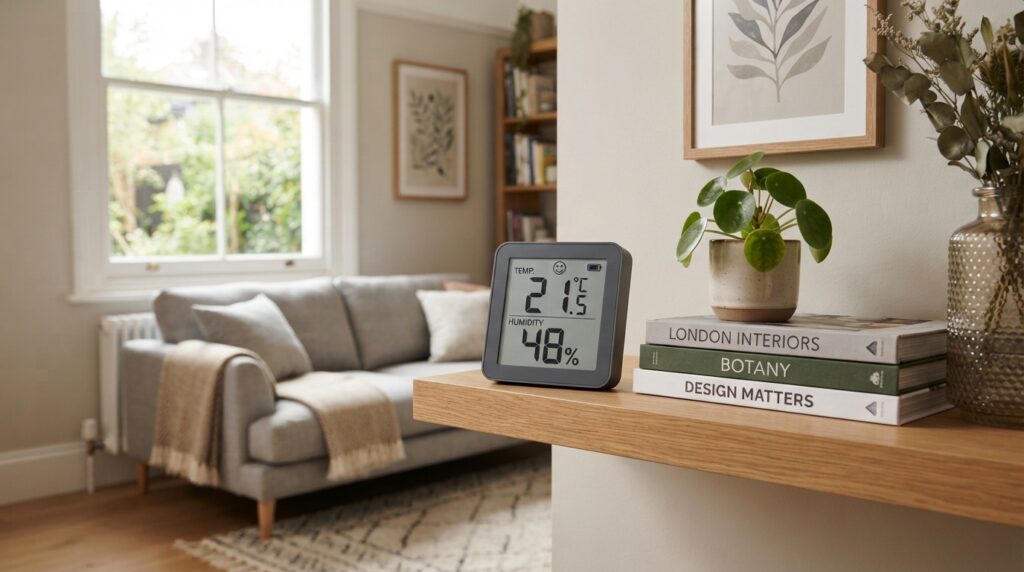
A cheap thermo-hygrometer — one device that shows both temperature and humidity — is one of the most useful few pounds you can spend on staying comfortable, because you can’t manage heat you’re only guessing at. Temperature tells you how hot a room actually is (people routinely over- or under-estimate); humidity tells you why it feels worse than the number suggests, since muggy air stops sweat evaporating. It also flags a damp or mould risk before it shows on the walls. For a one-off check, a basic digital unit is fine; to track a room over time or get phone alerts (handy for a damp problem, a nursery, or checking your cooling actually works), a smart Wi-Fi logging model earns its keep.
Measuring turns “it feels hot in here” into something you can act on — the right BTU when buying a unit, the real cause of a stuffy room, or proof your shading and ventilation are working. Here’s what to buy.
Why measure both temperature and humidity
Temperature is only half the comfort story. The other half is relative humidity — how much moisture the air holds — and it explains a lot of everyday puzzles:
- Why a room “feels” hotter than the thermometer says. In humid air, sweat evaporates slowly, so your body can’t cool itself as well and the same temperature feels more oppressive. It’s the indoor version of “it’s not the heat, it’s the humidity.”
- Why you might be damp, not just hot. Persistently high humidity is what drives condensation and mould — often the real problem behind a stuffy, musty room. A hygrometer catches it early.
- Whether you need cooling or drying. If the issue is heat, that points to a fan or air conditioner; if it’s humidity, a dehumidifier. Our AC vs dehumidifier guide covers choosing.
Where a thermo-hygrometer earns its keep
- Sizing an air conditioner or fan — knowing a room’s real peak temperature helps you buy the right capacity rather than guessing. Our sizing guide uses it.
- Diagnosing damp and mould — a hygrometer shows whether humidity is the culprit before mould appears.
- Checking your cooling works — measure before and after shading, ventilating or running a unit, so you know what’s actually helping rather than what feels like it should.
- Nurseries and bedrooms — many parents like to keep an eye on a baby’s room temperature; a simple monitor does that.
- Fridges, wine, instruments, storage — anywhere a stable temperature or humidity matters.
The picks
A basic digital thermo-hygrometer
Cheapest useful buy
Min/max memory
A few pounds
A small standalone unit showing temperature and humidity at a glance, usually with a min/max memory so you can see the day’s peak. Perfect for a one-off room check or to sit permanently on a shelf. Look for one with a min/max function so you catch the hottest point even when you’re not looking.
Good for: a quick, cheap read on any room; a permanent shelf display; checking before/after your cooling measures.
Less good for: tracking trends over time or getting alerts when you’re out — for that you want a smart model. Cheap units vary in accuracy, so treat readings as a good guide rather than laboratory-precise.
A smart Wi-Fi logging thermo-hygrometer
For tracking & alerts
History & graphs
Custom alerts
Records temperature and humidity over time and sends it to an app, so you can see trends, spot the overnight peak, and get an alert if a room crosses a threshold you set. Genuinely useful for chasing a damp problem, watching a nursery, or proving whether a cooling change worked.
Good for: tracking a room over days and weeks; alerts while you’re out; diagnosing damp with real data; multiple rooms from one app.
Less good for: anyone who just wants a number at a glance (a basic unit is cheaper and simpler); and it needs Wi-Fi and an app, plus occasional battery changes. Check it works with your phone before buying.
Getting an accurate reading
- Keep it out of direct sun and away from heat sources (radiators, electronics, a sunny windowsill) — those give a false high.
- Give it time to settle when you move it to a new room; humidity readings especially take a while to stabilise.
- Place it where you actually are — at seated or bed height, not up near the ceiling where it’s warmer.
- Compare, don’t obsess over absolute accuracy — cheap sensors aren’t lab instruments, but they’re reliable enough to track change, which is what matters most.
Frequently asked questions
Why measure humidity as well as temperature?
Because humidity decides how hot a given temperature feels — muggy air stops sweat evaporating — and because sustained high humidity causes condensation and mould. A hygrometer tells you whether you have a heat problem or a damp one.
What humidity should a room be?
As a general comfort guide, somewhere around 40–60% suits most people. Sustained readings well above ~65% raise the risk of condensation and mould over time. These are ballpark figures, not health rules.
Do I need a smart one?
Only if you want to track trends over time or get alerts while you’re out — useful for a damp problem or a nursery. For a quick room check, a basic digital unit is cheaper and does the job.
How accurate are cheap ones?
Accuracy varies, so treat a budget unit as a good guide rather than a lab instrument. They’re reliable enough to track change — before and after shading, say — which is what most people actually need.
Sources
- NHS — Heat exhaustion and heatstroke
- NHS — Can damp and mould affect my health?
- Energy Saving Trust — Keeping your home cool in summer
Related reading: our AC vs dehumidifier guide and sizing guide.
A thermo-hygrometer shows the real temperature and humidity for a few pounds. Compare current options at Amazon UK.