Air Conditioner Extended Warranties: Worth Paying For?
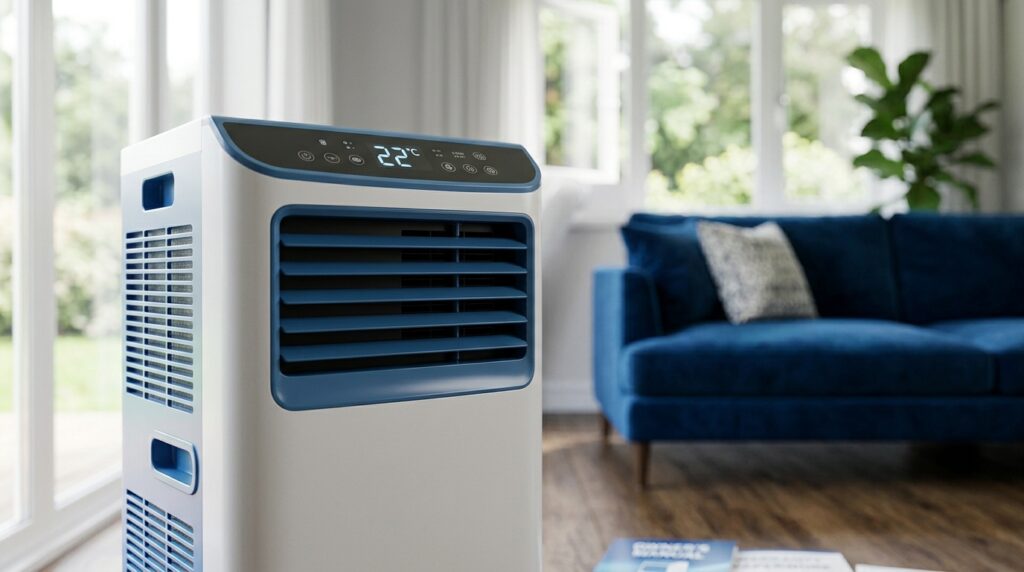
Usually not — and the main reason is that you already have rights that people don’t realise they have. Under the Consumer Rights Act 2015, goods must be of satisfactory quality and last a reasonable time, and the period for bringing a claim is six years in England, Wales and Northern Ireland, five in Scotland. An extended warranty is often sold as protection you largely have already. Where one can be worth considering is on an expensive fixed installation, or where the manufacturer’s own warranty is unusually short. On a plug-in portable unit, the money is usually better kept.
The pitch comes at checkout, when you’ve already decided to buy and aren’t inclined to read terms. Here’s what to weigh.
What you already have
The thing most people don’t know, and the reason to pause at the checkout.
Under the Consumer Rights Act 2015, goods bought from a trader must be of satisfactory quality, fit for purpose and as described. Satisfactory quality includes durability — goods should last a reasonable length of time given their nature and price.
Key points:
- A short-term right to reject for a refund applies within 30 days
- After that, you’re generally entitled to a repair or replacement first, then potentially a price reduction or final right to reject
- Within the first six months, a fault is generally presumed to have been present at purchase unless the trader proves otherwise
- The time limit for bringing a claim is six years in England, Wales and Northern Ireland, five in Scotland
Your claim is against the retailer, not the manufacturer. That’s often easier than people expect, and it doesn’t depend on any warranty.
What a manufacturer’s warranty adds
A separate thing again, offered voluntarily, and it can be genuinely useful:
- A clear process — you know who to contact and what happens
- No argument about whether a fault was inherent — within the warranty period they fix it
- Sometimes collection and return, which matters for a 30kg appliance
- Manufacturer parts and expertise
This is worth comparing between models before you buy. A longer manufacturer warranty on an appliance with a compressor represents real value, and it’s a legitimate reason to choose one unit over another — Meaco, for instance, publish a two-year warranty on their MC Series Pro models. Check the current terms on the manufacturer’s own site rather than a retailer listing.
What an extended warranty typically adds — and doesn’t
Read the actual terms rather than the counter pitch. Common features:
Sometimes genuinely useful:
- Accidental damage cover, which statutory rights never provide
- A clear, no-argument claims process
- Collection and return
- Replacement rather than repair on older units
Common limitations worth checking:
- Exclusions for wear and tear — which can cover a lot
- Exclusions where maintenance wasn’t performed, and you may need to evidence it
- Exclusions for commercial use — relevant if the unit is in a business premises
- Excess payments per claim
- A claim limit that may be below the unit’s value
- Overlap with the manufacturer’s warranty — you may be paying for years one and two twice
- The policy ending if a claim is paid
When it might be worth it
- An expensive fixed installation. A split system is a significant investment where a repair means a certified engineer rather than a courier. Cover here is a different proposition to cover on a plug-in unit.
- An unusually short manufacturer warranty on an expensive unit.
- Accidental damage genuinely matters to you — a busy household, pets, a unit in a workshop.
- Commercial use, where downtime costs money and statutory consumer protections may not apply in the same way.
- You’d struggle to replace it unexpectedly. A perfectly valid reason to buy certainty, and not one to be talked out of.
When to skip it
- On a budget portable unit, where the warranty cost is a large fraction of replacement cost
- Where it duplicates a manufacturer warranty you already have
- Where the exclusions cover the failures most likely to happen
- Where you’re being pressed to decide at the till — you can almost always buy later, and the pressure itself is a signal
- Where your credit card or home insurance may already provide relevant cover — worth checking before paying twice
The alternative: maintain it
Said plainly because it’s true: most portable air conditioner problems are maintenance, not manufacturing.
- Clean the filter fortnightly. The single commonest cause of a unit that seems to have failed.
- Dry it properly before storage — two to four hours of fan-only. Skipping this produces next June’s musty smell.
- Set up continuous drainage so it never shuts off mid-night.
- Keep the hose short and uncreased.
- Plug it into a wall socket, never an extension lead.
- Store it upright and let it settle before switching on after being tilted.
Our maintenance guide covers the routine, and our troubleshooting guide covers the faults people assume are terminal but aren’t.
If you do need to claim
- Find your proof of purchase. Keep receipts and order confirmations with the manual.
- Go to the retailer for statutory rights, the manufacturer for warranty claims.
- Put it in writing, describing the fault and when it appeared.
- Don’t attempt a repair yourself first — it may void cover, and opening a refrigerant circuit requires certification.
- If you’re refused, Citizens Advice can advise and refer to Trading Standards. For a regulated warranty product, there may be a route to the Financial Ombudsman Service.
- If you paid by credit card, section 75 of the Consumer Credit Act may give additional protection for purchases in a certain value range.
Frequently asked questions
Doesn’t the warranty run out after a year?
The manufacturer’s warranty might. Your statutory rights against the retailer run considerably longer — six years in England, Wales and Northern Ireland, five in Scotland, for bringing a claim. Those are separate things and the second one costs nothing.
Can I buy an extended warranty later?
Usually, within a window after purchase. You rarely have to decide at the till, which removes the pressure the pitch depends on.
Does maintenance affect my cover?
It can. Some warranties exclude faults arising from lack of maintenance, and you may need to show you’ve cleaned filters and stored it properly. Keep a note if the policy requires it.
What if the retailer has gone out of business?
Statutory rights are against the retailer, so that’s a real problem. A manufacturer warranty may still stand. If you paid by credit card, section 75 may help. It’s one genuine argument for buying from established retailers.
Sources
- Legislation.gov.uk — Consumer Rights Act 2015
- Citizens Advice — Problems with something you’ve bought
- Citizens Advice — If you paid by card (section 75)
- Which? — Consumer rights
- Financial Ombudsman Service — Financial Ombudsman Service
- CMA — Competition and Markets Authority
Related reading: our refurbished guide and maintenance guide.
Compare current specifications at Amazon UK — and compare the manufacturer’s warranty length between models, since that’s included in the price rather than sold separately.