Best Paddling Pools and Garden Water Play for UK Summers
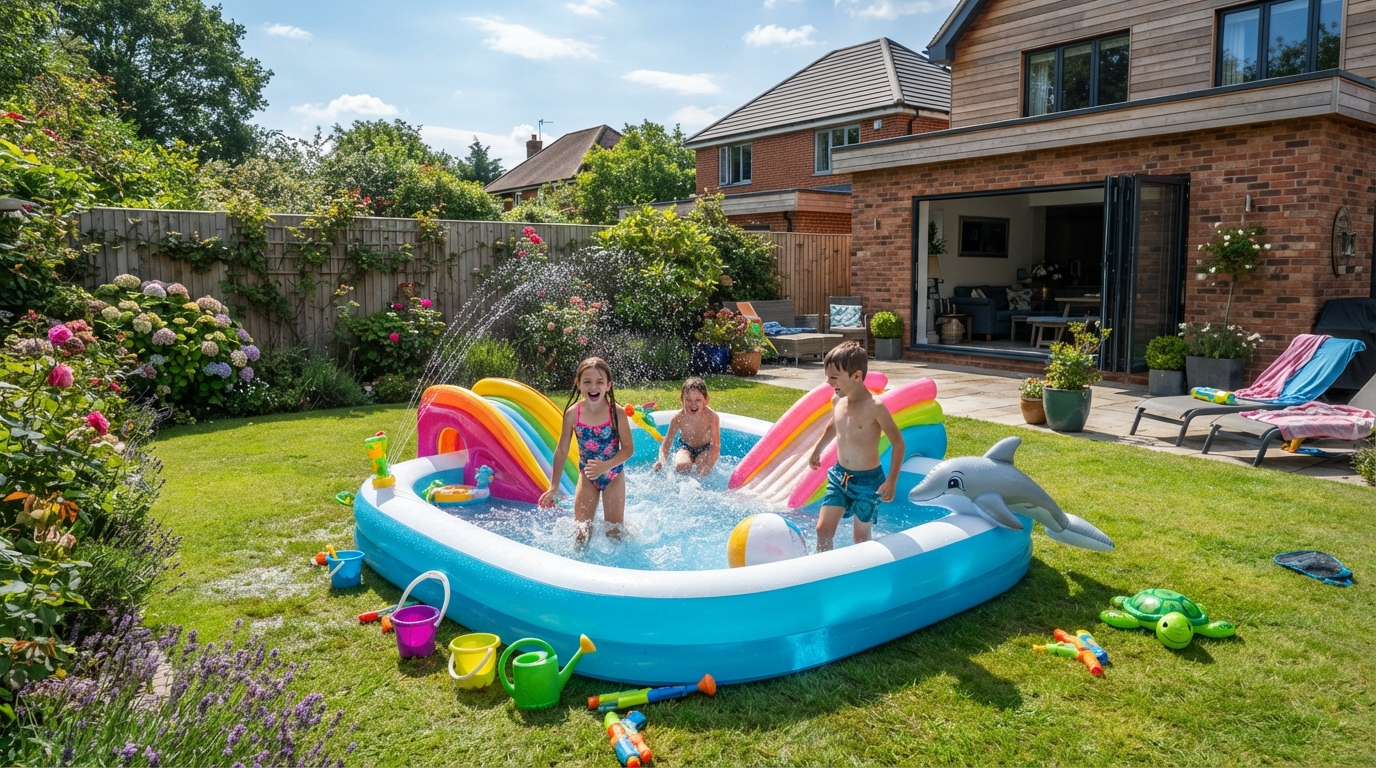
For most families, a simple inflatable paddling pool is the best-value way to keep young children cool and entertained in the garden, with a splash pad or sprinkler mat the safest option for toddlers (little or no standing water) and a framed pool better for older children who want more depth. Match the depth to the age, set it on level ground, and — above all — supervise constantly and empty it after every use. Two other things people forget: children burn fast in and around water (reflection makes it worse), and pool water gets grubby quickly in the heat, so change it regularly.
Cheap, effective, and endlessly popular in a UK hot spell — here’s how to choose the right one and use it safely.
The types, by age and space
Inflatable paddling pools
The classic — quick to inflate, cheap, and comes in every size from a baby pool to a family one.
Good for: most gardens and budgets; a range of sizes and depths; easy to empty and store (which you must do after each use).
Less good for: durability (they puncture) and older/rougher play; and any standing water is a drowning risk that demands constant supervision. Deeper inflatables suit older children — match the depth to the age.
Splash pads and sprinkler mats
A mat that sprays or bubbles water, with little or no standing water — connect a hose and children run and splash.
Good for: toddlers and the safest water play (minimal standing water to drown in); cooling fun without a deep pool; less water used than filling a pool.
Less good for: older children who want to sit and swim; and it needs a running hose, so mind water use in a drought. Supervision still matters — wet ground is slippery, and any pooled water is a risk.
Framed / rigid pools
A sturdier pool with a metal or rigid frame, deeper and longer-lasting than an inflatable.
Good for: older children wanting more depth; families who’ll use it a lot across the summer; durability.
Less good for: the extra depth means a greater drowning risk and even more need for supervision, fencing or a cover; they use a lot of water; and they’re slower to set up and empty. Anything approaching a small swimming pool brings serious safety and possibly other responsibilities — treat depth with real caution.
Setting up safely and sensibly
- Level ground so water sits evenly and the pool doesn’t tip or bulge. Clear stones and sharp objects first.
- Protect the lawn — a pool left on grass for more than a day or two kills it. Move it, or accept a yellow patch.
- Warm the water — filling in the morning lets the sun take the chill off by afternoon; UK tap water is cold.
- Mind water use — pools use a lot; during a drought or hosepipe ban, a splash pad or a small pool you top up (rather than refill) is kinder, and old pool water can go on the garden (not on edible crops if it has chemicals or sun cream in it).
- Change the water regularly — in warm weather standing water grows bacteria quickly, so empty and refill often rather than leaving it for days.
Sun and skin
Dogs love them too
A paddling pool is a great way for a dog to cool off in a heatwave — many take to them happily. Use a tougher pool (claws puncture thin inflatables), supervise as you would children, and let them choose to get in. Our keeping pets cool guide and pet cooling mats guide cover the wider picture.
Frequently asked questions
How much water can a child drown in?
Very little — a young child can drown silently in a few centimetres. Never leave children unsupervised near any water, keep them within arm’s reach, and empty the pool after use.
What’s the safest option for a toddler?
A splash pad or sprinkler mat with little or no standing water, or a very shallow pool — always with constant supervision. Less standing water means less drowning risk.
Should I empty the pool every day?
Empty it after each use for safety, and change the water regularly for hygiene — warm standing water grows bacteria fast. Emptying also stops it being an unsupervised hazard or refilling with rain.
Can I use paddling-pool water on the garden?
Plain pool water is usually fine on lawns and ornamental plants — a good use in a dry spell. Avoid using it on edible crops if it contains chemicals or sun cream. Check any local hosepipe restrictions too.
Sources
- RoSPA — Garden pool and paddling pool safety
- NHS — Sunscreen and sun safety
- RoSPA — Water safety
Related reading: our garden and patio shade guide and keeping pets cool guide.
A splash pad is the low-water, lower-risk pick for toddlers; an inflatable for a bit more. Compare current options at Amazon UK.