Best Cooling Mats for Dogs and Cats (UK)
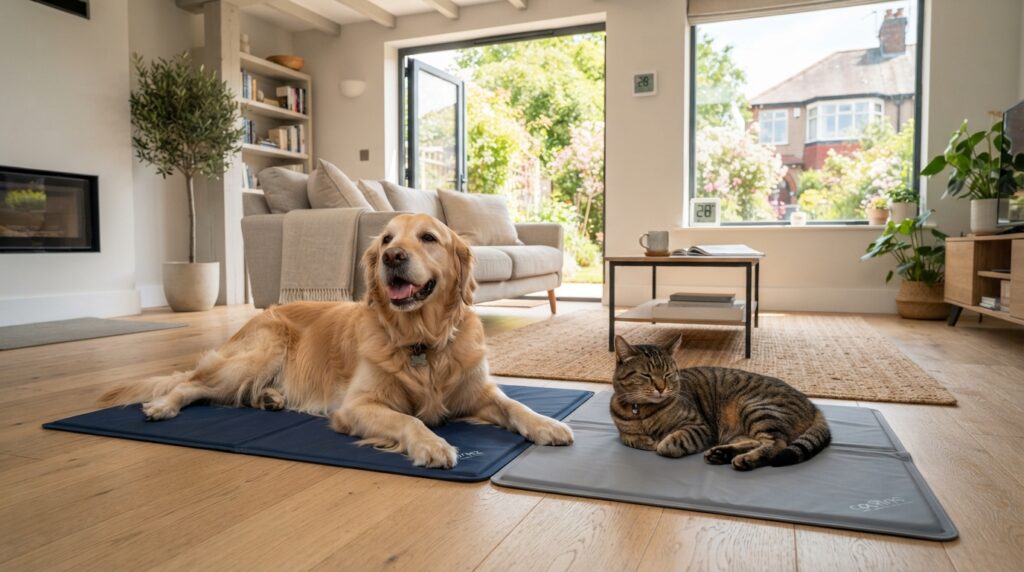
A cooling mat gives a pet a cool surface to lie on — most are pressure-activated gel that absorbs body heat with no power, water or freezer needed, so you just lay it down. They genuinely take the edge off, but set your expectations: they cool by contact where the animal lies rather than cooling the room, the effect is gentle and recharges when the pet moves off, and plenty of pets ignore them at first and need gently introducing. The two things that matter most are safety — a determined chewer can puncture a gel mat, so supervise and remove it from persistent chewers — and remembering a mat is a comfort extra, never a substitute for shade, fresh water and ventilation.
Cooling mats are a nice, low-effort way to help a pet through a hot spell — as long as they sit alongside the basics rather than replacing them. Here’s how to choose and use one safely.
How they work, and how much to expect
Most cooling mats contain a pressure-activated gel: when the pet lies on it, the gel absorbs body heat and feels cool to them, then “recharges” (returns to room temperature) when they move off for a while. There’s no electricity, no water to fill, and no need to freeze it — you just put it where they like to rest.
The cooling is gentle and works by conduction — the pet loses heat to the cool surface where they’re touching it. It’s not air conditioning for pets; it’s a cool spot to lie on. That’s genuinely useful for an animal on a hot day, but it won’t cool a hot room, and it can’t replace the essentials below.
The types
- Gel (self-cooling) mats — the common type. No power or prep; cool to lie on; recharge when unused. Convenient, but the gel is the thing a chewer can puncture.
- Water-fill mats — you add water; can give a cooler, longer effect, but heavier and there’s water to deal with if punctured.
- Raised / elevated mesh beds — not a “cooling mat” as such, but often the better answer: the pet sits on a breathable mesh raised off the floor, so air circulates underneath and carries heat away. No gel to chew, nothing to puncture, and pets often take to them readily.
Safety first
A cooling mat is not the safety plan
The essentials come first, every time — a mat is an extra on top:
- Constant access to shade and cool, fresh water.
- Ventilation and the coolest room — let them choose a cool tiled floor or a shaded, airy spot. Our keeping pets cool guide covers a hot day at home.
- Walk dogs in the cool of early morning or late evening, not the midday heat, and check pavement temperature with your hand.
- Know the signs of heatstroke — heavy panting, drooling, lethargy, collapse — and treat it as an emergency: contact a vet immediately.
- Flat-faced (brachycephalic) breeds, older, overweight and thick-coated pets are at higher risk and need extra care in heat.
What to check before buying
- Size for your pet — big enough for them to lie fully on, in the spot they actually rest.
- Durability and chew-resistance — a tougher cover matters if your pet is mouthy; for real chewers, a raised bed is safer.
- Easy to clean — a wipe-clean surface or washable cover, since it’ll get furry and grubby.
- Non-toxic materials from a reputable pet brand.
- Where it’ll live — floor mat for a dog, a smaller one for a cat’s favourite perch; some pets prefer it in their bed, some on bare floor.
The picks
A gel (self-cooling) pet mat
Easiest — no power or prep
No freezing or filling
Recharges when unused
The simplest option: lay it in your pet’s favourite spot and it cools them as they lie on it, recharging when they move off. Buy the right size and a reputable brand, and introduce it under supervision.
Good for: most cats and non-chewing dogs; a low-effort cool spot with no power or prep; travel and crates.
Less good for: chewers (puncture and ingestion risk — supervise, or choose a raised bed); pets that simply won’t use them (many ignore them at first); and it cools only where they lie, not the room.
A raised mesh cooling bed
Best for chewers
Nothing to puncture
Sturdy
An elevated breathable-mesh bed keeps the pet off the warm floor and lets air circulate underneath to carry heat away. There’s no gel to chew or puncture, it’s easy to hose down, and many pets take to it happily — often the better all-round choice for dogs.
Good for: chewers and bigger dogs; gardens and patios; durability and easy cleaning; pets that dislike gel mats.
Less good for: cats that prefer a soft surface, and small spaces (it has a footprint). It relies on airflow, so it does most in a shaded, airy spot.
Frequently asked questions
Do pet cooling mats actually work?
They give a genuinely cooler surface to lie on, cooling the pet by contact — gentle but real. They don’t cool the room, and the effect recharges when the pet moves off. They’re a comfort extra, not a replacement for shade and water.
My dog won’t use the cooling mat — why?
Common — many pets are wary of a new surface or find the coolness odd at first. Introduce it gently in their favourite spot, without forcing them, and let them choose. Some never take to gel and prefer a raised mesh bed.
Are cooling mats safe if my dog chews?
A determined chewer can puncture a gel mat, which is a choking and blockage risk and means a vet call if ingested. For persistent chewers, choose a raised mesh bed with no gel, and always supervise at first.
Can I put a cooling mat in the freezer?
Most gel mats are designed to work at room temperature and shouldn’t be frozen — freezing can be too cold and can damage them. Follow the maker’s instructions rather than freezing by default.
Sources
- RSPCA — Keeping pets safe in hot weather
- Blue Cross — Keeping your dog cool in summer
- PDSA — Pet health advice (heatstroke)
Related reading: our keeping pets cool guide and car window shades guide.
A gel mat suits most pets; a raised mesh bed suits chewers. Compare current options at Amazon UK.