Air Conditioning Rules in Flats, HMOs and Shared Houses
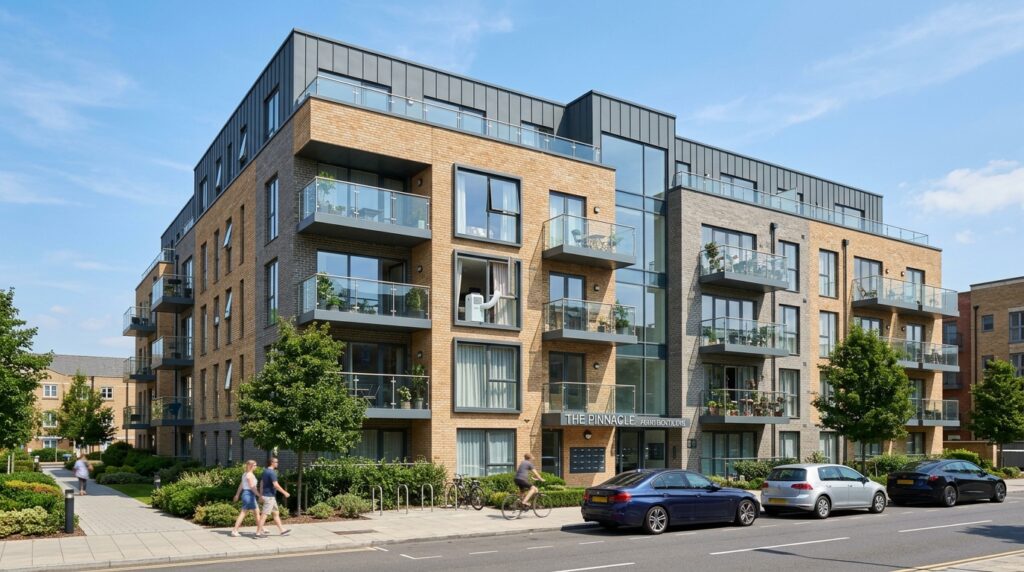
Three different situations get conflated, and the rules differ. In a leasehold flat, the freeholder controls the building’s exterior and structure — a portable unit vented through your own window is normally fine, anything fixed almost certainly needs consent. In an HMO, the obstacles are usually electrical capacity and shared bills rather than permission. In an informal house share, it’s mostly a conversation with housemates about cost and noise. In all three, a portable unit vented through an opening window alters nothing and is the practical answer.
Situation 1: A leasehold flat
The most restrictive, and the one where people most often get caught out after the fact.
Your lease typically gives you the interior; the freeholder retains the structure and exterior. That distinction decides everything:
- A portable unit vented through your own opening window — normally fine. Nothing is altered, nothing penetrates the structure. Check your lease for anything about appliances or nuisance, but there’s usually nothing to stop you.
- Anything drilled through an external wall — you’re altering the building, which almost certainly requires the freeholder’s written consent. Check your lease for an alterations clause.
- An external condenser unit on a wall, balcony or roof — the freeholder controls those surfaces, and you’d also be affecting the building’s appearance. Expect this to need formal consent and possibly a licence to alter.
- Noise — most leases contain a nuisance clause, and a compressor audible to neighbours can breach it regardless of any other permission.
Get consent in writing. Verbal agreement from a managing agent is worth very little when the agent changes or the flat is sold, and a buyer’s solicitor will ask about unauthorised alterations. Our leasehold guide covers the process in detail.
On planning permission
Worth being straight: we don’t state a size threshold for outdoor units here, because the published sources contradict each other and none we could find was the legislation itself. What all sources agree on:
- Permitted development rights are more limited for flats than for houses.
- Listed buildings have no permitted development rights for this, and unauthorised work is a criminal offence.
- Conservation areas carry an additional condition — an outdoor unit must not go on a wall or roof fronting a highway.
- An Article 4 Direction can remove those rights entirely in a defined area.
For the current thresholds, check the Planning Portal or ask your local planning authority. Both are free.
Situation 2: An HMO
Here permission is rarely the blocker. Two other things are.
Electrical capacity
Bills
The commonest source of friction, and better raised in April than July.
A portable air conditioner is among the higher-consumption appliances in a home. Where energy is included in rent or split evenly, one person running one for weeks shifts real cost onto people who aren’t benefiting.
What resolves it:
- Measure rather than estimate. A plug-in energy monitor turns an argument into a number, and the figure is usually lower than housemates fear. Our running cost guide covers the calculation.
- Offer to cover it.
- Put it in a shared room and split the cost, if there’s a living room everyone uses.
- Check for a fair-usage clause if bills are included in your rent — some agreements have them, and this is exactly what they’re written for.
- Ask the landlord, particularly if a specific room is genuinely unbearable. Some will contribute if it helps them re-let it.
Windows
Many HMOs have restricted-opening windows for safety, which can make venting difficult or impossible. Check before buying. Our windowless room guide covers alternatives, and our seal kits guide covers making a panel for an awkward opening.
Situation 3: An informal house share
Fewest formal rules, so it comes down to agreement.
- Noise through shared walls. A compressor running overnight where bedrooms adjoin is a real consideration. Ask your neighbour in the next room before committing to running it nightly — cheaper than a dispute in a house you have to keep living in.
- Shared kitchen heat. If several people cook at different times, the kitchen warms the house through the evening. Using the extractor properly is free and helps everyone.
- Agree a house routine for communal windows and blinds. Shading the landing window from mid-morning and purge ventilating in the evening works far better than everyone doing their own thing.
- Storage over winter. Shared houses rarely have spare space for a 30kg appliance. Worth thinking about before you buy — our storage guide covers the requirements.
When a room is genuinely unusable
Worth distinguishing between “hot in a heatwave”, which is most of the country, and a property defect.
What you can do in any of the three
All removable, all leaving no trace:
- A portable unit vented through an opening window
- Fans of any kind
- Blinds or curtains on existing fittings, or clipped into the recess
- Removable static-cling solar film
- Draught excluders and removable seals
- A cut foam-board or acrylic panel, friction-fitted with foam tape rather than screwed
Our renter’s setup guide covers doing this without risking your deposit.
The picks
MeacoCool MC Series 7000
Easiest to live with in a share
Small rooms
Lighter to move
UK support
Meaco’s smallest model, intended for small home and office spaces. For a single room in a share this has practical advantages beyond capacity: lower power draw on a circuit that may already be loaded, lighter to move between properties if you change house annually, and less compressor noise through a shared wall.
Good for: one bedroom in a share or HMO; anyone paying their own metered electricity who wants to keep the draw modest.
Less good for: a large room, where it’ll run continuously without catching up. It’s still 20kg-plus to carry up stairs at every house move, and the supplied window kit may not fit a restricted-opening HMO window — check before ordering. Confirm Meaco’s current published room-size range.
A plug-in energy monitor
Settles the bills argument
Inexpensive
Ends the guesswork
The item that prevents the most common shared-house dispute. Housemates imagine an air conditioner costs far more to run than it does; a monitor gives you the actual kilowatt-hours, which you multiply by your unit rate. Offering to cover a measured figure is a much easier conversation than defending an estimate.
Good for: any situation where bills are shared or included; also useful for spotting which of your other appliances is actually expensive.
Less good for: high-wattage appliances if you pick the wrong one — check the monitor’s maximum load rating before plugging an air conditioner through it. Many are rated well below 13A, and putting a high-draw appliance through an underrated device is a fire risk rather than a measurement problem.
Frequently asked questions
Can my freeholder refuse a portable unit?
Unlikely, since nothing is altered — but check your lease for appliance or nuisance clauses. Anything fixed or drilled is a different matter entirely.
Who pays if bills are included in rent?
Check for a fair-usage clause. Even without one, raising it before running a high-consumption appliance for weeks is sensible, and a measured figure makes the conversation straightforward.
My HMO window barely opens. What can I do?
Restricted openings are common and often required for safety, so don’t defeat the restrictor. A fabric window seal kit designed for narrow openings may work; otherwise a fan plus proper shading is the realistic answer. Our windowless room guide covers the alternatives.
Is the landlord obliged to keep it cool?
No set temperature obligation exists. But excess heat is a recognised hazard under housing standards, and a defect making a room unusable is different from a property being hot in a heatwave.
Sources
- Shelter — Private renting advice
- Citizens Advice — Renting privately
- GOV.UK — House in multiple occupation licence
- GOV.UK — Housing Health and Safety Rating System
- GOV.UK — Electrical safety standards in the private rented sector
- Planning Portal — Do you need permission?
- Leasehold Advisory Service — LEASE
- Electrical Safety First — Overloading sockets
Related reading: our renter’s guide and leasehold guide.
Compare portable air conditioners at Amazon UK. In a flat or shared house, check whether a flexible window kit is included — restricted openings are common.