UK Heat-Health Alerts Explained: What Yellow, Amber and Red Actually Mean
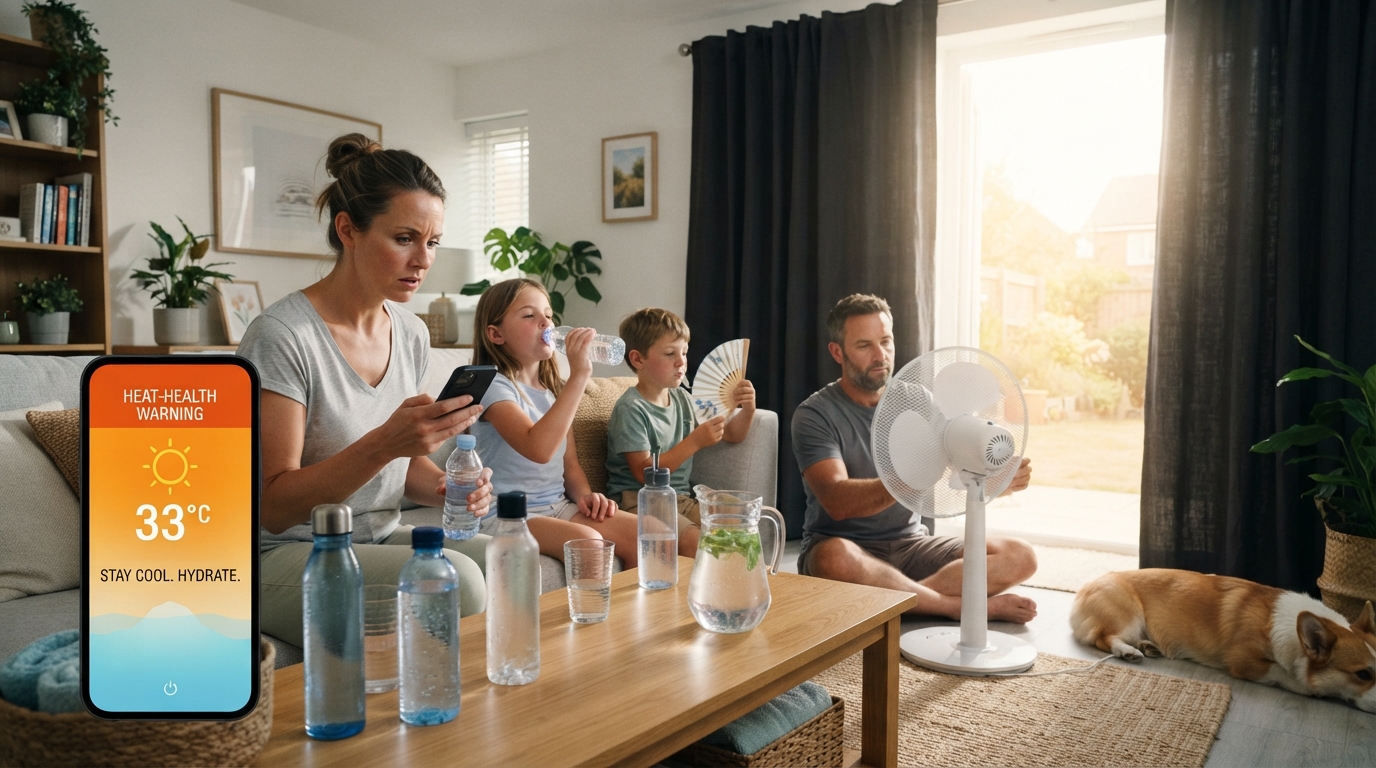
Heat-Health Alerts are issued by the UK Health Security Agency (UKHSA) with the Met Office, and they’re based on the likely impact on health, not a fixed temperature. Green means no alert. Yellow means heat that probably won’t affect most people but could affect those who are particularly vulnerable. Amber means impacts are likely across the whole health service, with the whole population potentially at risk. Red means a significant risk to life even for healthy people. The core alert season runs from 1 June to 30 September. Don’t dismiss a yellow alert: it’s aimed at older people and those with health conditions, and they’re the people most at risk.
Weather warnings are familiar. Heat-Health Alerts are newer and more easily misunderstood, because a yellow alert can arrive on a day that doesn’t feel particularly extreme, and an amber alert doesn’t map neatly onto a temperature. That’s by design. Here’s what each colour actually means, and what the data shows about why they matter.
What changed in 2023
UKHSA and the Met Office moved to an impact-based alerting system in 2023. Instead of triggering an alert when a forecast crosses a fixed temperature, the level reflects how likely the heat is to affect people’s health and health services, taking into account how hot it will be, for how long, and how widespread it is. The same temperature can therefore produce different alert levels depending on the circumstances.
The alert levels, in UKHSA’s own words
- Green: no alert is issued, as conditions are likely to have minimal impact on health — business as usual.
- Yellow: may be issued during periods of heat that would be unlikely to impact most people but could impact those who are particularly vulnerable.
- Amber: weather impacts are likely to be felt across the whole health service, with potential for the whole population to be at risk.
- Red: significant risk to life for even the healthy population.
The core alerting season runs from 1 June to 30 September each year, though UKHSA can issue alerts outside that period if conditions call for it.
What the numbers actually look like
UKHSA publishes an annual heat mortality monitoring report for England, estimating deaths associated with each summer’s heat episodes. The figures show why these alerts exist.
- 2022: an estimated 2,985 heat-associated deaths across 5 heat episodes.
- 2023: an estimated 2,295 deaths across 5 periods of heat.
- 2024: an estimated 1,311 deaths across 4 heat episodes.
- 2025: an estimated 1,504 deaths across 5 heat episodes.
- 2026 so far: an interim report covering May and June estimated 2,877 heat-associated deaths across 2 episodes — 753 in the 24–27 May episode and 2,124 in the 21–28 June episode. UKHSA stresses these are provisional and will be updated in the annual report.
What to actually do at each level
Yellow. Think about who you know. If you have an older relative, a neighbour living alone, or someone with a heart or lung condition, this is the moment to check they have a plan: curtains closed on the sunny side during the day, windows opened when it’s cooler outside, plenty to drink, and some way to know how hot the room actually is. Our guide to keeping an elderly parent cool in a heatwave goes through it in detail.
Amber. Treat it as affecting everyone. Plan your day around the heat, keep your home as cool as you can using the timing in our window timing guide, and check on vulnerable people more than once. If you rely on a fan, remember UKHSA advises using electric fans only when the air temperature is below 35°C — our fan explainer explains why.
Red. This is rare and serious. It means a risk to life even for fit, healthy people. Follow official advice closely, avoid unnecessary exertion, and make sure anyone vulnerable is somewhere cool.
Across all levels, one practical step stands out: know the temperature inside. Upstairs bedrooms and top-floor flats are often noticeably hotter than the rest of the building, and hot nights that don’t cool down — covered in our tropical nights explainer — give the body no chance to recover.
A digital room thermometer and hygrometer
Know how hot the room actually is
Min/max memory on many models
Battery powered, no setup
A heat-health alert is about outdoor forecasts; what matters to your health is the room you’re in. A cheap digital thermometer in the bedroom or living room tells you whether it’s time to act, and a min/max memory shows you how hot the room got overnight. For an older relative, choose one with a large, clear display. Our thermometer and hygrometer guide covers what to look for.
Good for: knowing when a room has become dangerously hot; checking on a relative’s home; spotting which room stays coolest.
Less good for: cooling anything — it’s an early warning, not a fix. Cheap models vary in accuracy by a degree or so.
Where to get alerts directly
You can receive Heat-Health Alerts by email by filling in the registration form on UKHSA’s Weather-Health Alerting System page. Because the system is run jointly with the Met Office, alerts are also widely reported alongside weather forecasts during alert periods. If you look after someone vulnerable, signing up means you don’t have to rely on catching the news.
Frequently asked questions
What does a yellow heat-health alert mean?
In UKHSA’s words, it may be issued during periods of heat that would be unlikely to impact most people but could impact those who are particularly vulnerable, such as older people and those with health conditions.
What temperature triggers an amber heat-health alert?
There isn’t a single temperature. Since 2023 the system has been impact-based, so the level depends on how severe, long-lasting and widespread the heat is expected to be and its likely effect on health services.
When are heat-health alerts issued?
The core alerting season is 1 June to 30 September each year, but UKHSA can issue alerts outside that period if needed.
How many people die in UK heatwaves?
UKHSA estimated 2,985 heat-associated deaths in England in summer 2022, 2,295 in 2023, 1,311 in 2024 and 1,504 in 2025. An interim report estimated 2,877 across May and June 2026, which is provisional.
Sources
- GOV.UK — Heat-health alerting system
- UKHSA — Heat mortality monitoring report 2022
- UKHSA — Heat mortality monitoring report 2023
- UKHSA — Heat mortality monitoring report, England: 2024
- UKHSA — Heat mortality monitoring report, England: 2025
- UKHSA — Interim heat mortality monitoring report, England: May and June 2026
- UKHSA — Beat the heat: staying safe in hot weather
Related reading: our keeping elderly relatives safe in a heatwave, tropical nights explainer and heatwave preparedness checklist.
Compare current digital room thermometers with min/max memory at Amazon UK.