How to Keep an Elderly Parent Cool in a Heatwave (UK)
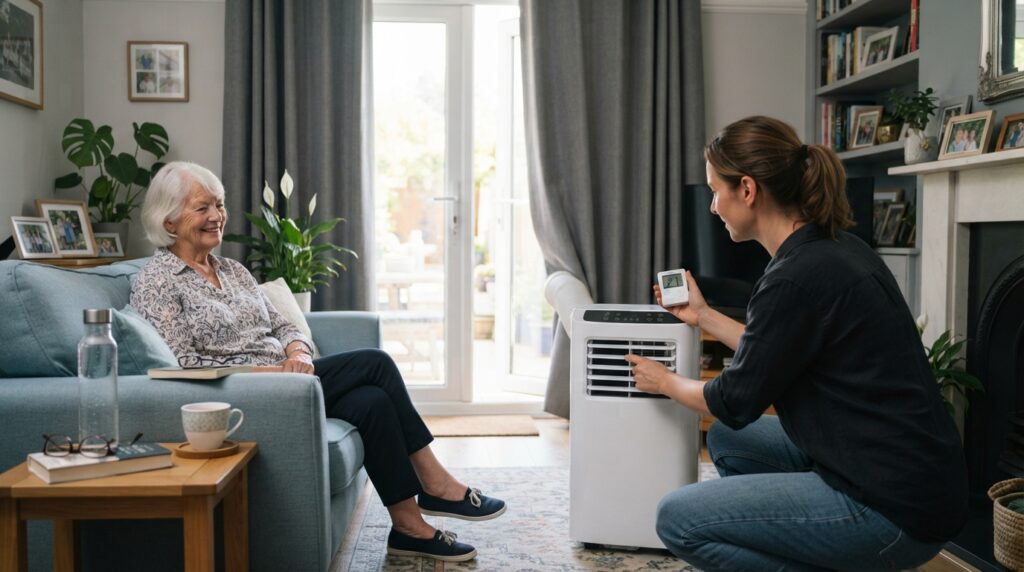
If your parent lives on their own, the hardest part of a heatwave often isn’t knowing what keeps a home cool — it’s staying confident they’re actually alright when you’re not there to see it. A phone call can miss the early signs of heat-related illness, especially confusion, which is itself one of the warning signs. Practical steps that genuinely help: check in more than once a day during the worst of it, ask questions that reveal clear thinking rather than just “are you OK?”, help them avoid going out in peak heat by arranging deliveries or a lift, do a quick home check before summer properly starts, and agree with them in advance what happens if you can’t reach them. This page focuses on that at-a-distance caregiving angle — our wider elderly heatwave safety guide covers the fuller picture of keeping an older person’s home itself cool and safe.
Worrying about a parent in a heatwave is different from worrying about your own home — you can’t feel the room temperature over the phone, and the person you’re checking on might understandably downplay how they’re actually doing. Here’s how to make that distance workable.
Checking in without just asking “are you OK?”
Confusion is one of the early signs of heat exhaustion tipping toward heatstroke, and it’s exactly the kind of thing a general “are you alright?” phone call can miss — someone experiencing early confusion may still answer “fine” out of habit. A few better approaches:
- Ask something specific rather than a yes/no question — what they’ve had to drink today, what they’re planning to do this afternoon, or something that needs a clear, coherent answer.
- Listen for the pace and clarity of the conversation, not just the words — slurring, confusion, or seeming unusually vague are worth taking seriously, even if they insist they’re fine.
- Call more than once a day during a genuine heatwave, ideally including the hottest part of the afternoon, rather than one morning check-in.
- Ask them to describe the room — is it hot, have they got a fan on, have the curtains been drawn — as a natural way to check both their environment and their thinking in one question.
If they’re not answering
Helping them avoid the peak heat without you being there
The advice to avoid going out during the hottest part of the day is easy to say and harder to follow if it means missing errands. A few ways to make it genuinely easier for a parent living independently:
- Arrange grocery or prescription deliveries so a heatwave doesn’t mean a trip out in the worst hours just to keep the fridge stocked.
- Offer to do a supermarket run yourself or arrange for someone else to, timed to avoid the midday-to-mid-afternoon peak.
- Pre-empt the “I just need to pop out” trips — a chat beforehand about what can wait a day or be done first thing or in the evening instead.
- Check they have enough water and food in that they’re not tempted out simply because the cupboard’s bare.
A pre-summer home visit is worth doing
Before the weather turns properly hot, a visit specifically to check the practical setup pays off:
- Curtains or blinds that can actually be closed against direct sun, especially on south or west-facing windows.
- A working fan that’s easy for them to switch on and reposition themselves — our easiest air conditioners for older adults guide covers straightforward options if a fan alone isn’t enough for their room.
- Easy access to drinking water in the rooms they use most, not just the kitchen.
- A working thermometer somewhere visible, so “is it too hot in here” isn’t guesswork for either of you.
- Mobility and layout — if getting to a cooler room or reaching a fan is physically difficult, our cooling and mobility guide covers adapting the practical setup.
Medication and heat tolerance — ask, don’t guess
Some medications can affect how well the body handles heat or regulates its own temperature. This isn’t something to work out yourselves from a leaflet — if your parent takes regular medication and you’re concerned about how a heatwave might affect them, a quick call to their GP or local pharmacist is the right move. They can advise on anything specific to what’s actually prescribed, which is well beyond general guidance like this.
Coordinating with others
You don’t have to carry this alone if there’s a wider support network — a neighbour who sees them regularly, another family member, or a care worker if one’s already involved. A short conversation before a heatwave about “can you keep half an eye out and let me know if anything seems off” spreads the load and means someone local can act faster than you could from a distance.
When to act immediately
Frequently asked questions
How often should I check on a parent during a heatwave?
More than once a day if you can, ideally including the hottest part of the afternoon. A short, specific check-in that reveals clear thinking is more useful than a single general call.
What if my parent insists they’re fine but I’m not convinced?
Trust specific signs over a general reassurance — confusion, vagueness, or anything out of character is worth acting on even if they say they’re OK. If in doubt, a wellbeing visit or a call to 111 for advice is a reasonable step; call 999 for the emergency signs above.
Is this different from your general elderly heatwave safety guide?
Yes — this page focuses specifically on caring for a parent from a distance: checking in effectively, arranging help so they avoid peak-heat trips out, and planning for if you can’t reach them. Our wider elderly heatwave guide covers keeping an older person’s home itself cool and safe in more general detail, including for households living together.
Sources
- NHS — Heat exhaustion and heatstroke
- Age UK — Staying cool in a heatwave
- UK Health Security Agency — Heat-health alert service
Related reading: our wider elderly heatwave safety guide and easiest air conditioners for older adults guide.
A simple fan or an easy-to-use air conditioner makes checking in easier for everyone. Compare current options at Amazon UK.