Best Cool Boxes and Cooler Bags for UK Days Out
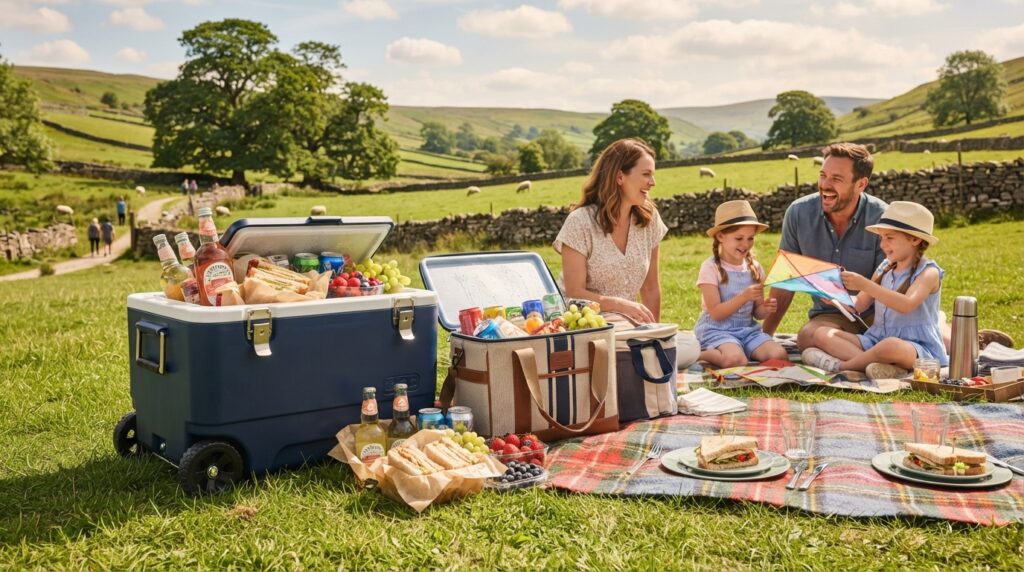
For a picnic, the beach or a festival, match the cooler to the trip. A soft cooler bag is light and packable for a few hours out; a hard cool box with good ice packs keeps food cold far longer for a full day or a camping trip; and an electric (thermoelectric) coolbox that plugs into the car or mains suits long journeys and caravans — though it only cools to roughly 15–20°C below the surrounding temperature and can’t freeze. Whatever you pick, the food-safety basics matter more than the brand: keep perishables properly cold, keep the lid shut, and keep it in the shade.
The right cooler depends entirely on how long you’re out and whether you’ve got power. Here’s the honest breakdown, plus the food-safety part people skip.
How they keep things cold
Two different principles, and it’s worth knowing which you’re buying:
- Passive (soft bags and hard boxes) — insulation plus ice packs or ice. There’s no power; the cold comes from what you put in, and the insulation slows it warming up. Simple, reliable, and only as good as your ice packs and how often you open it.
- Active (electric / thermoelectric coolboxes) — plug into a 12V car socket or the mains and actively cool. Handy on the move, but they only reach roughly 15–20°C below the surrounding air and can’t freeze — so on a hot day in a hot car, “cool” rather than “cold”. Many also switch to a warming mode.
The types
A soft cooler bag
Light & packable
Carry on your shoulder
A few hours out
The everyday choice for a picnic, the park or a short beach trip — light, easy to carry, and folds flat to store. Pair it with frozen ice packs and it keeps drinks and food cool for a few hours.
Good for: short outings; carrying by hand or over a shoulder; easy storage; lunch and drinks for the day.
Less good for: long trips and hot days — soft insulation loses the battle faster than a hard box, so ice packs melt sooner. Not for keeping food safe over many hours in strong heat.
A hard cool box
Longest cold, no power
Long ice retention
Great for camping
A rigid, well-insulated box holds cold far longer than a soft bag — a full day out, a camping weekend, or a big picnic. Higher-end (thick-walled) boxes keep ice for a very long time. Load it with plenty of ice packs, pre-chill it, and keep it shut.
Good for: all-day and multi-day trips; camping; keeping a decent amount of food genuinely cold; the most reliable no-power option.
Less good for: portability (bulkier and heavier, especially loaded); and the best ones cost more. Still passive, so it relies on ice packs and staying closed and shaded.
An electric (thermoelectric) coolbox
For the car & caravan
No ice packs needed
Cool, not cold
Plugs into the car’s 12V socket (and often the mains), so it keeps cooling on a long drive without relying on ice packs — good for road trips and caravans. Just be realistic: it cools only so far below the ambient temperature and can’t freeze, so in a hot car it keeps things cool rather than fridge-cold.
Good for: long journeys, caravans and campsites with power; not having to freeze ice packs; some also keep food warm.
Less good for: hot days (limited cooling below ambient — it won’t get things truly cold), and it drains a car battery if run with the engine off. For genuinely cold storage over a long hot day, a well-iced hard box can beat it.
Food safety on a hot day
Getting the most from any cooler
- Pre-chill it and pack cold food — a cooler keeps cold in, it doesn’t create it.
- More ice packs, well distributed — a couple isn’t enough for a full day; block ice/large packs last longer than small ones.
- Keep it shut and shaded — every opening lets warmth in; direct sun on the lid undoes your ice fast.
- Separate drinks from food — a drinks cooler gets opened constantly; keep food in a second, less-opened one if you can.
- Freeze your own packs, or freeze bottles of water that double as cold packs and drinks as they thaw.
Making your own ice ahead of a trip is easy with a countertop machine — see our portable ice makers guide.
Frequently asked questions
Cool box or cooler bag?
A soft bag for short outings and easy carrying; a hard box for a full day, camping, or keeping food genuinely cold for longer. The hard box holds cold much better; the bag is lighter and packs away.
Are electric coolboxes worth it?
For long car journeys and caravans with power, yes — no ice packs to freeze. But they only cool so far below the surrounding temperature and can’t freeze, so on a hot day a well-iced hard box can actually keep things colder.
How long will food stay safe in a cool box?
It depends on the insulation, how much ice you used, the heat, and how often you open it — there’s no fixed figure. Keep perishables cold (around 5°C or below), keep it shut and shaded, and when in doubt about warm food, throw it out.
How do I make the ice last longer?
Pre-chill the cooler, use plenty of large ice packs or block ice, keep it full (less air), keep the lid closed, and keep it out of the sun. Frozen water bottles double as ice and drinks.
Sources
- Food Standards Agency — Chilling food safely
- Food Standards Agency — Cooking and eating outdoors safely
- NHS — Food poisoning
Related reading: our portable ice makers guide and heatwave checklist.
A soft bag for a few hours, a hard box for the day, electric for the car. Compare current options at Amazon UK.