How to Protect Garden Plants During a UK Heatwave
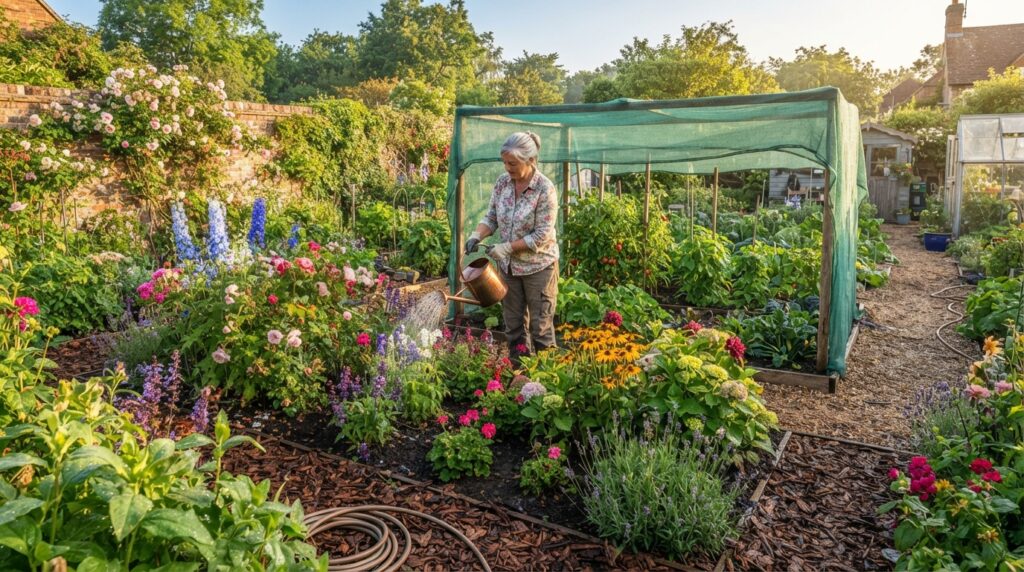
Get three things right and most of your garden will ride out a heatwave: water deeply in the early morning or evening (never in the midday sun, when most of it evaporates before it reaches the roots), mulch the soil to lock that moisture in, and shade the plants that need it most. Prioritise ruthlessly — containers, new plantings and veg suffer first and fastest, while established shrubs and trees are far more resilient, and a browning lawn almost always recovers on its own, so don’t waste water on it. Aim water at the soil and roots, not the leaves, and be aware of any local hosepipe restrictions.
You can’t stop a heatwave stressing a garden, but you can decide what survives it by watering smartly and protecting the vulnerable. Here’s how.
Water deeply, and at the right time
How and when you water matters more than how often:
- Early morning or evening, not midday. Water in the heat of the day and much of it evaporates before the roots get it — and droplets on leaves in strong sun can scorch them. First thing or after the sun’s off the garden is far more efficient.
- Deep and less often beats shallow and daily. A good soak that reaches down encourages roots to grow deep, where the soil stays moist; a daily splash keeps roots shallow and thirsty. Water thoroughly, then let the surface dry before the next soak.
- At the base, not over the top. Aim at the soil around the roots — that’s where the water is needed, and it wastes less to evaporation than spraying foliage.
- Containers need the most attention. Pots dry out fast in heat and can need watering daily, sometimes twice on the hottest days. Standing them in saucers or grouping them helps.
Mulch: lock the moisture in
A layer of mulch — compost, bark, or even grass clippings — spread over the soil surface dramatically slows evaporation, keeping the roots cooler and moister for longer after you water. It’s one of the highest-value, lowest-effort things you can do before and during a hot spell. Mulch onto already-moist soil (water first), and keep it slightly clear of plant stems.
Shade the vulnerable
Some plants — leafy veg, new plantings, tender or shade-loving types — scorch in relentless direct sun. Temporary shade gets them through:
- Shade netting or horticultural fleece rigged over a bed or greenhouse diffuses the fiercest sun without cutting off all light.
- Move containers into the shade of a wall, tree or larger plant during the worst of it — the big advantage of pots.
- Greenhouse shading — a greenhouse can cook in a heatwave; shade netting, shade paint or opening vents and doors keeps it survivable, and damping down the floor adds humidity and cool.
Prioritise — you can’t save everything equally
In a serious heatwave with limited time or water, protect in this order:
- Containers and hanging baskets — the first to dry out and die.
- New plantings — anything planted this year hasn’t rooted deep yet and is very vulnerable.
- Vegetables and fruit — especially leafy and thirsty crops you want to harvest.
- Established borders — more resilient; water the ones that look stressed.
- The lawn — last, or not at all. A brown lawn is dormant, not dead, and almost always greens up when rain returns. Don’t pour precious water on it.
What not to do
- Don’t feed or fertilise in extreme heat — plants under heat stress can’t use it well, and it can do more harm than good. Wait for cooler, settled conditions.
- Don’t water the lawn — it’s the least valuable use of water and it recovers on its own.
- Don’t prune hard in a heatwave — it stresses plants further; save it for cooler weather.
- Don’t ignore hosepipe rules — during a drought your area may have restrictions; check with your water company, and lean on stored water.
Save water where you can
- A water butt collects rainwater for exactly these dry spells — set one up ahead of summer.
- Reuse household water where suitable — cooled cooking water, or “grey” water from washing up (used sensibly and not on edible crops).
- Self-watering spikes or ollas deliver water slowly to the roots and are handy for containers or while you’re away.
Look after yourself and pets out there too
Gardening in a heatwave is hot work — do it in the cool of the morning or evening, keep hydrated, wear sun protection, and follow NHS sun-safety advice. Keep pets shaded and watered too — our keeping pets cool guide covers it — and see our garden and patio shade guide for shading the space you sit in.
Frequently asked questions
When should I water in a heatwave?
Early morning or evening, never midday — in strong sun most of the water evaporates before it reaches the roots, and droplets on leaves can scorch. Water deeply and less often to encourage deep roots.
Should I water my lawn?
Usually not — a brown lawn is dormant, not dead, and recovers when rain returns. Save water for containers, new plantings and veg, which actually need it.
Is it bad to water leaves in the sun?
Water on foliage in strong sun can scorch and mostly evaporates anyway. Aim at the soil around the roots, where the water is needed and less is lost.
What suffers first in a heatwave?
Containers and hanging baskets, then new plantings, then thirsty veg. Established shrubs and lawns are far more resilient — prioritise the vulnerable.
Sources
- RHS — Gardening in a drought
- RHS — Watering advice
- NHS — Sunscreen and sun safety
Related reading: our garden and patio shade guide and heatwave checklist.
Mulch and shade netting are the two highest-value buys for a hot spell. Compare current options at Amazon UK.