Awnings and External Shading: Are They Worth the Investment for a UK Home?
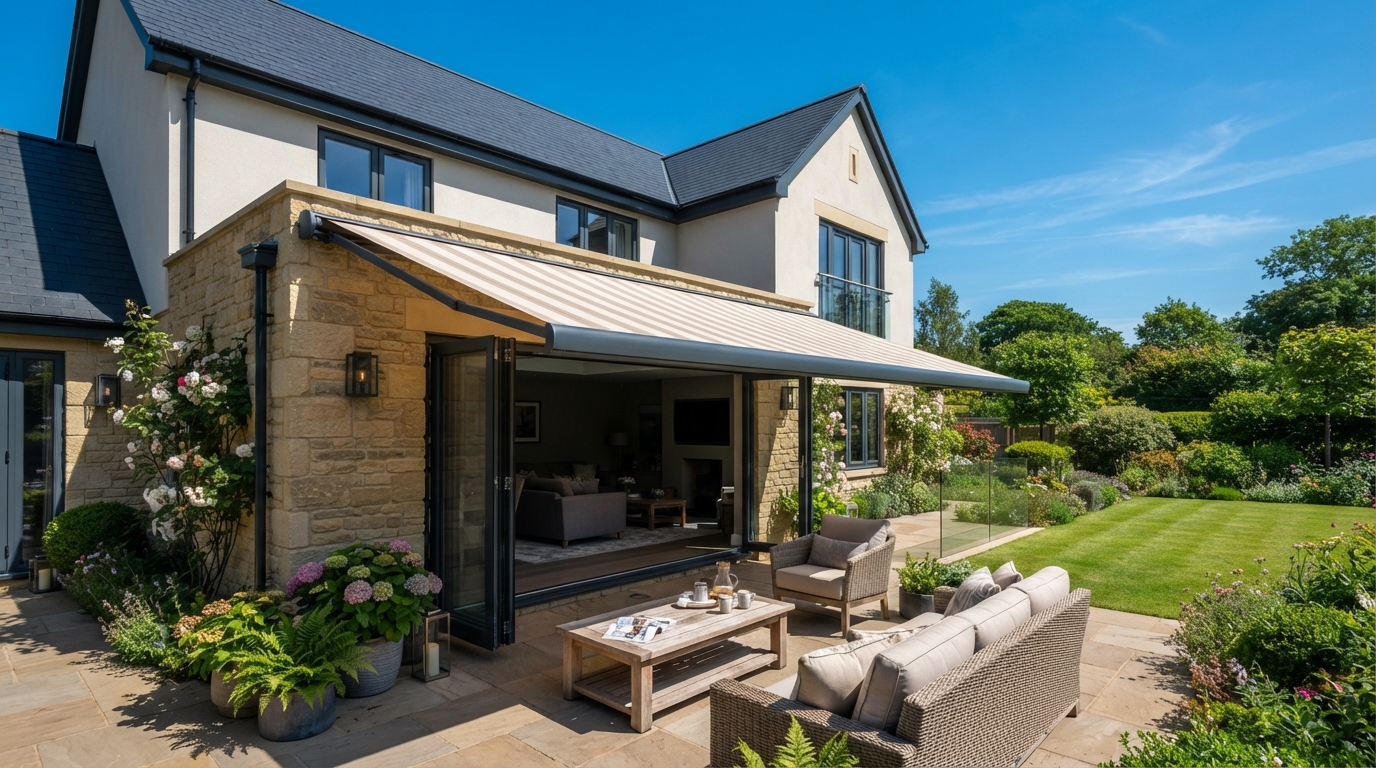
For a window that overheats, external shading is the single most effective thing you can fit — more effective than any curtain, blind or film, because it stops the sun before it reaches the glass. Whether it’s worth the investment depends on the window: a south- or west-facing room that bakes every summer justifies it easily; a north-facing one doesn’t need it. A retractable awning is the flexible choice — shade in summer, retracted to let low winter sun and light back in — while external blinds or shutters do the most for a specific window. The honest costs: it’s a bigger outlay than internal options, fixed installations can need permission, and anything external must be rated for UK wind and weather.
This is the “tier 1” measure that our window and curtain guide points to. If you’ve done the cheap internal things and a room still overheats, this is the next step — here’s how to judge whether it’s worth it and which type to choose.
Why external beats everything internal
It comes down to one piece of physics. Sunlight passes straight through glass, and once it lands on something inside — a blind, the floor, the furniture — it turns into heat that’s now trapped in the room, because that longer-wave heat can’t easily pass back out through the glass. A curtain or blind can only reflect some of it back and slow the rest.
External shading intercepts the sunlight before it crosses the glass, so the heat never becomes your problem. This is why every hot country shades from outside — shutters, deep eaves, awnings — and why an internal blind, however good, is always second best for heat. It’s also why external shading is the measure that most reduces the load on any fan or air conditioner you run.
Which windows actually justify it
Don’t shade everything — spend where the sun is fiercest:
- West-facing — takes the strong afternoon and evening sun, and rooms here overheat worst because they’re already warm from the day. Usually the top priority.
- South-facing — takes sustained sun through the middle of the day. High priority, especially large glazed areas.
- East-facing — morning sun; matters for bedrooms you want cool for sleep and for early-start home offices.
- North-facing — little direct sun. Rarely worth shading for heat.
A single well-shaded west-facing window can make more difference than shading three windows that don’t take much direct sun.
The main types, and who each suits
Retractable awnings
A fabric awning that extends over a window, door or patio and rolls away when not needed. The flexibility is the point: shade through summer, retract in autumn to let the low winter sun and daylight back in.
Good for: patio doors and large windows; anyone who wants summer shade without permanently darkening the room in winter; combined house-shading and outdoor living (it shades the patio too).
Less good for: exposed, windy spots — fabric awnings must be retracted in high wind, and a manual one you forget to bring in can be damaged; motorised ones with a wind sensor cost more. It’s also a fixed installation into the wall, so see the permission note below.
External blinds, shutters and roller shades
Mounted outside the window itself, these do the most for a specific window because they sit right at the glass on the outside. External roller shades and louvred shutters are common across Europe for exactly this reason.
Good for: a specific overheating window or bedroom; the strongest per-window heat reduction of any option here; louvred types let you keep some daylight and airflow while blocking direct sun.
Less good for: budget — external systems cost more than internal blinds and usually need professional fitting; and like awnings, a fixed external fitting can raise permission questions on some buildings.
Freestanding shade (the renter’s option)
If you can’t fix anything to the building — a rental, a leasehold flat, a listed building — a freestanding parasol, sail or screen positioned to shade a window from outside still intercepts sun before the glass, with nothing drilled.
Good for: renters and anyone who can’t alter the building; a movable, no-commitment option; doubles as patio shade. Our garden and patio shade guide covers the freestanding options in detail.
Less good for: upper-floor windows (hard to position freestanding shade high up); and it’s less precise than a fitted external blind, so it blocks less of the direct beam.
Planting (the slow, free option)
A deciduous tree or tall shrub positioned to shade a hot window is the cheapest external shading there is — leaves block the summer sun and drop in winter to let it through. It’s slow to establish and needs the right position, but it’s effective, free once grown, and cools the surrounding air too.
The permission point — check before you fix
What to check before buying
- Wind rating and how it retracts. UK weather turns quickly. A fabric awning needs bringing in for high wind; a wind sensor on a motorised one does this automatically and is worth the premium in an exposed spot.
- Manual vs motorised. Manual is cheaper and has nothing to break; motorised is easier to use daily (so you actually use it) and can automate on sun and wind sensors.
- Fabric and fittings for weather. It lives outside year-round — look for weather- and UV-resistant fabric and corrosion-resistant fittings, and check whether it needs bringing in over winter.
- Fixing surface. A solid masonry wall takes an awning’s load and leverage; render, cladding or a weak wall may not. This is part of why fitted external shading is often a professional job.
- Projection and coverage. Measure what you actually need to shade at the times the sun hits — a shade that’s too shallow leaves the low morning or evening sun coming in under it.
Is it worth it? The honest verdict
For the right window, external shading is the most effective heat measure a home can have, and it pays back in comfort every summer plus a lower cooling load if you run a fan or air conditioner. It’s worth it when:
- You have a specific room that overheats every summer, especially south- or west-facing;
- You’ve already done the cheap internal and sealing measures and it’s still too hot;
- You’ll be in the home long enough to enjoy the payback.
It’s not worth it for a north-facing room, a window that only occasionally catches sun, or a situation where a freestanding parasol or a good internal blind would do. And if you rent or can’t fix to the building, start with freestanding shade and internal measures. Either way, external shading reduces the need for cooling rather than replacing it — on the hottest, most humid days you may still want a fan or a unit, as our fan vs air conditioner guide explains.
Frequently asked questions
Is external shading really better than blackout blinds?
For heat, yes — it stops sunlight before it enters, whereas an internal blind is dealing with heat that’s already through the glass. Internal blinds still help and are cheaper, but external wins on effectiveness.
Do I need planning permission for an awning?
Usually not for a domestic awning on a standard house, but listed buildings, conservation areas and leasehold flats are real exceptions where consent may be required. Check the Planning Portal and, if leasehold, your freeholder first.
Will an awning survive UK wind?
Fabric awnings must be retracted in high wind, and a manual one relies on you remembering. In an exposed spot, a motorised awning with a wind sensor that retracts automatically is worth the extra cost.
What if I rent and can’t fit anything?
Use freestanding shade — a parasol, sail or screen positioned to shade the window from outside — plus internal measures. You get much of the benefit with nothing drilled. Our garden and patio shade guide covers the options.
Does external shading help in winter?
A retractable one is designed for this — retract it in winter to let the low sun and daylight in, and even gain a little useful warmth. A fixed shade that blocks winter sun as well is the trade-off to weigh.
Sources
- Energy Saving Trust — Keeping your home cool in summer
- GOV.UK — Approved Document O: Overheating (solar gain and shading)
- Planning Portal — Do you need permission?
Related reading: our window and curtain guide and garden and patio shade guide.
A retractable awning gives summer shade without darkening the room in winter. Compare current options at Amazon UK.