How to Lag Your Pipes Before Winter to Stop Them Freezing (UK)
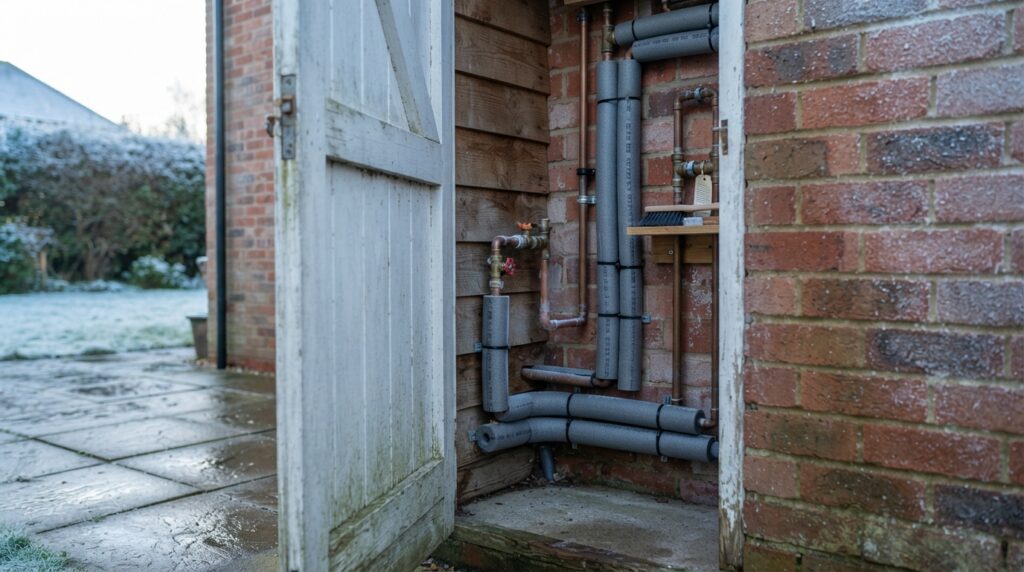
A burst frozen pipe is one of the most expensive things that can happen to a British house in winter. Preventing it is a Saturday morning job with a few pounds of foam. Severn Trent Water’s advice is to protect any water pipes exposed to cold temperatures — lofts, garages, outside — with lagging. That means slipping split foam sleeves over the pipes and taping the joints. If a pipe does burst, turn off the water at your stop tap and call a plumber. Do this now, in autumn; don’t wait for the first cold snap when everyone else has bought the last of the foam.
Cold water pipes running through unheated spaces — a loft, a garage, up an outside wall or under a suspended timber floor — are the ones that freeze. When they freeze, they expand; when they thaw, the crack that opened up releases water everywhere. A burst in the loft can bring a ceiling down before you notice. Here’s how to stop it.
Which pipes to lag
Severn Trent’s advice is to protect any water pipe exposed to cold temperatures. In practice that means:
- Loft pipes: cold water supply and any overflow pipes. If your cold water tank is in the loft, the pipes to and from it are the most vulnerable in the house.
- Garage and outbuilding pipes: outside taps, water butts on mains supply, any pipe running through an unheated space.
- External wall runs, particularly on north-facing walls.
- Boiler condensate pipe where it runs outside — a separate freezing problem covered in our condensate pipe guide.
- Outside taps: fit an outdoor tap cover, and turn off the internal isolation valve before winter if you have one.
What to buy
The standard product is a split foam sleeve that opens along one side and slips over the pipe. It’s sold by pipe size — the two most common in UK homes are 15mm and 22mm outside diameter — and by length. Thicker foam insulates better; look for 19–25mm wall thickness for pipes in cold spaces. Cheap thin sleeves are barely worth fitting.
Foam pipe lagging sleeves
Under a tenner for a Saturday’s peace of mind
Sized by pipe outside diameter (usually 15mm or 22mm)
19–25mm foam wall thickness for cold spaces
Measure a section of your pipe with a ruler first: 15mm is your standard household run, 22mm is often the incoming main. Buy sleeves in the matching size and enough length to cover every exposed run with a bit of overlap for the joints. Look for a foam wall thickness of 19mm or 25mm for anything in a loft, garage or outside — thin 9mm sleeves are only really enough for pipes inside heated rooms. Add a roll of foil-backed insulation tape or plain PVC tape for the seams.
Good for: lofts, garages, outbuildings, exterior runs; DIY-friendly, cuts to length with a knife; cheap peace of mind before the first cold snap.
Less good for: pipes that go through tight bends where a rigid sleeve won’t follow — use tape-on flexible insulation there. Won’t fix an already frozen pipe.
Fitting it: step by step
- Measure the run, including bends and elbows. Add 10% for offcuts.
- Cut a length of sleeve slightly longer than the section you’re covering, so the joints press together with a small squeeze.
- Open the split along the side and slip it over the pipe. Try to get the split facing downwards, so any condensation drips off rather than pooling on top of the pipe.
- At joints and bends, cut a mitre with a sharp knife so the sleeves meet neatly. Wrap the joint with insulation tape.
- Don’t leave gaps at valves, tees or where a pipe passes through a wall. Small unlagged sections are where the freeze starts.
- For tanks in the loft, wrap a tank jacket around the sides and top but leave the underside clear.
Other winter pipe measures
- Know where your stop tap is before you need it. Usually under the kitchen sink or in the utility room. Test that it turns.
- Keep some heat on if you go away in winter. Severn Trent’s wider advice is that a house that freezes internally is at risk of far worse damage than one kept ticking over at a low temperature. A frost-setting on a modern thermostat, or 10–12°C on a manual one, is enough to stop most pipes freezing.
- Fit an outside tap cover for exposed taps.
- Turn off water to outside taps at their internal isolation valve if you have one, and drain the tap.
- If a pipe bursts, Severn Trent’s advice is to turn off the water at the stop tap, and call a plumber if water doesn’t return after thawing.
Frequently asked questions
Which pipes need lagging in winter?
Severn Trent advises protecting any water pipes exposed to cold temperatures — loft, garage, outside, and pipes running through unheated spaces. Cold water pipes are the priority because they contain still water when not in use.
What thickness of pipe lagging do I need?
For pipes in loft, garage or outside, a foam sleeve wall thickness of around 19–25mm gives sensible protection. Thin 9mm sleeves are only really useful for pipes inside heated rooms.
Should I leave the heating on if I go away in winter?
Yes. A house that freezes internally is at real risk of burst pipes and serious damage. Set the thermostat to a frost setting or 10–12°C, or leave it on a low background programme.
What do I do if a pipe bursts?
Turn off the water at your stop tap immediately, then call a plumber. Severn Trent also advises contacting a plumber if water doesn’t return after a frozen pipe thaws, in case the cold has caused hidden damage.
Sources
- Severn Trent Water — Protecting your pipes
- Energy Saving Trust — Insulating tanks, pipes and radiators
Related reading: our frozen boiler condensate pipe guide, storm-proofing your home and draught-proofing your home.
Compare current foam pipe lagging sleeves at Amazon UK.