How to Keep Chickens Cool in a UK Heatwave
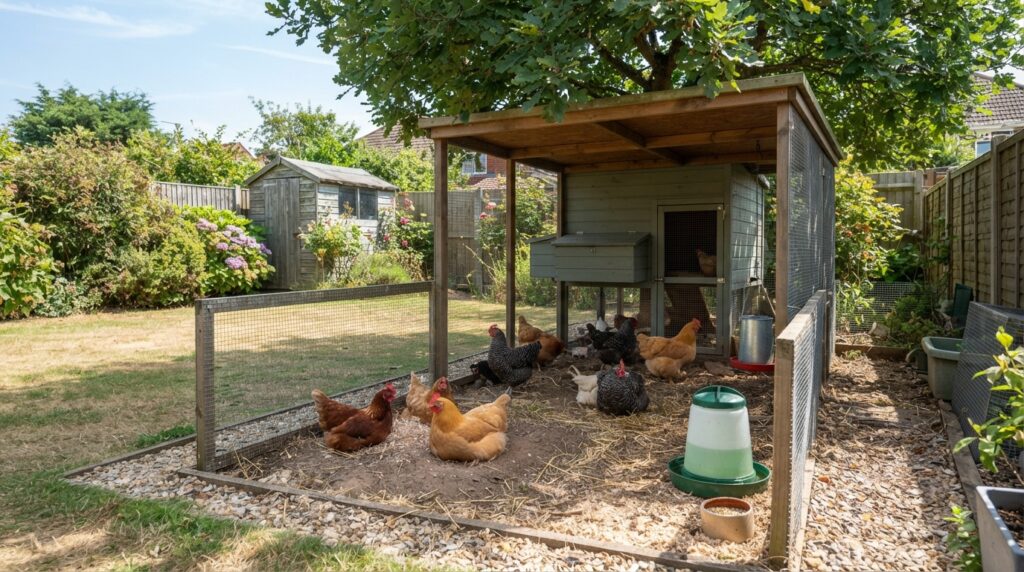
Hens cope with cold far better than heat, and a run with nowhere shaded to sit is the most common problem in a British heatwave. The British Hen Welfare Trust’s priorities are cold water, kept in the shade and refreshed twice a day, proper shade they can actually get to, and a hen house that is well ventilated at night rather than shut up tight. Give them somewhere to dust bathe, because that’s how they regulate their own temperature. Skip the corn and other high-carbohydrate treats in hot weather — the Trust points out that digesting them raises body temperature. Watch for panting, going off their food, sluggishness and a pale comb, which are the Trust’s signs that a hen is struggling.
Garden hens have become a normal part of British back gardens, and they’re generally hardy birds. Heat is the exception. A hen wearing a full coat of feathers, with no way to sweat, in a run that was designed to be secure rather than shaded, can get into trouble quickly. Here’s what the UK’s hen welfare charity actually recommends.
Why heat is harder on hens than cold
As the British Hen Welfare Trust puts it, hens can easily overheat with all those feathers. They can’t sweat, so they lose heat mainly by panting and by holding their wings away from their body. Both of those are visible, which is useful — a hen standing with her beak open and wings held out is telling you something. Ex-commercial hens, which is what many UK garden flocks are, often arrive with bare patches and thinner feathering, and they can be less robust than a bird that has always lived outdoors.
Water: cold, shaded, and refreshed twice a day
A larger shaded poultry drinker
More water, and somewhere to put it out of the sun
Easy to empty and refill twice daily
A second drinker prevents guarding
Small starter drinkers are fine in April and a nuisance in a heatwave, when you want more water, in more than one place, all of it in the shade. Look for something you can actually lift, empty and rinse twice a day without it becoming a chore, since a drinker that’s awkward to refill is a drinker that doesn’t get refilled. Check the capacity against your flock size on the listing before buying.
Good for: holding enough cold water through a hot day; putting a second supply in a different shaded spot; quick daily refreshing.
Less good for: keeping water cold on its own — that comes from shade and refilling, not the drinker itself. Larger models are also heavier to carry when full.
Shade they can actually reach
Shade is the single biggest improvement to most runs. The Trust suggests the space under a raised coop, a parasol positioned by the run, or something improvised from blankets and garden chairs. The test is simple: at the hottest part of the afternoon, walk out and look. If there’s nowhere shaded inside the fencing where a hen can sit on the ground, that’s the job for today. Trees and bushes are ideal because they cool the air as well as blocking the sun. Our garden shade guide covers sails, parasols and screens if you need something more permanent.
Ventilate the coop, don’t seal it
A closed hen house on a warm night is a hot box. The Trust’s advice is to keep the hen house well ventilated overnight, because a cool breeze makes those warm nights more bearable. The obvious worry is predators, and the answer is mesh rather than a closed door: covering pop holes and windows with sturdy wire mesh lets air move while keeping foxes out. That’s the same principle as ventilating your own windows safely at night — airflow and security aren’t actually in conflict if you plan for both.
Dust baths
Dust bathing isn’t just grooming. The Trust lists it among its hot weather advice because hens use it to help regulate their temperature, working cool, dry earth down through their feathers. If your run is baked hard or has turned to mud, put out a tray of dry soil or sand, ideally somewhere shaded. It also helps with the summer red mite problem below.
Food and treats: go easy on the corn
This one catches a lot of keepers out. The Trust advises against high-carbohydrate treats such as corn in warmer months, because digesting them raises a hen’s body temperature. Save the corn for winter, when that’s exactly what you want. In a heatwave, hens will often eat less anyway, which is normal, and cool watery treats like chopped cucumber or frozen peas dropped into water are a better choice than scratch feed.
Sunburn, red mite and the other summer problems
- Bare patches can burn. The Trust suggests sun cream on featherless areas for hens with bald patches, and keeping the cream in the fridge so it’s cooling when applied.
- Red mite thrives in summer. The Trust recommends diatomaceous earth powder and disinfectant sprays. Infestations build quickly in warm weather, so check the coop more often than you would in spring.
- Check them more often generally. Hot weather problems in poultry develop over hours, not days.
Signs a hen is struggling
Frequently asked questions
Can I put ice in my chickens’ water?
Yes. The British Hen Welfare Trust’s emphasis is on cold water kept in the shade and refreshed at least twice a day, and adding ice is a reasonable way to keep it cold for longer on a very hot afternoon.
Should I shut the coop at night in a heatwave?
The Trust recommends keeping the hen house well ventilated at night, using wire mesh over pop holes and windows so air can move without letting predators in, rather than closing it up completely.
Why shouldn’t I give chickens corn in hot weather?
Because digesting high-carbohydrate treats such as corn raises body temperature, which is the opposite of what you want in a heatwave. The British Hen Welfare Trust advises avoiding them in the warmer months.
Sources
- British Hen Welfare Trust — Hot weather tips
- British Hen Welfare Trust — Caring for chickens in hot weather
Related reading: our garden shade guide, misting fan guide and protecting garden plants in a heatwave.
Compare current larger poultry drinkers at Amazon UK.