How to Keep a Tent Cool When Camping in a UK Heatwave
A tent is thin fabric with very little insulation, so in direct sun it can become much hotter inside than out. The most effective fixes are about where and when, not gadgets. Pitch in partial shade from trees or hedges, but not directly underneath them. Open every vent and keep the fly screens zipped. On a genuinely hot day, the Camping and Caravanning Club’s technical manager suggests taking the tent down during the day and re-pitching once it’s cooler, so it isn’t soaking up heat for hours while you’re out. A reflective tarp over the outside, a rechargeable fan and bedding chilled in a cool box all help with sleeping. Portable air conditioners are technically possible on a pitch with electric hook-up, but a tent leaks cooled air so readily that they’re rarely worth it.
British camping trips are usually planned around rain, not heat, so a hot spell can catch people out. A tent that feels fine at 8am can be unbearable by midday. Here’s what actually works, drawing on advice from the Camping and Caravanning Club’s technical manager.
Why tents get so hot
Most tents are made from thin synthetic fabric designed to keep rain out and be light to carry. That fabric does very little to stop the sun’s heat, and a closed tent traps warm air with nowhere to go. There’s almost no thermal mass to soak up heat either, which is the opposite of a brick house. The upside is that a tent cools down quickly once it’s out of the sun and air can move through it. Most of the advice below makes use of exactly that.
Pitch in the right place
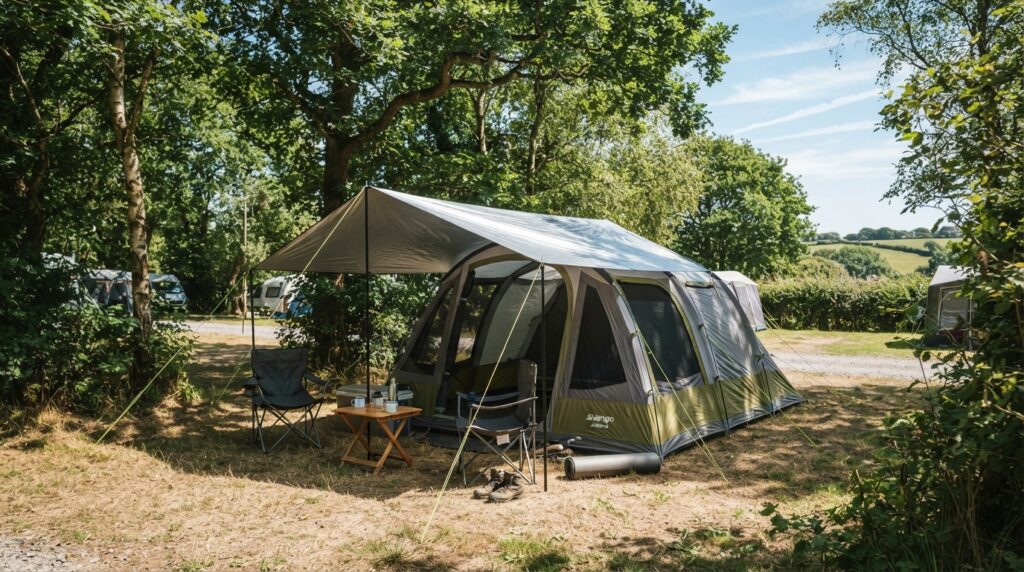
The Camping and Caravanning Club recommends pitching in partial shade from trees or hedges, but not directly beneath them. Shade from nearby trees keeps the worst of the afternoon sun off without the risks of pitching right under branches. Think about where the sun will be in the afternoon, when it’s hottest, rather than where the shade is when you arrive. If your tent has a door at each end, lining it up with the breeze helps air flow through.
Ventilation: open everything
Open every vent the tent has to let hot air out and cooler air in, while keeping the fly screens closed against insects. A tent that feels hot and stuffy is usually one where the air isn’t moving, not just one that’s in the sun. Opening the doors on both sides during the day, where it’s practical and safe, makes a big difference.
Take it down during the day
This sounds drastic, but it’s the Club technical manager’s own advice for very hot weather. If you’ll be out for the day, taking the tent down stops it absorbing heat for hours, and you can pitch it again in the evening once the temperature drops. It’s most practical with a smaller tent that’s quick to put up. For a large family tent, focus instead on shade, ventilation and reflective covering.
Reflect the sun
A reflective tarp or insulating blanket draped over the outside of the tent can bounce back a lot of the sun’s energy before it reaches the fabric. Keep a gap between it and the tent if you can, so air can move between the two layers, and make sure it doesn’t cover the vents. Spraying the outside of the tent with water is another trick the Club suggests, cooling the fabric as the water evaporates.
Keep air moving with a fan
A rechargeable camping fan
Air movement without needing hook-up
Can often hang from a tent loop
Usable on non-electric pitches
The Club suggests rechargeable personal fans, which you can top up from a solar panel or your car, or a mains fan if your pitch has electric hook-up. A fan doesn’t lower the air temperature, but moving air over your skin makes a hot tent far more bearable, especially at night. The Club also suggests putting a block of ice in front of the fan for a cooler breeze. Check the battery life on the specific model’s listing against how long you’ll want it running overnight.
Good for: non-electric pitches; overnight air movement; hanging from a tent’s roof loop.
Less good for: actually lowering the temperature, since it only moves air around. Battery life also varies a lot between models, so check it matches a full night’s use.
Sleeping cooler
- Swap the sleeping bag for cotton sheets. The Club recommends lightweight cotton sheets for breathability on hot nights.
- Chill your bedding. Put pillowcases, sheets or socks in a cool box beforehand. Our cool box guide covers which types stay cold longest.
- Use damp towels or clothing for quick relief before bed.
- Drink plenty of water throughout the day, not just when you feel thirsty.
Can you run an air conditioner in a tent?
Technically, on a pitch with electric hook-up, you could run a small portable air conditioner. In practice, it’s rarely worth it. A tent isn’t sealed or insulated, so most of the cooled air leaks straight out through the fabric and vents, while the hot exhaust still needs somewhere to go. You’d also need to be sure the pitch’s hook-up can handle the load. For most people, shade, ventilation and a fan do far more for far less. If you’re camping in a caravan or campervan rather than a tent, our caravan and motorhome cooling guide covers the options properly.
Frequently asked questions
How do you keep a tent cool without electricity?
Pitch in partial shade, open every vent, cover the tent with a reflective tarp, and use a rechargeable fan. On very hot days the Camping and Caravanning Club suggests taking the tent down during the day and re-pitching when it’s cooler.
Should I pitch my tent under a tree for shade?
The Camping and Caravanning Club recommends partial shade from trees or hedges, but not pitching directly beneath them.
Is it worth taking a portable air conditioner camping?
Rarely for a tent. It needs electric hook-up, and a tent isn’t sealed or insulated, so most of the cooled air escapes. A fan and good ventilation are usually far more practical.
Sources
- TGO Magazine, with the Camping and Caravanning Club — Camping in the heat
- NHS — Carbon monoxide poisoning
Related reading: our caravan and motorhome cooling guide and personal and neck fan guide.
Compare current rechargeable camping fans at Amazon UK.