Why Does My Heating Smell of Burning When I First Turn It On?
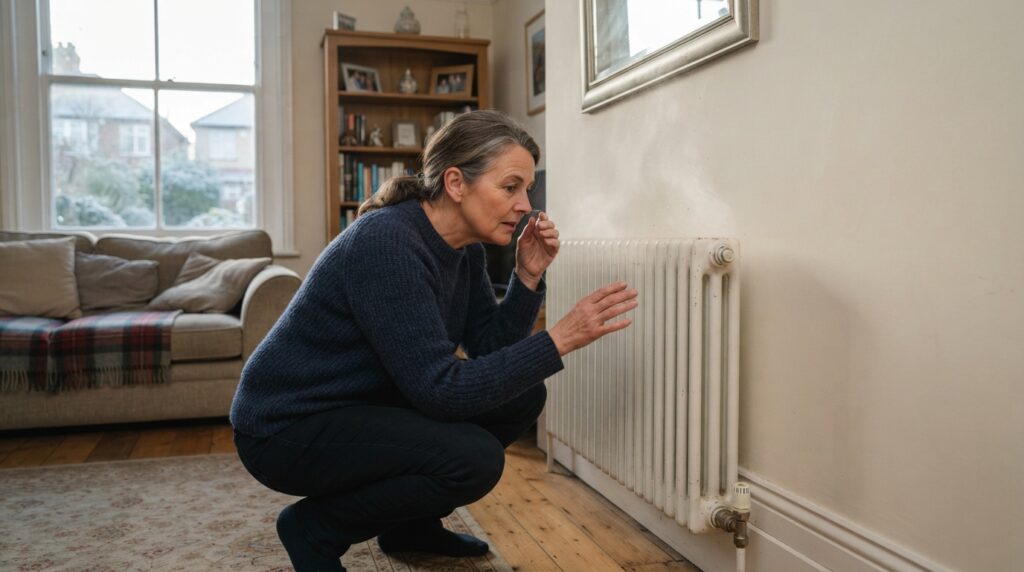
If you smell gas — often described as rotten eggs, from the odorant added to it — call the National Gas Emergency Service on 0800 111 999 immediately. Open windows and doors, don’t use light switches, electrical appliances or naked flames, turn the gas off at the meter if you can safely, and leave the property.
If you smell burning plastic, acrid or electrical burning, or see scorching, smoke or discoloured sockets: switch the system off at the isolator or consumer unit and call an electrician or heating engineer before using it again. Don’t wait to see if it passes.
If a carbon monoxide alarm sounds, or several people feel unwell with headaches, dizziness or nausea that improves when they leave the house: get everyone out into fresh air, call 0800 111 999, and call 999 if anyone is unwell. Carbon monoxide itself is colourless and odourless — you cannot smell it.
In the overwhelming majority of cases it’s dust burning off. Radiators, heat exchangers and heating elements collect dust over a summer of disuse, and the first time they get hot it scorches away. It smells unpleasant, and it should clear within an hour or two and not return. If the smell persists beyond a few hours, gets worse, smells of gas, plastic or electrical burning, or comes with any physical symptoms, that is not dust and needs an engineer.
The normal explanation: dust
Your heating sits idle from roughly April to October. In that time, dust settles on and inside radiators, on heating elements, and within the boiler’s heat exchanger and casing.
The first time everything reaches operating temperature, that dust burns off. It’s the same phenomenon as a new oven or a fan heater that hasn’t been used since last winter.
What normal looks like:
- Noticeable in the first ten to thirty minutes
- Smells dusty or slightly scorched, not chemical or acrid
- Fades over an hour or two
- Doesn’t come back the next time you run the heating
Open a window while it clears. That’s the whole treatment.
What isn’t normal
Take these seriously rather than waiting to see:
- The smell returns every time you run the heating, or persists for days.
- Acrid, chemical or burning plastic — suggests overheating wiring, a failing pump or motor, or something in contact with a hot surface.
- Gas. Emergency — see the box above.
- Oily or fuel smells from an oil-fired system — suggests a leak or incomplete combustion.
- Smoke, scorch marks, or discoloured sockets or fittings.
- Anyone feeling unwell — headache, nausea, dizziness, drowsiness — particularly if it improves away from the house or affects several people. Treat this as possible carbon monoxide.
- A yellow or orange flame on an appliance that should burn blue.
- Black or sooty marks around a boiler, fire or flue.
Reducing the dust smell next autumn
Straightforward preventive work, best done in September:
- Vacuum inside and behind radiators. A radiator brush or a vacuum crevice tool reaches down between the fins where most of it collects. This is where the majority of the smell originates.
- Wipe down radiator surfaces and the tops of skirting.
- Vacuum around the boiler and any airing cupboard, but don’t open boiler casing — that’s an engineer’s job.
- Do the first run with a window open for half an hour on a mild day, well before you need the heating. This is part of the autumn test run in our boiler prep guide, and it means the burn-off happens on your terms rather than on the first cold evening.
- Clean or replace filters on warm air systems, electric heaters and fan-assisted radiators.
Other first-of-season smells and what they mean
- Musty or damp — usually a room that’s been closed up, or damp that developed over an unheated summer. Our condensation guide covers it.
- Metallic or hot metal — often normal for the first run, but note if it persists.
- Sweet or chemical from a heat pump or air conditioning unit — could indicate a refrigerant leak. That’s an F-Gas certified engineer’s job, as covered in our installation law guide.
- Sewage or drains — likely a dried-out trap in a rarely used sink or an unrelated drainage issue, not the heating.
- Burning from a wood burner on first light — some is normal, but a strong smell of smoke in the room suggests a flue problem. Get the chimney swept and the appliance checked, and make sure your CO alarm works. Our wood burner guide covers ventilation and combustion safety.
The carbon monoxide point, properly
Worth stating clearly because the “burning smell” question and the CO question get conflated.
Carbon monoxide has no smell. You cannot detect it by nose. A burning smell is not a CO warning, and the absence of a smell is not reassurance.
What CO does produce is symptoms: headache, dizziness, nausea, breathlessness, confusion and tiredness — often described as flu without a temperature. The telling patterns are symptoms that improve when you leave the house and return when you come back, or several people in the household affected at once. Pets can be affected too.
Fit a working CO alarm if you have any fuel-burning appliance — boiler, gas fire, wood burner, open fire, oil or solid fuel heating. Test it, and check its expiry date; they don’t last indefinitely. In England, landlords must ensure an alarm is fitted in rooms with a fixed combustion appliance other than a gas cooker, and requirements vary across the UK nations.
This is the reason the annual service matters. A Gas Safe registered engineer carries out flue gas analysis, which measures whether the appliance is burning correctly — something no amount of sniffing can tell you.
When to call someone, and who
- Gas smell → 0800 111 999, immediately. Leave the property.
- Suspected CO or alarm sounding → everyone out, 0800 111 999, and 999 if anyone is unwell.
- Electrical or plastic burning smell → isolate the system, call a qualified electrician or heating engineer.
- Persistent unexplained smell from a gas appliance → Gas Safe registered engineer. Check their ID card and verify the number on the Gas Safe Register.
- Oil system smells → OFTEC registered technician.
- Smell from an air conditioner or heat pump → F-Gas certified engineer for anything involving the refrigerant circuit.
Frequently asked questions
How long should the dust smell last?
An hour or two on the first run, fading as it goes, and not returning on subsequent runs. Anything longer or recurring isn’t dust.
Is it safe to sleep with the heating on if it smelled of burning earlier?
If it was a brief dust smell that cleared, yes. If the smell is still present, persistent, acrid or electrical, switch the system off and get it checked before running it overnight. When in doubt, don’t.
Can I stop it by cleaning the radiators myself?
Largely yes — vacuuming inside and behind radiators before the first run removes most of what causes it. Don’t open boiler casing or dismantle appliances.
My electric heater smells of burning every time. Is that normal?
Some smell on first use of the season is normal; every time is not. Unplug it and inspect for dust build-up or damage. A recurring burning smell from any electrical appliance is a reason to stop using it, not to tolerate it.
Sources
- Gas Safe Register — Carbon monoxide safety
- Gas Safe Register — Gas emergencies
- HSE — Carbon monoxide in the home
- NHS — Carbon monoxide poisoning (symptoms)
- Electrical Safety First — Electrical safety around the home
- GOV.UK — Smoke and carbon monoxide alarms: landlord guidance
- OFTEC — OFTEC (oil-fired heating technicians)
Related reading: our boiler prep guide and autumn changeover checklist.
Related guides



Compare current prices, stock and reviews on portable air conditioners at Amazon UK. Prices and stock move fast in a heatwave, so it is worth checking before you commit.
Browse air conditioners →