Always Cold Hands and Feet at Home? What’s Actually Going On
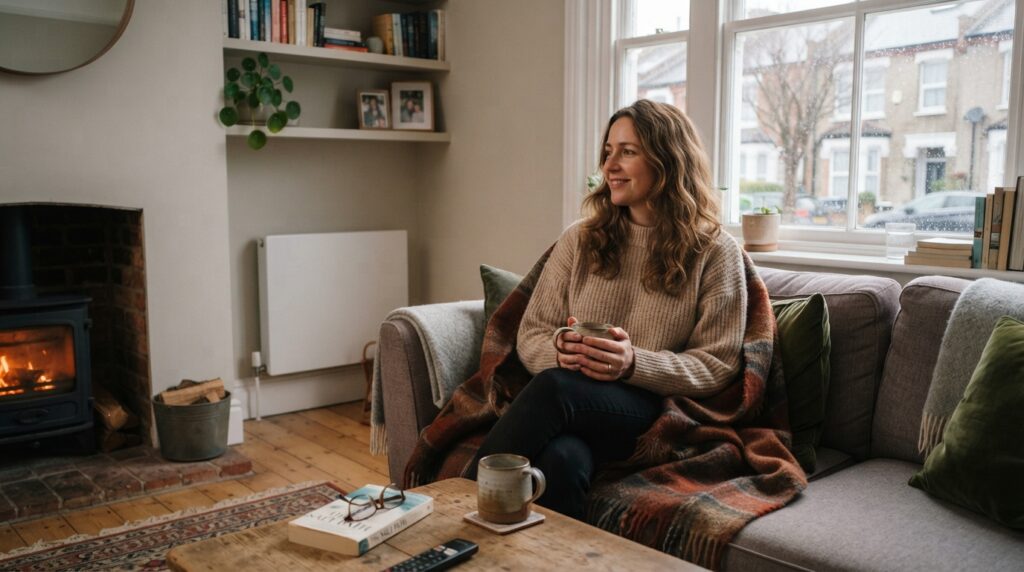
Two separate things get confused here. One is your house — cold surfaces, draughts and cold floors pull heat from your extremities faster than the air temperature suggests. The other is you — circulation to hands and feet reduces first when your body is conserving heat, and several common medical conditions affect this. Fix the house first, because it’s cheap and it either solves the problem or rules it out. If it doesn’t, that’s genuinely worth a GP conversation.
This is one of the most common winter household complaints from middle age onward, and it sits awkwardly between a heating problem and a health question. Here’s how to work out which yours is.
Why hands and feet go first
When your body needs to conserve heat, it prioritises the core. Blood vessels near the skin constrict — vasoconstriction — reducing flow to the extremities to keep warm blood around your vital organs.
Your hands and feet are where that shows up first: they have a large surface area relative to their volume, they’re furthest from the core, and they have relatively little insulating tissue.
So cold hands aren’t a fault. They’re the system working. The question is whether it’s being triggered too readily, and why.
The house-side causes, in order of how cheap they are to fix
Cold floors
Enormously underrated. If you have a suspended timber floor with a ventilated void beneath, or a solid uninsulated floor, that surface can be several degrees below air temperature. Bare feet or thin socks on it lose heat by direct conduction — much faster than to air at the same temperature.
Fixes: rugs, proper slippers with an insulating sole, or draught-proofing floorboard gaps. Our draught-proofing guide covers the gaps. Don’t block airbricks ventilating the void.
Draughts at floor level
Cold air is denser and pools low, so a draught under a door tracks across the floor exactly where your feet are. You can feel perfectly warm from the waist up and have genuinely cold feet in the same chair.
A door brush strip is one of the cheapest, highest-value fixes in the whole house.
Radiant heat loss to cold surfaces
You radiate heat toward any surface colder than you. Sitting beside a large single-glazed window or an uninsulated external wall means continuous radiant loss, and you’ll feel cold even when the thermometer says 20°C.
Move the chair, close the curtains at dusk, or address the surface. This is why people so often say a room “feels” colder than it reads.
Temperature swings
If your heating cycles the room between 21°C and 15°C, your body keeps re-triggering its conservation response. A steadier, moderate temperature is often more comfortable than a higher but swinging one. Our cold room guide covers diagnosing rooms that never hold temperature.
The body-side causes worth knowing about
These are the ones that warrant a GP conversation rather than a draught excluder.
- Raynaud’s. Common, and frequently undiagnosed. Fingers or toes go white, then often blue, then red as blood returns, typically triggered by cold or stress, sometimes with numbness or pain. It’s a recognised condition with management options, and it can occasionally be secondary to something else — which is why it’s worth mentioning to a GP rather than living with.
- An underactive thyroid. Cold intolerance is a classic symptom, alongside fatigue, weight gain and dry skin. Diagnosed with a simple blood test and treatable.
- Anaemia. Reduced oxygen-carrying capacity commonly produces cold hands and feet plus tiredness and breathlessness. Also a blood test.
- Circulation problems. Peripheral arterial disease becomes more common with age, particularly with smoking, diabetes or high blood pressure. Cold feet with leg pain on walking is a specific combination worth reporting.
- Diabetes. Can affect both circulation and nerve sensation in the feet. Reduced sensation is genuinely important, because it means burn risk from hot water bottles and heaters that you may not feel.
- Some medications, including certain beta blockers, can affect peripheral circulation.
The pattern worth acting on: cold extremities that are new, getting worse, affect one hand or foot rather than both, or come with colour changes, numbness, pain, or skin that breaks down.
What actually helps at home
- Warm the extremities directly. Proper slippers with insulating soles, wool socks, fingerless gloves indoors. Far more effective per pound than raising the whole room.
- Layer thin, not thick. Multiple thin layers trap more air than one bulky one, and let you adjust.
- Keep your core warm. Counterintuitive but important — if your core is warm, your body is more willing to send blood to the extremities. A warm gilet or extra core layer often does more for cold hands than gloves.
- Move regularly. Sitting still for hours reduces circulation. Getting up every half hour genuinely helps.
- Warm drinks and warm food — modest effect, but real, and pleasant.
- Warm foot soak in the evening. Warming the feet triggers vasodilation, which is the same mechanism that helps with sleep onset — covered in our temperature and sleep guide. Use a safe temperature, especially if sensation is reduced.
- Stop smoking, if relevant. Nicotine constricts peripheral blood vessels; it’s one of the most direct contributors there is.
Fix the house first, then see the GP
A sensible order, because it’s cheap and it produces useful information either way.
Spend a fortnight on the free and cheap house fixes — door brush, rug, chair position, curtains at dusk, a steadier heating setting. Note whether it makes a difference.
If it does, you had a house problem. If your hands and feet are still cold in a warm, draught-free room, that’s genuinely worth mentioning at your next GP appointment — and you’ll be able to describe it precisely, which helps.
The wider point about cold homes
Worth stating. Cold remains a larger cause of temperature-related mortality in England and Wales than heat, and it’s driven by poorly heated homes rather than record low temperatures.
If cost is what’s keeping your home cold, it’s worth checking what support exists rather than simply enduring it — Citizens Advice and the Energy Saving Trust both maintain current information on grants, discounts and payments, and these are widely under-claimed.
Frequently asked questions
Is it normal for hands and feet to be colder than the rest of me?
Yes — that’s normal thermoregulation. What’s worth investigating is a change from your own baseline, colour changes, numbness or pain, or one side being affected differently from the other.
Does it get worse with age?
Circulation and thermoregulation do change with age, and several relevant conditions become more common. That’s a reason to mention it to a GP rather than to accept it as inevitable.
Would underfloor heating solve it?
It addresses the cold-floor conduction problem directly, which is a genuine cause. It’s a significant expense, though — try rugs and proper slippers first and see how much of the problem that removes.
Why are my feet cold in bed even under a duvet?
Because a duvet insulates rather than heats — if your feet are already cold when you get in, they may not warm up. A warm foot soak beforehand, or warming the bed, tends to work better than more covers.
Sources
- NHS — Raynaud’s (symptoms, triggers, when to see a GP)
- NHS — Underactive thyroid (cold intolerance as a symptom)
- NHS — Iron deficiency anaemia
- NHS — Peripheral arterial disease
- NHS — Keep warm, keep well
- Energy Saving Trust — Draught-proofing
- ONS / BBC — Heat and cold related deaths in England and Wales
- Citizens Advice — Grants and benefits to help pay energy bills
Related reading: our draught-proofing guide and cold room guide.
Related guides



Compare current prices, stock and reviews on portable air conditioners at Amazon UK. Prices and stock move fast in a heatwave, so it is worth checking before you commit.
Browse air conditioners →