Will Winter 2026/27 Be the Coldest for Years? What the Forecast Actually Says
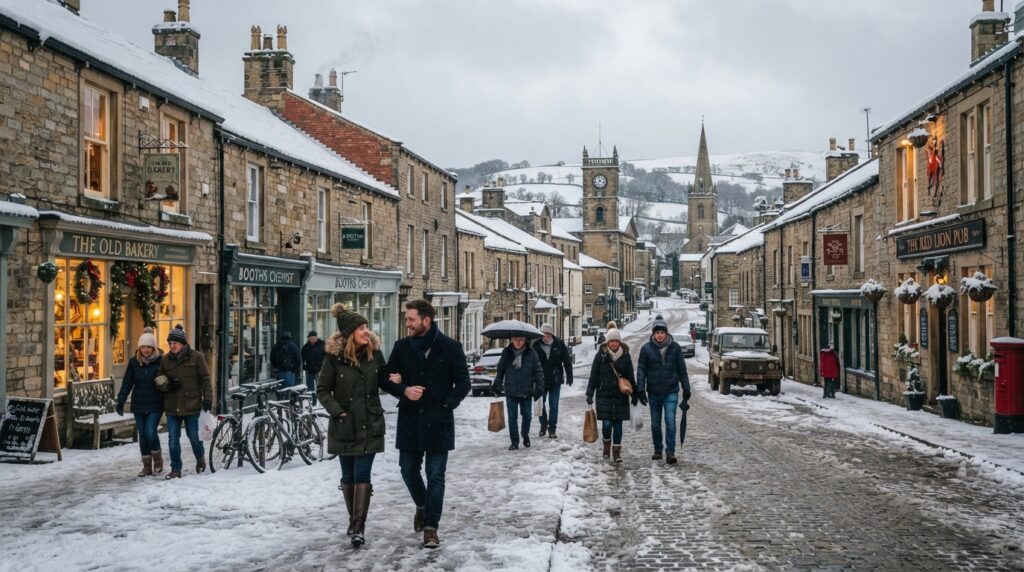
On current evidence, probably not — and we’d rather say so than tell you what the headlines are telling you. A strong El Niño winter in the UK is associated with milder, wetter and considerably stormier conditions, not record cold. The Met Office’s position is that El Niño raises the chance of milder, wetter and windier weather during autumn and early winter here. What is genuinely on the table is a disruptive cold snap in late winter, via polar vortex disruption — a different thing from a cold season, and worth preparing for separately.
Search “coldest winter for years” in any given August and you’ll find plenty of confident content. Here’s an honest version, and an explanation of why the honest version is more useful.
What’s actually happening in the Pacific
The starting point isn’t in dispute. NOAA’s Climate Prediction Center has El Niño at Advisory status, with a greater than 90% chance of a very strong event during Northern Hemisphere autumn and winter 2026–27. CPC also gives the October–December 2026 season a 69% chance of a historic event — a three-month RONI value of +2.5°C or higher, which would exceed every El Niño in the record back to 1950.
So the event is real, and it’s large. The question is what a large Pacific event does to British weather, and that’s where confident cold predictions fall apart.
What El Niño actually does to UK winters
The Met Office is direct about this. Its position is that El Niño is one of several climate drivers influencing weather patterns in Europe and the UK, that its impacts here are typically indirect, and that it can increase the likelihood of more unsettled conditions later in the year — including a higher chance of milder, wetter and windier weather during autumn and early winter.
The mechanism is jet stream related. El Niño energises the subtropical jet, which sharpens the temperature contrast across the North Atlantic and drives deeper, faster-moving low-pressure systems toward the British Isles. The UK and Ireland sit more or less directly in the path of that enhanced flow.
The practical expression of that isn’t snow. It’s storms, rain and flooding. During the 2015–16 El Niño winter, Storm Desmond dropped a month’s worth of rain in 24 hours across Cumbria and Lancashire, causing severe flooding in Carlisle and the Lake District.
Our companion article on storm-proofing your home covers what that means practically, because that’s the more likely disruption this winter.
The genuine cold story, which is more specific
None of the above means a cold winter is impossible, and there’s a real mechanism worth understanding — it just isn’t “El Niño means cold.”
The stratospheric polar vortex is a band of strong winds circling the Arctic in the stratosphere. When it’s strong, it tends to lock cold air over the pole and drive a mild, zonal, stormy pattern across the UK. When it’s disrupted or collapses — a sudden stratospheric warming, or SSW — that cold air can spill southward, and the UK’s most memorable cold spells have followed SSW events.
Two relevant points:
- El Niño winters raise SSW likelihood. Research has shown the chance of an SSW occurring increases in El Niño winters relative to ENSO-neutral years, and this is reproduced in seasonal hindcasts.
- There’s an early signal for this winter specifically. Long-range data has shown a notable January weakening signal in the stratosphere, with several background drivers developing in a way that can increase the chance of a more dynamic winter pattern across the US, Canada and Europe.
So the plausible shape of winter 2026/27 is: mild, wet and stormy through autumn and early winter, with a meaningful chance of a disruptive cold spell in the second half. Our polar vortex explainer covers this properly.
Why “mild on average” doesn’t mean “no cold weather”
This is the distinction that matters for a household, and it’s routinely lost in coverage.
A winter that averages mild across December, January and February can still contain a genuinely disruptive week of frost, ice or snow. Averages hide extremes. Mild and cold patterns aren’t mutually exclusive across a three-month season — they alternate.
So the practical answer to “should I prepare for cold” is yes, regardless of the seasonal outlook, because seasonal outlooks don’t tell you about individual weeks. What they do tell you is which risk to prioritise — and this winter that’s storms and water rather than snow and ice.
The risk that’s genuinely underrated: cold homes
Worth stating plainly, because it doesn’t depend on any forecast.
Cold remains a larger cause of temperature-related mortality in England and Wales than heat, by a substantial margin. That’s true in mild winters as well as harsh ones, because the deaths are driven by poorly heated homes and vulnerability rather than by record low temperatures.
A mild, wet, windy winter is not a benign winter for a draughty, poorly insulated house. Wind-driven rain and high air-change rates make a home harder and more expensive to heat than still, dry cold does at the same temperature.
That’s the case for doing the work in our draught-proofing guide and room temperature imbalance guide regardless of what the season turns out to be.
What to actually do
- Prioritise storm and water resilience this year, because that’s where the signal points. Our storm-proofing guide covers gutters, roof checks, fences, drainage and flood preparation.
- Draught-proof and insulate anyway. Cheap, effective in every winter, and it reduces heating cost immediately.
- Have a plan for one warm room. Being able to heat a single room efficiently is the practical answer to both a cold snap and a high energy bill — our cheapest way to heat one room guide covers the options.
- Sign up for Met Office warnings and Environment Agency flood alerts. Both free, both region-specific, both linked below.
- Don’t buy anything based on a seasonal headline. Buy based on your actual house and its actual weaknesses.
Frequently asked questions
So is it going to snow this winter?
Almost certainly somewhere in the UK, as it does most winters. Strong El Niño winters can still produce snow events where the southerly jet pulls moist air north into colder continental air — typically a narrow band affecting Scotland and northern England more than the south-east. What’s less likely on current signals is a prolonged, widespread cold and snowy season.
How far ahead can UK winter weather actually be forecast?
Seasonal forecasts produce useful probability shifts — more or less likely than average — rather than deterministic predictions. Skill is better for large-scale patterns like storminess than for specific cold spells, and specific weeks aren’t forecastable months ahead at all.
Why do “coldest winter ever” stories appear every year?
They perform well, and long-range model output can be cherry-picked — any large ensemble contains individual members showing extreme outcomes. A single member isn’t a forecast. Check whether a named forecasting body is actually cited.
Does a mild winter mean lower energy bills?
Generally yes for heating demand, but wind-driven rain and high air-change rates in a draughty home can offset a lot of that. Fabric improvements matter more to your bill than the seasonal average does.
Sources
- NOAA Climate Prediction Center — ENSO Diagnostic Discussion (Advisory status; >90% very strong event, autumn/winter 2026–27)
- Met Office — El Niño and the UK (indirect UK impacts; higher chance of milder, wetter, windier autumn and early winter)
- Ineson et al., “Prediction of European Winter 2023/24: Influence of a Strong El Niño”, Atmospheric Science Letters (SSW likelihood increases in El Niño winters; citing Butler & Polvani 2011, Scaife et al. 2016)
- Severe Weather Europe — Polar Vortex Warning Signs for Winter 2026/2027 (January stratospheric weakening signal)
- ONS / BBC — Heat and cold related deaths in England and Wales (cold mortality exceeds heat)
- Met Office — UK weather warnings
- GOV.UK — Sign up for flood warnings
Related reading: our storm-proofing guide and polar vortex explainer.
Related guides




Compare current prices, stock and reviews on portable air conditioners at Amazon UK. Prices and stock move fast in a heatwave, so it is worth checking before you commit.
Browse air conditioners →