How to Cool a Kitchen That Gets Too Hot (UK)
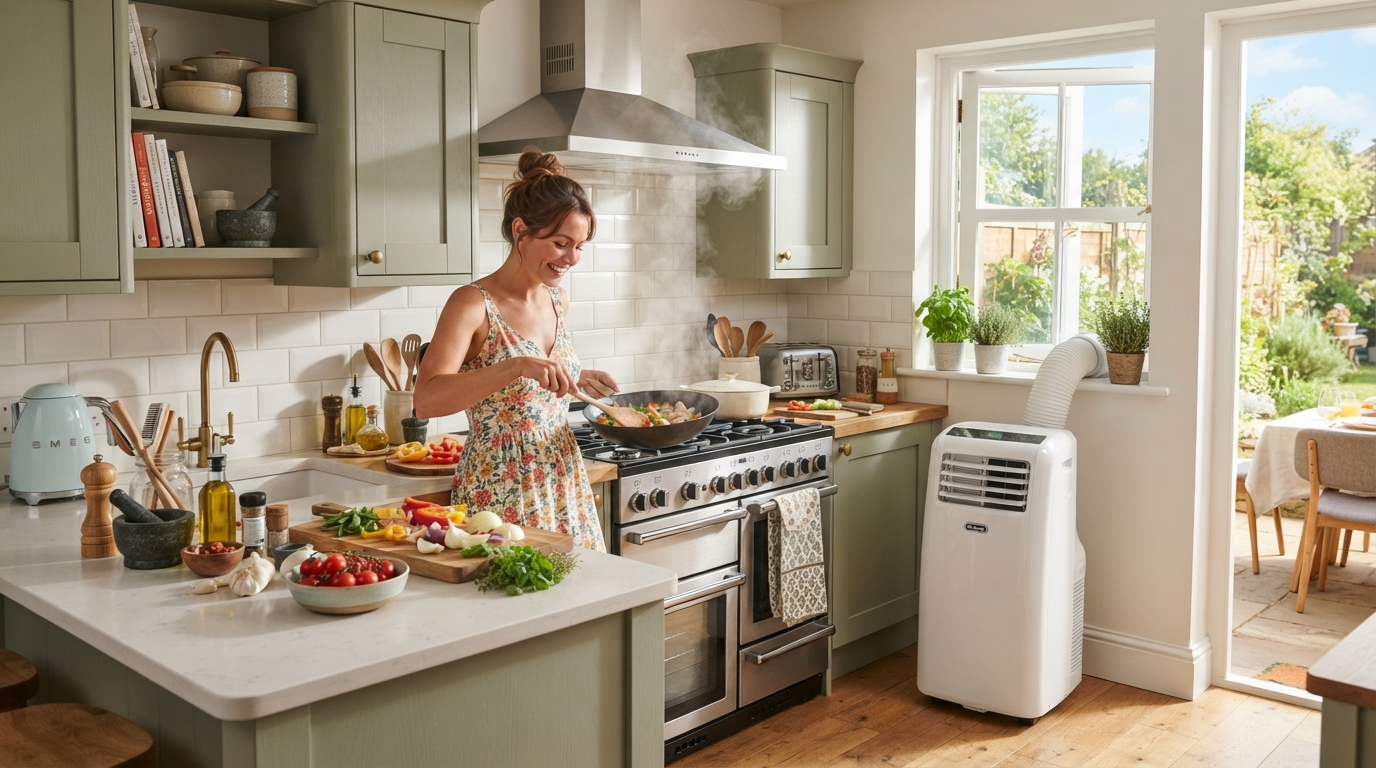
Kitchens run hotter than almost any other room for straightforward reasons — the oven, hob, dishwasher and even the fridge-freezer all give off heat, often with more glazing than a typical room if it’s an extension. The single biggest fix that costs nothing is using your cooker hood or extractor fan properly, and specifically checking whether it actually vents outside rather than just recirculating filtered air back into the room — only a vented hood removes heat and humidity rather than just grease and odour. Beyond that, timing what you cook (avoiding the oven at the hottest part of the day), cross-ventilating with a window or door on another wall, and not running every heat-generating appliance at once all add up. If your kitchen is part of a larger extension with a lot of glazing, our kitchen extension and bifold doors guide covers when a proper cooling appliance becomes the realistic answer.
“Why is the kitchen always the hottest room in the house?” has a genuinely simple answer, and most of the fix is about how you use what’s already there, not what you buy. Here’s the full picture.
Why kitchens run hot in the first place
- The oven and hob are, by design, heating appliances — and a lot of that heat escapes into the room around them rather than staying contained, especially with an oven door opened repeatedly to check on food.
- The fridge-freezer is often overlooked, but its compressor gives off heat as a by-product of keeping the inside cold — and if it’s boxed into a cabinet without proper ventilation gaps, that heat builds up around it rather than dispersing.
- The dishwasher and washing machine, if either is in the kitchen, add both heat and humidity during a cycle.
- More glazing than average — many UK kitchens, especially extensions, have larger windows, bifold or French doors, or a roof lantern, all of which let in more solar heat than a standard room. Our kitchen extension guide and open-plan sizing guide cover this specifically for larger, glazed kitchen-diner spaces.
- Concentrated activity — cooking itself generates steam and heat right at the point you’re standing, so it feels hotter than the room’s average temperature actually is.
Extraction: the single most underused fix
Whichever type you have, use it properly: switch it on before you start cooking rather than partway through, keep it running for a few minutes after you finish to clear residual heat and steam, and clean or replace the grease filter regularly — a clogged filter reduces airflow and makes the whole system less effective, in both hood types.
Cross-ventilation while cooking
A single open window in the kitchen lets some heat and steam out, but pairing it with an open window or door on another wall — ideally one that creates a through-draught — moves air across the room far more effectively than one opening alone. If the kitchen connects to a hallway, garden door, or another room, opening both ends creates a genuine flow rather than a single stagnant vent point.
Planning meals around the heat
On a genuinely hot day, the biggest single reduction in kitchen heat often comes from simply not running the oven for an extended period at the hottest point of the day:
- Cook earlier or later — first thing in the morning or in the cooler evening, rather than mid-afternoon.
- Use appliances that generate less ambient heat — a microwave, slow cooker, air fryer or an outdoor barbecue all add far less heat to the kitchen than a conventional oven running for an hour or more.
- Batch-cook in advance during a cooler part of the day or a cooler day entirely, so hot-weather days need only reheating.
- Consider what else is running — a dishwasher and washing machine both add heat and humidity; running them overnight or at a cooler time rather than alongside cooking reduces the total heat load at once.
Fans and portable cooling in a kitchen — a safety note
When the kitchen needs more than technique
For a small, enclosed kitchen, better extraction, timing and ventilation can make a real difference on their own. For a large, glazed kitchen-diner or an extension with bifold doors, these techniques help but often aren’t enough by themselves — the room is simply absorbing more solar heat and holding more people and appliances than a fan or open window can offset. At that point, a proper cooling appliance sized for the space is the realistic next step. Our kitchen extension and bifold doors guide covers choosing one, and if the kitchen is part of a bigger open-plan living space, our open-plan sizing guide covers whether one unit or several makes sense.
Shading the kitchen itself
If the kitchen has significant glazing, shading it works the same way as anywhere else in the house — blocking solar heat before it enters beats trying to cool it out afterwards. Our window and curtain guide and external shading guide cover options, including for roof lanterns and larger glazed areas common in kitchen extensions.
Frequently asked questions
Does a cooker hood actually cool the kitchen down?
A vented (ducted) hood genuinely removes heat and humidity by extracting air outside. A recirculating (filtered) hood only filters grease and odour and blows the air straight back into the room, so it does little to reduce heat — check which type you have.
Why is my kitchen always hotter than the rest of the house?
The oven, hob, dishwasher and even the fridge-freezer’s compressor all give off heat, often combined with more glazing than a typical room in an extension — several heat sources concentrated in one space, which most other rooms don’t have.
What’s the quickest thing I can do while actively cooking on a hot day?
Switch the extractor on before you start (not partway through), open a window on another wall for cross-ventilation, and use the microwave, slow cooker or an outdoor barbecue instead of the oven if the meal allows it.
Is it safe to run a fan in the kitchen while cooking?
Yes, as long as it isn’t blowing directly toward a lit gas hob or open flame — that’s a genuine fire and gas-safety hazard. Position it to circulate air generally around the room instead.
Sources
- Energy Saving Trust — Keeping your home cool in summer
- RoSPA — Kitchen safety advice
Related reading: our kitchen extension and bifold doors guide and open-plan house sizing guide.
A portable fan or air conditioner can bridge the gap. Compare current options at Amazon UK.